CV Examples
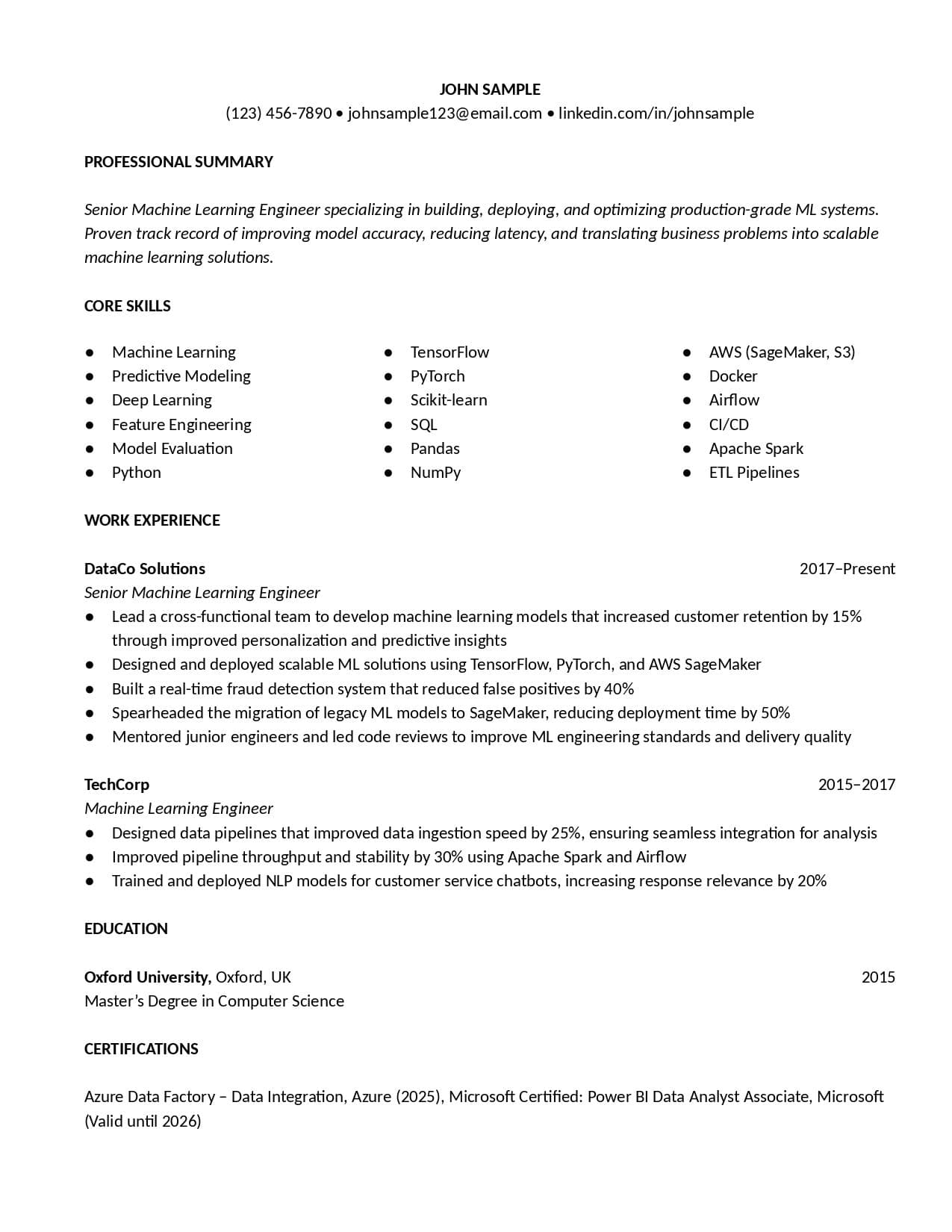
Junior Web Developer
Web Developer
Senior Web Developer
Start Your CV Now
Use our AI CV writer to craft a professional CV that helps you land a job.
Junior Web Developer
Web Developer
Senior Web Developer
Start Your CV Now
Use our AI CV writer to craft a professional CV that helps you land a job.
What Makes a Strong Web Developer CV?
A strong web developer CV shows more than your technical knowledge. It demonstrates how you have used your skills to build websites, improve user experiences, solve technical challenges, and contribute to business goals. Hiring managers want to see the technologies you can comfortably work with, the projects you delivered, and the results you achieved.
Your web developer CV should clearly highlight your programming languages, frameworks, and content management systems. Technologies such as JavaScript, TypeScript, React, Next.js, WordPress, Node.js, Git, and cloud platforms are common in web developer job postings.
The strongest CVs combine technical work with measurable results. Instead of creating a list of responsibilities, explain what you built and the impact it had. Good examples might include improving the page load speed, increasing conversion rates, or launching a website that can support thousands of monthly users.
Recruiters should be able to understand your technical expertise, development experience, and the value you can bring to a team from the first page of your CV.
Professional Summary for Web Developers
Experienced web developers should use a professional summary that concisely explains their technical expertise, years of experience, and most relevant achievements. A strong summary might mention expertise in React, Next.js, WordPress, Shopify, or Node.js, along with a measurable result such as improving website performance, increasing conversions, or leading a website redesign.
Entry-level candidates can use the summary to highlight relevant coursework, freelance projects, or internships. The goal of the summary at this career level is to give recruiters immediate context about your technical background and desired career direction.
At all career levels, make sure to avoid generic descriptions like "strong team player." The summary section should focus on the technologies you use, the products you built, and the results you delivered.
Key Skills for a Web Developer CV
The skills section should give an overview of your strongest skills and make it easy for recruiters to quickly understand your strengths. For web developers, it's common to organise the skills section using categories such as programming languages, frameworks, and databases.
For example, JavaScript, TypeScript, HTML, and CSS can appear under core technologies, while React, Next.js, Vue.js, and Node.js would fit under frameworks. Tools such as Git, Docker, Figma, and Google Analytics are also common for web development and may be relevant depending on the role you're applying for.
After listing your strongest technical skills, make sure to also include core competencies that employers regularly seek in this area, including responsive design, accessibility, SEO fundamentals, website optimisation, and cross-browser compatibility. A well-written skills section format ideally also helps applicant tracking systems (ATS) identify relevant keywords.
- JavaScript
- TypeScript
- HTML
- CSS
- React
- Next.js
- Node.js
- WordPress
- Shopify
- Git
- Responsive Design
- REST APIs
CV Keywords for Web Developers
Many employers use an applicant tracking system to search CVs for relevant technologies and job-specific terms. Including targeted keywords improves the chances of your application appearing as a match in recruiter searches.
The strongest CV keywords come straight from job descriptions. For web development positions, companies often search for technologies such as React, Next.js, WordPress, Shopify, Tailwind CSS, Node.js, GraphQL, and REST APIs. They may also look for terms related to performance optimisation, accessibility, responsive design, SEO, and content management systems.
Keyword optimisation works best when technologies are included naturally within work experience and project descriptions. Recruiters are more interested in how you used a tool than seeing it repeated in a long skills list.
- Front-end Development
- Responsive Web Design
- Website Optimisation
- Cross-browser Compatibility
- Performance Optimisation
- Accessibility Standards
- Content Management Systems
- Technical SEO
- User Interface Development
- Version Control
ATS Optimisation for Web Developer CVs
Many companies use an applicant tracking system to organise applications before recruiters review them manually. Clean formatting helps ATS software parse CV content correctly and reduces the risk of important information being missed.
An ATS-friendly CV usually has a single-column layout, standard section headings, and clear formatting. It's best to avoid graphics, icons, tables, and complex design elements that may create issues in platforms such as Workday, Greenhouse, Lever, or iCIMS.
Web developers should include technical keywords naturally throughout their experience, projects, and skills sections. Mentioning technologies such as React, WordPress, Shopify, JavaScript, TypeScript, Node.js, and GraphQL within work experience bullets provides stronger context than simply listing the terms without examples.
Design & Style Guidelines for Web Developers
A well-organised, clean CV format is usually the safest choice for web development roles. Hiring managers often review dozens of applications per day, so it's recommended to prioritise readability over visual design.
Use a simple CV layout with clear section headings, consistent spacing, and professional font choices such as Inter, Calibri, Arial, or Helvetica. A single-column format is generally the most reliable option for both recruiters and ATS platforms.
Keep CV length to one page if you have limited experience and no more than two pages for senior roles. Include links to your portfolio, GitHub profile, or live projects in your contact info section. Strong project examples usually carry more weight than visual design elements on the CV itself.
Common mistakes in web developer CVs:
- Listing every framework you have used once instead of focusing on technologies you can discuss confidently in interviews.
- Adding project links without any descriptions. Explain what you built, your role, and the results achieved.
- Writing generic experience bullets, instead of including measurable outcomes such as improved page speed, increased conversions, or reduced bounce rates.
- Leaving out strong portfolio work that demonstrates real development skills.
- Forgetting to mention accessibility, performance, or responsive design improvements, rather than including specific examples that show how you improved the user experience.
Frequently Asked Questions
Most web developers should keep their CVs to one page. If you have more than 10 years of experience, multiple technical specialisations, or a long list of impactful projects, a second page is acceptable. The goal is to highlight your most relevant work instead of documenting every technology or skill you've ever used.