How to Write a Professional Resume Summary: A Guide for Tech Professionals
Resume Tips
How to Write a Professional Resume Summary: A Guide for Tech Professionals
Crafting a strong resume summary is key to getting noticed—especially when hiring decisions happen in seconds. Learn how to write one that speaks to recruiters and ATS, backed by resume summary examples that show you how it’s done.
AUTHOR
Tracie Close
Job Search & Career Strategist
Tracie Close is a job search and career strategist specializing in job search optimization, resume writing, and employer branding. With more than 16 years of experience supporting recruiters, HR teams, and job seekers, she brings deep insights into hiring practices and applicant tracking systems (ATS). She holds a Bachelor of Arts in Communications and Writing Arts from Rowan University and has led digital strategy projects for global tech firms.
With the speed of hiring in today’s tech job market, a resume has seconds to make an impression. Recruiters scan hundreds of resumes per role, and filter out candidates before a human sees them. A resume that doesn’t immediately communicate a candidate’s value may never surpass the first round.
FAQs: How to Write a Professional Resume Summary for Tech Professionals
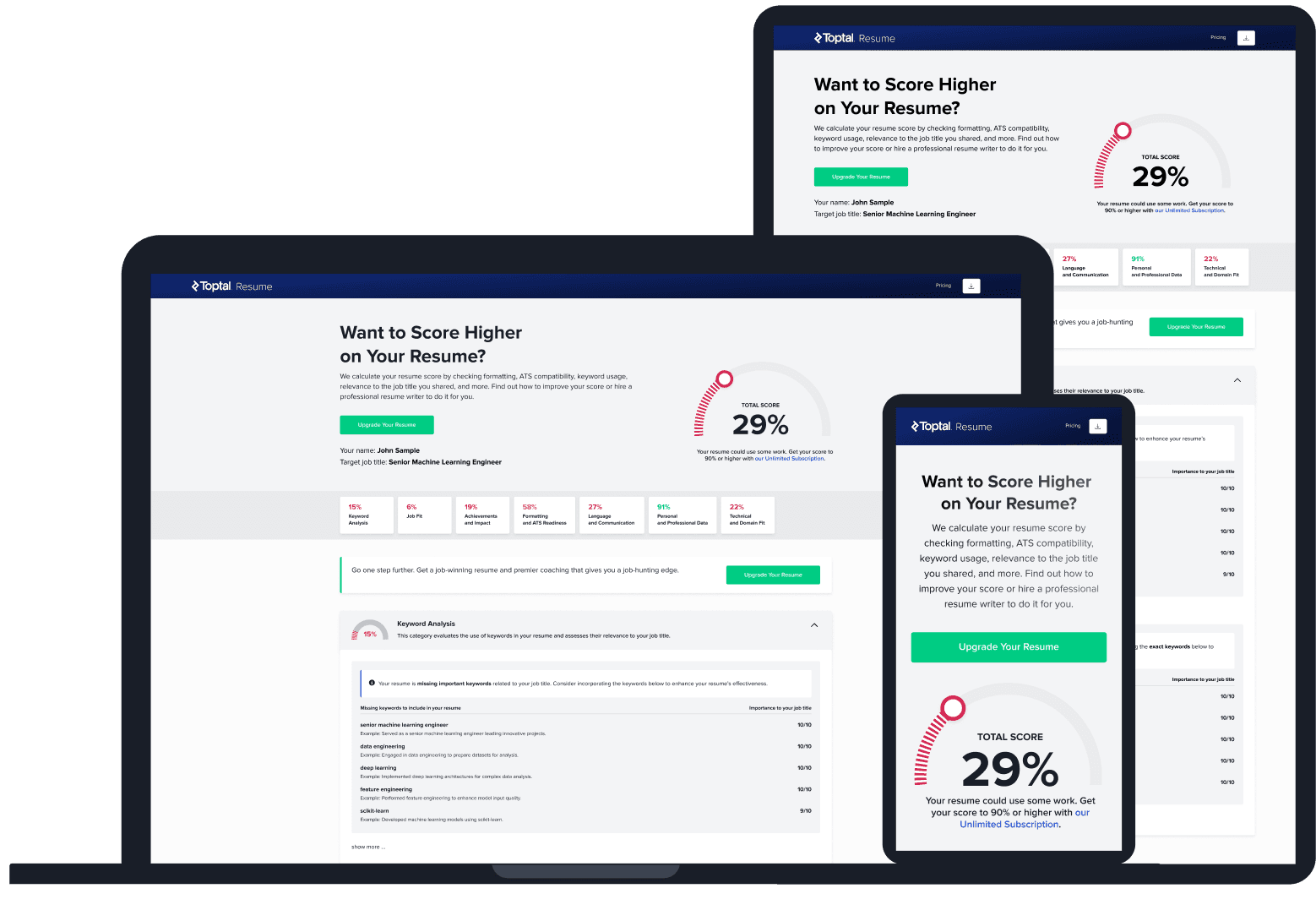
ATS Resume Score Checker for Professional Roles
Upload your resume and tell us your target job title. Our system will analyze it the way a recruiter and ATS would—scoring it across core hiring dimensions and giving you personalized, role-specific feedback you can implement right away.
Upload Your Resume
Please note: Your resume must be a PDF or DOCX file in English.
Most Common Tech Resume Mistakes (and How to Fix Them)
Even highly skilled tech professionals can miss out on job opportunities due to avoidable resume mistakes that weaken their applications. Gain insight into the most common tech resume errors—and how to fix them—so your resume passes applicant tracking systems (ATS) and gets you to the interview stage.
Tracie Close is a job search and career strategist specializing in job search optimization, resume writing, and employer branding. With more than 16 years of experience supporting recruiters, HR teams, and job seekers, she brings deep insights into hiring practices and applicant tracking systems (ATS). She holds a Bachelor of Arts in Communications and Writing Arts from Rowan University and has led digital strategy projects for global tech firms.
Job Market Trends
How Understanding Applicant Tracking Systems (ATS) Can Land You a Top Tech Job
Applicant Tracking Systems (ATS) are now used by nearly all Fortune 500 companies to handle the surge in job applications. For tech professionals, understanding how these systems parse applications can mean the difference between being filtered out and moving forward in the hiring process.
Amanda Menin is a Talent and Organizational Strategy expert specializing in hiring practices, resume optimization, and applicant tracking systems (ATS). With more than 20 years of experience across technology, healthcare, and consulting, she offers practical insight into how employers evaluate candidates. She holds a master’s in industrial and organizational psychology and is a SHRM Senior Certified Professional (SCP).
Resume Tips
How to Write a Tech Resume for Software Engineering Roles
If you’re a software engineer looking to land tech interviews, a clear, focused resume is essential. Learn how to write a software engineer resume that highlights your tech skills, demonstrates impact, and passes ATS screening.
Audrey Goodson Kingo is a book author and a renowned journalist covering careers and HR. She has advised insurance giant Aon on work-life balance and shared her expertise with CNN, Good Morning America, MSN, and more.
That’s where a professional or career resume summary comes in.
A well-crafted summary acts as a candidate's professional headline. It clarifies their technical identity, highlights their core strengths, and aligns their experience with the target role. Whether the candidate is a senior engineer, a transitioning professional, or a recent boot camp grad, a tailored summary sets the tone for the rest of the resume. It can be the difference between getting filtered out or fast-tracked.
What a Resume Summary Is—and What It’s Not
A professional summary is a short paragraph—ideally two to four lines long—that communicates your value at a glance. It should highlight your role, technical focus, and standout skills, and answer the question: Why should someone hire you?
It’s not the same as an objective statement—in other words, it’s not about what you want from the role, but what you bring to it. It’s also not a personal mission statement. Steer clear of generic intentions such as “eager to join a dynamic team” and “looking to grow professionally”. Similarly, it shouldn’t be a list of soft skills or generic adjectives. Attributes like attention to detail or communication skills should be reflected in your achievements, not simply stated.
A strong summary is clear, strategic, and tailored to the position. It emphasizes measurable impact, includes relevant keywords, and eliminates empty or generic wording. As Harvard Business Review notes, the first 15–20 words of a resume are critical—this is often all the time a hiring manager spends on an initial scan. Starting with a summary of your expertise helps create an immediate connection between your experience and the job requirements.
“A strong summary delivers instant clarity: what you do, what you excel at, and how that aligns with the job. The best summaries feel like a preview of what’s to come in the rest of the resume.”
— Marisa Goldberg, Senior Director of Recruiting at Toptal
What Makes an Effective Tech Resume Summary
Tailored to the role and its requirements
Emphasizes measurable impact and technical strengths
Incorporates keywords naturally and strategically
Tight, lean, and free of filler or generic content
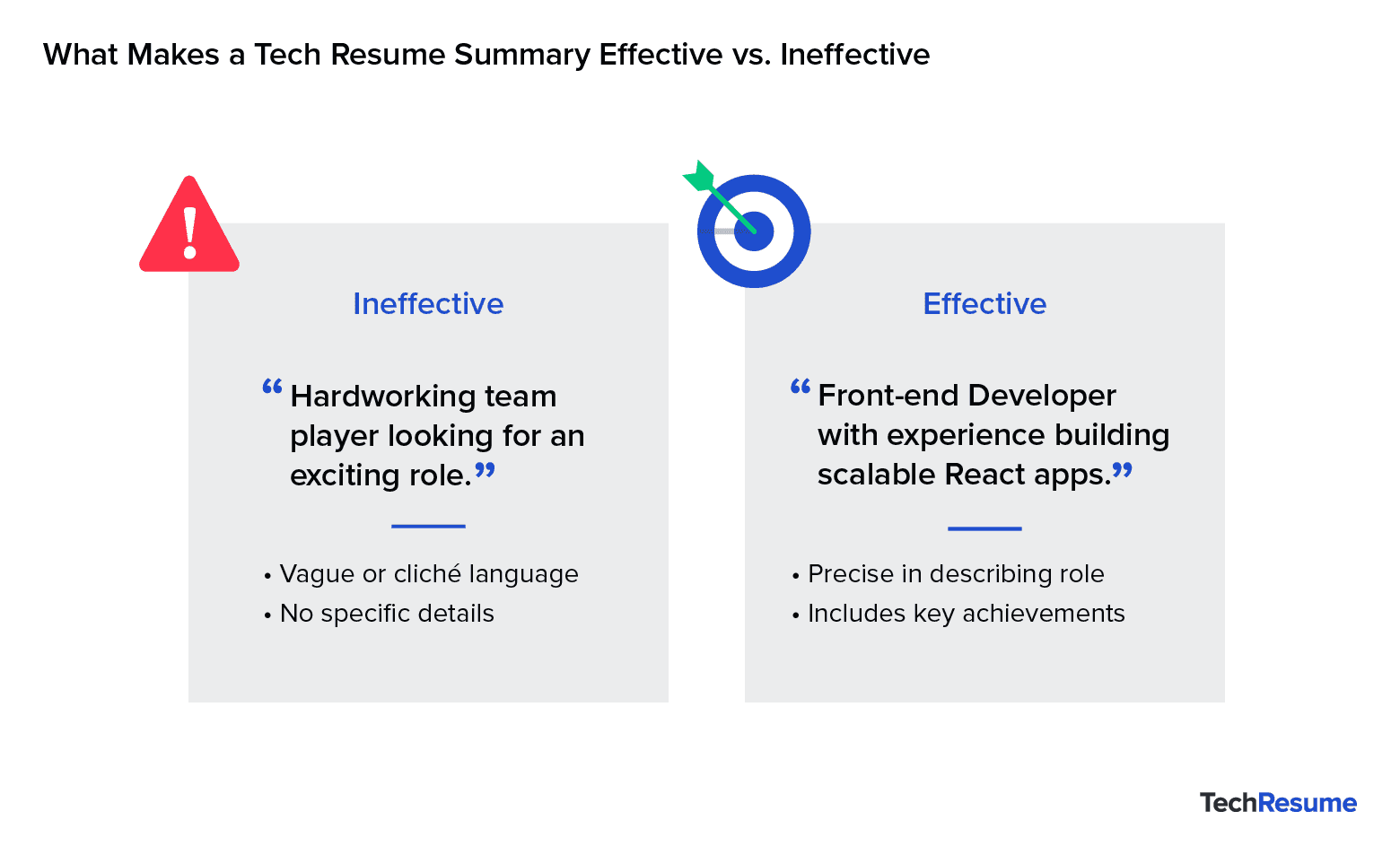
What Makes an Ineffective Tech Resume Summary
Vague or overly broad in describing the candidate’s value
Lists soft skills without context or evidence
Relies on clichés or buzzwords like “go-getter” or “team player”
Exceeds four lines or reads like a cover letter introduction
Why Every Tech Resume Needs a Summary—and How to Make Yours Count
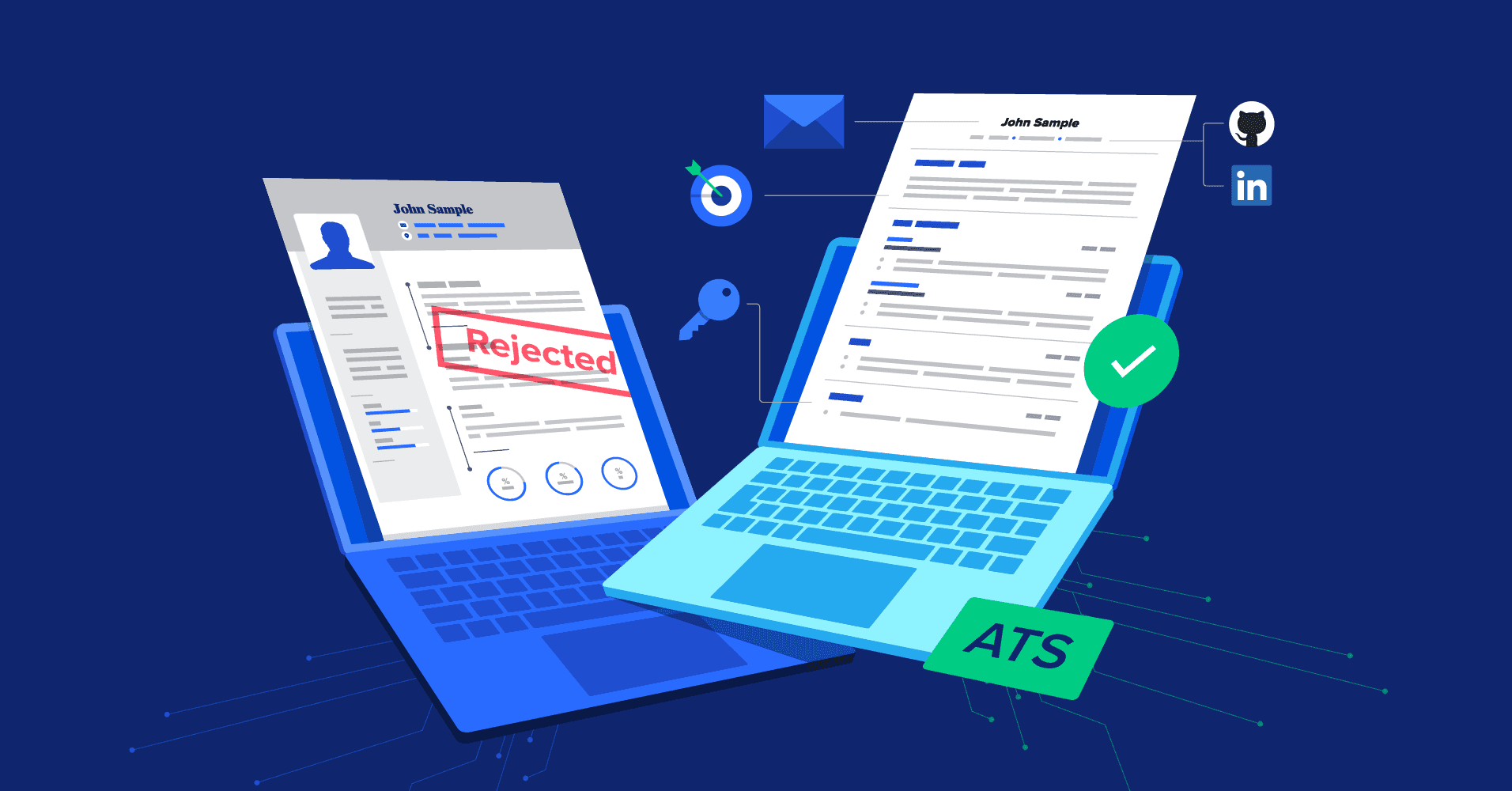
The summary is the first thing both ATS platforms and recruiters see. It sets the stage for the rest of the candidate's resume and helps ensure the candidate's most relevant strengths aren’t buried in bullet points.
LinkedIn reports that AI-powered recruitment tools are becoming the norm in 2025. These tools automate tasks like resume screening, freeing hiring teams to focus on strategic work. They are also reshaping workflows and streamlining how applications are managed, supporting more targeted, efficient hiring decisions.
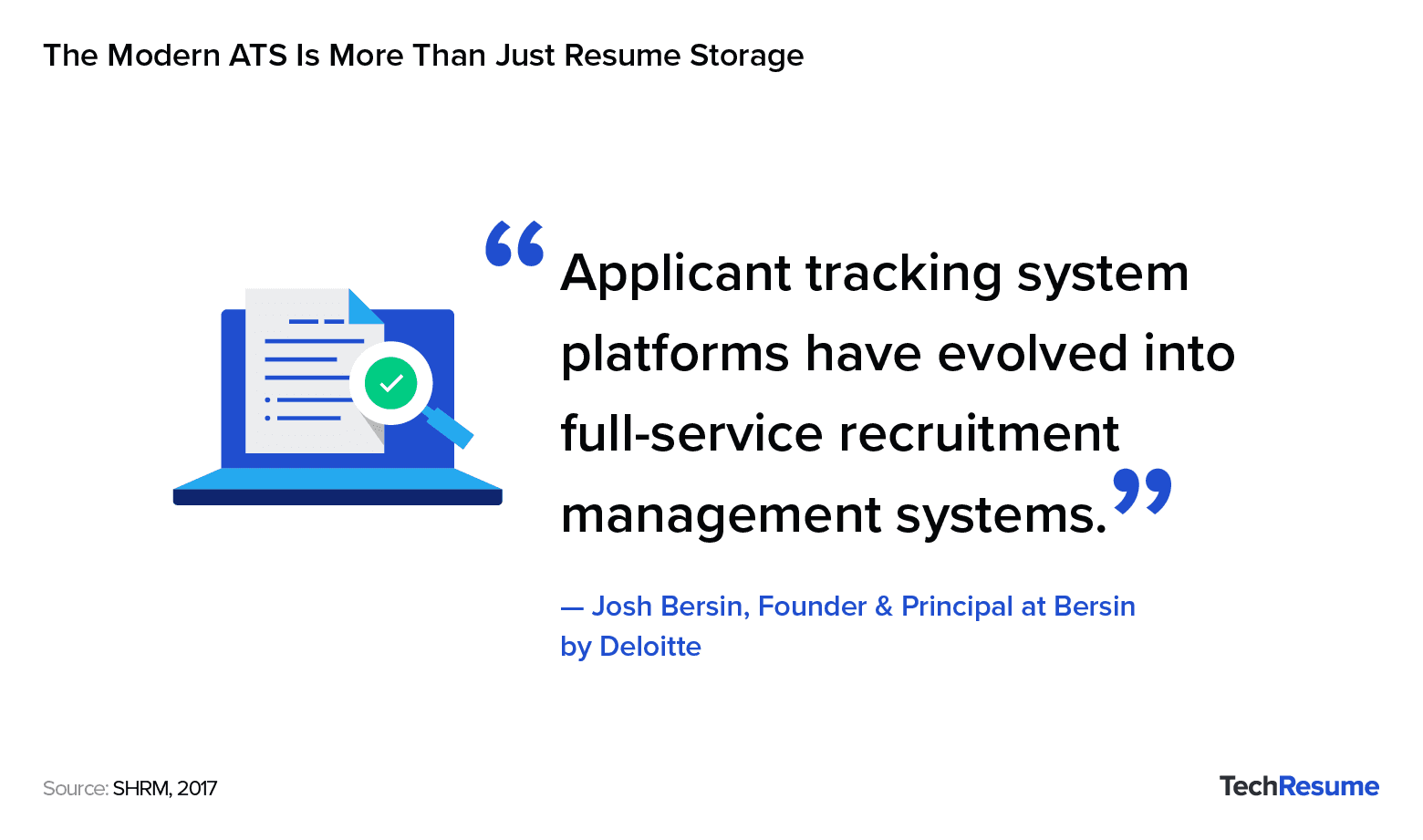
As early as 2017, SHRM reported that ATS tools were evolving beyond basic resume storage. Josh Bersin, Principal and Founder of Bersin by Deloitte, noted that these platforms had become full-service recruitment management systems, highlighting a growing emphasis on keyword clarity, user experience, and strategic functionality.
A strong summary:
Improves ATS discoverability by including relevant keywords.
Frames candidates' resumes for human reviewers.
Clarifies the candidate's role fit instantly.
Boosts recruiter engagement by highlighting what matters most.
How to Write a Tech Resume Summary That Shows Value
What to Include in a Tech Resume Summary
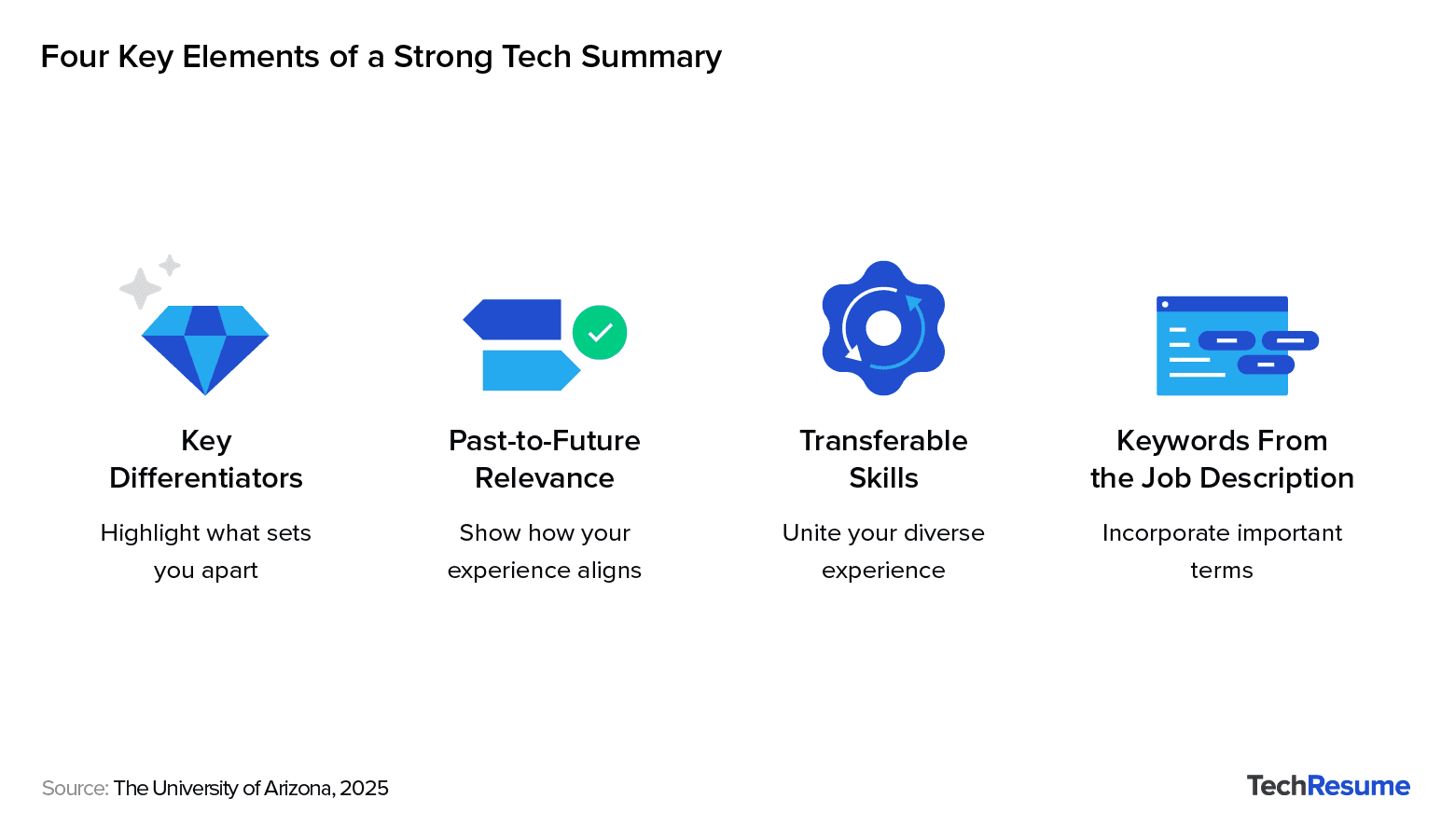
A strong tech resume summary should begin with your core professional identity—for example, “Full-stack Developer with extensive experience in SaaS and cloud-native development.” This immediately signals your level, focus, and domain expertise. Next, highlight key differentiators such as niche specialties, industry background, or standout technologies you've mastered. Think about what makes you uniquely qualified for the role.
You should also include strengths that align directly with the job target, such as a proven track record in scaling applications, leading cross-functional teams, or delivering performance improvements in real-world environments. When showcasing your skills and impact, replace buzzwords and empty phrases like “team player” or “go-getter” with specific skills or examples. Don’t overload the summary with soft skills that can’t be backed up by evidence in your experience.
What are three to four key points you want to communicate that could make a difference in how you're perceived as a candidate?
How can you show a clear connection between what you’ve done in the past and what you can offer in the future if hired?
What transferable skills can you highlight that unify experiences that may not seem directly related?
Are there keywords or skills that appear frequently in job descriptions that you can naturally incorporate?
Tech Resume Summary Writing Tips
Keep your resume summary specific, concise, and tailored to the role you’re targeting. Mention standout achievements in narrative form, but avoid turning the summary into a bulleted list or a restatement of your work history. Stick to resume convention by writing in the third person without using pronouns like “I” or “my.”
Focus on clear, role-relevant language that reflects your technical identity—for example, “experience managing cloud infrastructure” or “specialized in back-end development.” Avoid filler phrases, vague context, or overused buzzwords, and aim for tight, polished language that communicates value quickly and effectively.
Tailoring a Tech Resume Summary to Your Experience Level
“No matter your experience level—early career or executive—your summary should show that you make an impact, deliver results, and have the desirable skills and experience. That’s what makes it stand out.”
— Marisa Goldberg, Senior Director of Recruiting at Toptal
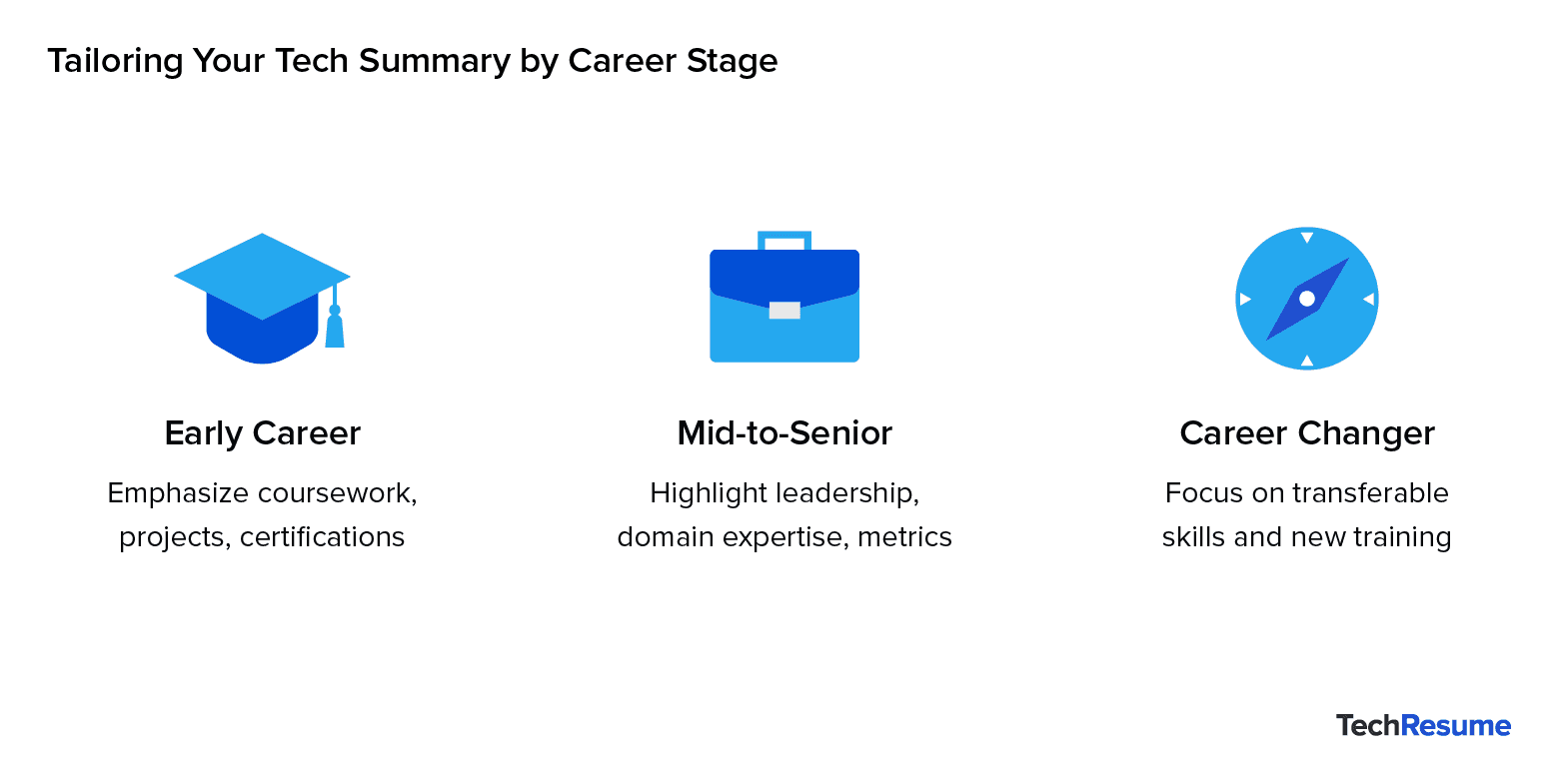
Early-career Professionals
Your summary should clarify your target role as an early-career professional or recent graduate and highlight relevant projects, internships, coursework, or certifications. It should also show that you're focused, motivated, and ready to contribute meaningfully.
For example:
Detail-oriented computer science graduate with hands-on experience in Python, REST APIs, and Agile workflows. Eager to contribute to back-end development in a fast-paced SaaS environment.
Mid-career to Senior Professionals
If you're a mid-career or senior professional, use your resume summary to highlight your technical expertise, leadership experience, and key differentiators. Focus on your ability to drive scalable impact, lead cross-functional initiatives, or guide product and engineering strategy.
For example:
Seasoned quality management professional with extensive experience in SaaS, HR tech, and edtech. Known for driving customer satisfaction and retention through process optimization, strategic problem-solving, and cross-functional collaboration. Skilled in managing C-level relationships, leading high-performing teams, and leveraging platforms like HubSpot and Intercom to streamline workflows and analyze customer journeys.
Career Changers or Transitioning Tech Professionals
If you're transitioning from another field into tech, use your summary to communicate your new direction and transferable skills. Emphasize what you've gained through formal training, independent learning, or project work.
For example:
Former educator transitioning into UX design with a strong foundation in user research, wireframing, and accessibility. Completed the Google UX Design Certificate and led multiple design sprints for nonprofit clients.
Professional Summary Examples for Tech Roles
Senior Software Engineer (Full Stack)
Experienced Senior Software Engineer specializing in full-stack development and solution architecture. Proven success in designing and implementing high-performance software solutions, optimizing system performance, and driving business growth. Passionate about mentoring engineering teams and fostering cross-functional collaboration.
UX/Product Designer
Innovative Product Designer and Design Systems Expert with a track record of building scalable frameworks for Fortune 500 companies and startups. Recognized for public speaking and open-source contributions around design tokens. Focused on delivering high-impact UX while enabling teams to adopt emerging technologies with clarity and confidence.
Project Manager
Strategic Project Manager with a proven record of delivering impactful projects across government, business, and civic sectors. Skilled in planning, execution, stakeholder engagement, and emergency response. Holds academic credentials from top universities in Europe and the US.
Data Analytics/Business Intelligence/Data Engineering
Results-driven Data Analytics, Business Intelligence, and Data Engineering professional with expertise in designing scalable data pipelines, optimizing storage solutions, and developing impactful BI dashboards. Highly proficient in SQL, Power BI, and Azure Synapse, with a strong focus on automation, data accuracy, and delivering actionable insights. Proven experience collaborating with stakeholders to transform business needs into data-driven strategies.
Data Scientist/ML Engineer
Machine Learning Engineer and Cloud Architect with extensive experience building scalable AI solutions on AWS, GCP, and Azure. Skilled in MLOps, infrastructure automation, and back-end development. Known for delivering enterprise-ready systems and award-winning predictive platforms through cross-functional leadership and deep technical expertise.
Cybersecurity Specialist
Skilled Cybersecurity Specialist with experience managing security operations, incident response, and compliance with HIPAA, NIST, and ISO standards. Proficient in vulnerability detection, phishing simulations, social engineering, and employee security training. Experienced with Splunk, Nessus, and Metasploit. Known for improving audit outcomes, strengthening policy compliance, and driving cross-team collaboration.
Common Tech Resume Summary Mistakes to Avoid
Generic phrases such as “hardworking team player looking for a challenging role” fail to convey value. Instead, opt for role-specific language—for example, “Front-end Developer with a strong background in responsive web apps using React and TypeScript.”
In addition, don’t overload your summary with a long string of keywords like “Cloud, DevOps, CI/CD, Kubernetes, Docker, Terraform, Jenkins, AWS, Azure, GCP, etc.” Focus instead on key expertise areas: “Cloud Engineer with expertise in AWS and Kubernetes, focused on building scalable CI/CD pipelines and infrastructure as code.”
Also, avoid soft-skill clichés such as “results-driven, passionate, and detail-oriented.” A more effective approach would be demonstrating those traits through accomplishments: “Project Manager with a track record of delivering $1M+ IT projects on time and under budget.” Finally, keep your summary under four lines. If it reads like a paragraph from your cover letter, it’s too much.
Your Professional Tech Resume Summary Sets the Tone
In 2025, a professional tech resume summary isn’t optional; it’s essential. It’s your first and best chance to show recruiters and ATS platforms how well you fit the role.
A strong tech resume summary clarifies your technical identity and expertise. It aligns your experience with the job you are applying for, improving your chances of passing ATS filters. It is a key element that sets the tone for your resume, so take the time to strategically and intentionally write this content, keeping the tips and instructions we have provided in mind.
Want to know how your tech resume summary stacks up? Upload your resume to TechResume’s ATS score checker to evaluate your summary’s alignment, keyword strength, and ATS readiness.