In 2025, landing a top tech role—whether in software engineering, DevOps, data science, or cybersecurity— requires more than experience—it demands a resume engineered to meet the dual standards of human recruiters and AI-driven applicant tracking systems (ATS). With hiring processes becoming increasingly data-driven and selective, resumes that once passed may now be filtered out before a human ever sees them.
The most effective tech resumes are streamlined, results-oriented, and keyword-optimized. They reflect the latest formatting standards, prioritize relevant experience, and avoid unnecessary sections or visual distractions. That means tailoring your resume content to the job description to ensure alignment with the key terms and keywords for applicant tracking systems that hiring managers seek.
Understanding current trends in resume structure, language, and recruiter expectations is essential to staying competitive in the increasingly demanding tech hiring landscape.
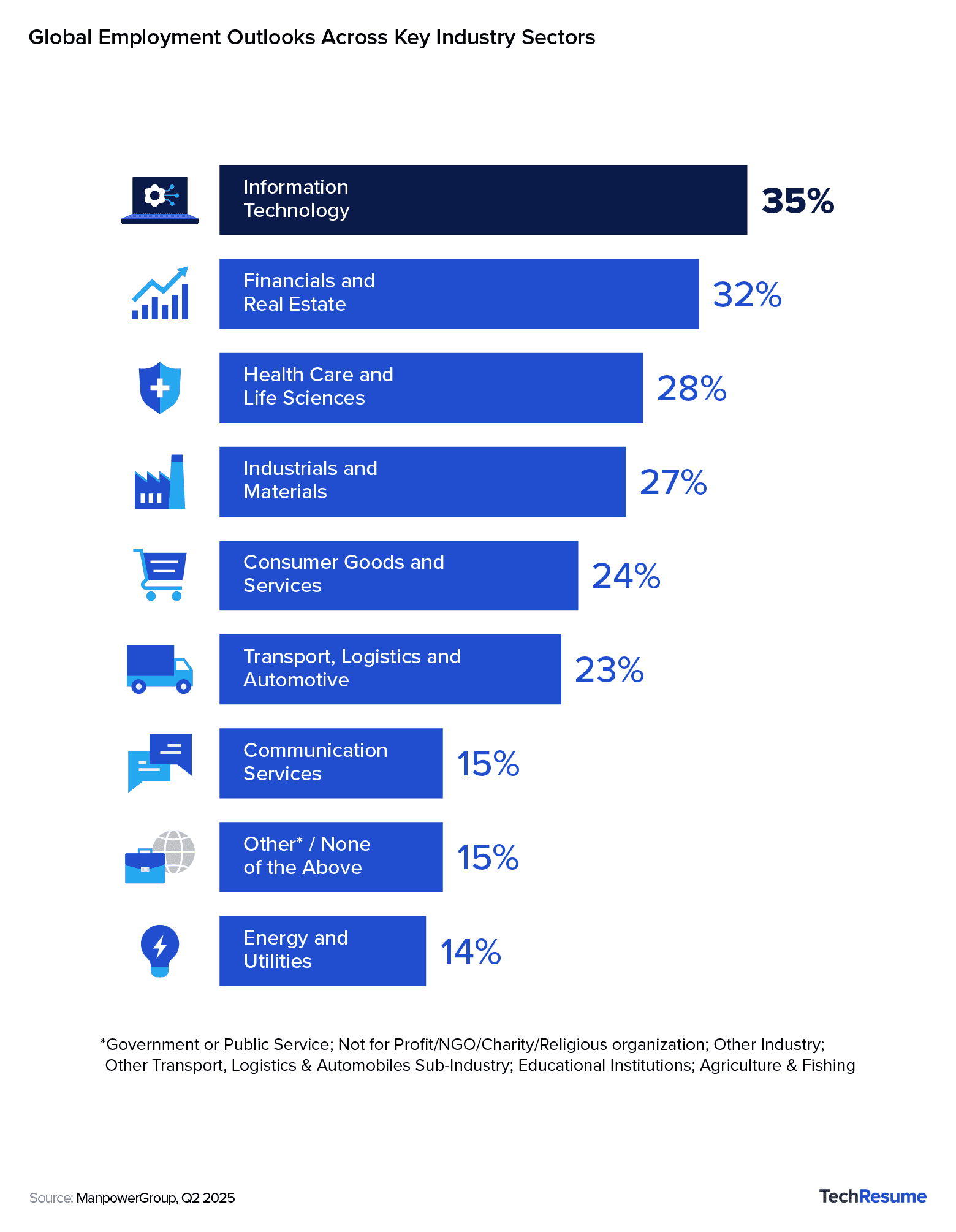
The global tech job market is expanding rapidly. According to the ManpowerGroup survey for Q2 2025, the IT sector leads global growth expectations with a 35% hiring outlook. This places it ahead of other key industries, including Financials and Real Estate (32%), Health Care and Life Sciences (28%), and Industrials and Materials (27%).
As a result, the expectations for tech resumes have shifted significantly. Recruiters no longer scan for long lists of responsibilities—they prioritize clear, measurable outcomes and immediately relevant experience. With more standardized hiring processes and higher applicant volumes, companies are raising the bar on what qualifies as a standout resume.
At the same time, ATS technology is more sophisticated than ever, scanning resumes for keywords and structure, clarity, and formatting consistency. Resumes that rely on visual elements like columns, tables, or heavy styling often fail to make it past these filters.
Modern resume templates in 2025 are built for readability and machine parsing. That means clean headers, simple typography, logical section flow, and a concise, professionally worded summary that positions the candidate. In this landscape, clarity isn’t optional—it’s a competitive advantage.
In 2025, the most effective tech resumes will lead with clarity and impact. Recruiters and ATS platforms favor resumes focusing on quantifiable results, not just responsibilities. Bullet points that include metrics (e.g., “increased system efficiency by 25%”) make it easier to assess value at a glance.
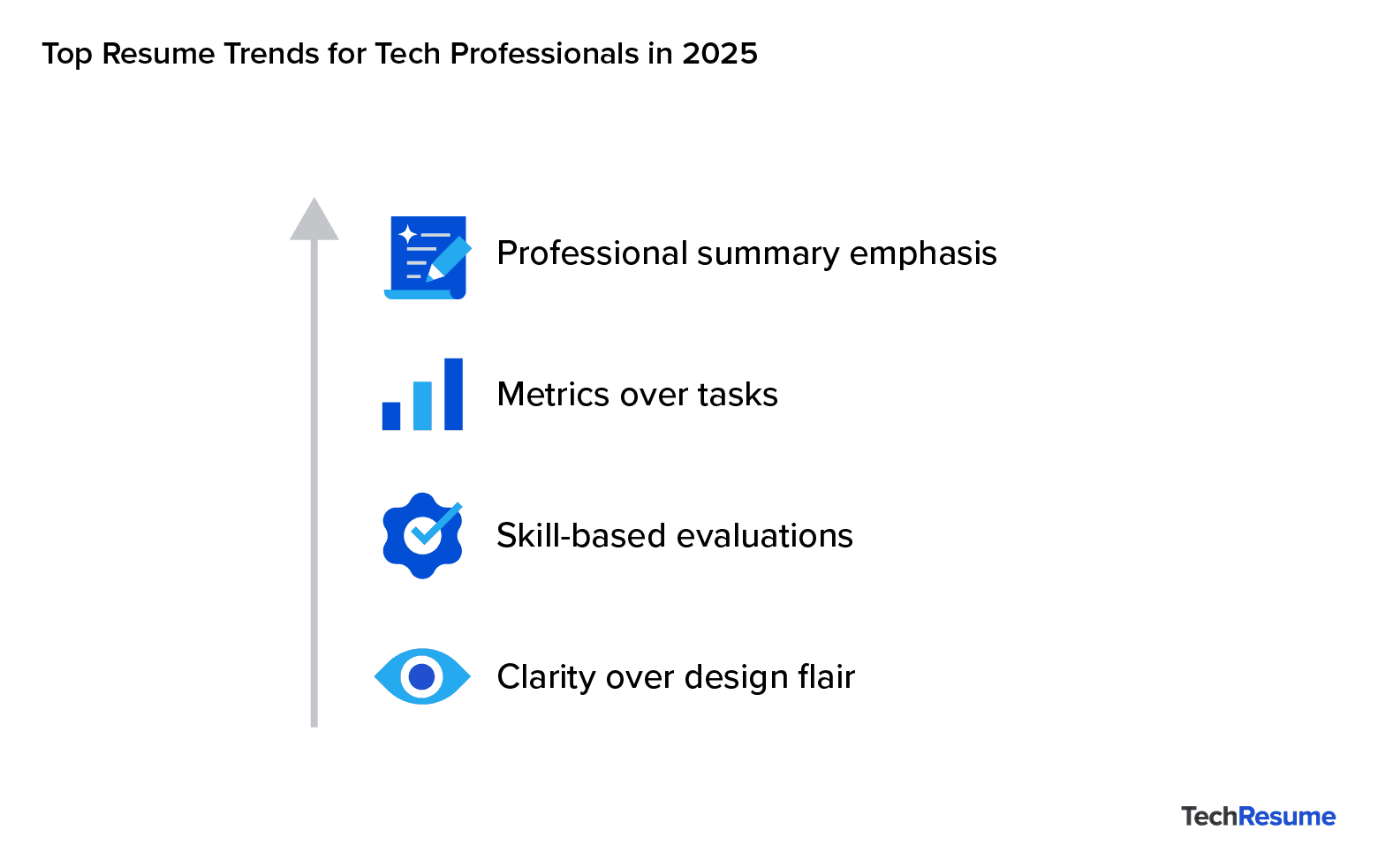
Rather than listing soft skills as standalone points, candidates are expected to demonstrate them through outcomes, such as mentoring junior engineers, leading cross-functional sprints, or managing technical documentation across distributed teams.
Another key trend is an increased focus on the professional summary. Candidates with five or more years of experience should include a 2–4 line summary that positions their technical focus and strengths. This section should not list achievements—those belong in the experience section—but instead serve as a sharp, role-aligned introduction. Clean formatting and high-impact phrasing matter more than ever.
Tech hiring managers want proof of proficiency—not just project results. Use your resume to name specific tools, frameworks, and platforms you’ve used (e.g., React, Kubernetes, Django, AWS). Don’t just say “worked on backend systems”—specify what tech stack, scale, and performance metrics were involved.
“One of the fastest ways recruiters scan for fit is by skimming for tech stack alignment. The more specific you are—naming tools, frameworks, and platforms—the faster we can connect you to the right opportunities.”
— Marisa Goldberg, Senior Director of Recruiting at Toptal
Today’s recruiters are also scanning for formatting consistency and ATS compatibility. Layouts that include emojis, graphics, or unusual fonts are often filtered out or cause parsing issues. Trending resume templates for 2025 prioritize readability and simplicity, using clean fonts, aligned sections, and spacing designed for machine readability.
A well-structured resume helps recruiters and ATS software quickly understand your qualifications, experience, and technical strengths. While content should be tailored to each job application, the structure should follow a clear, familiar order, especially in the tech industry.
Here are the key sections every 2025 tech resume should include, based on current industry standards and best practices:
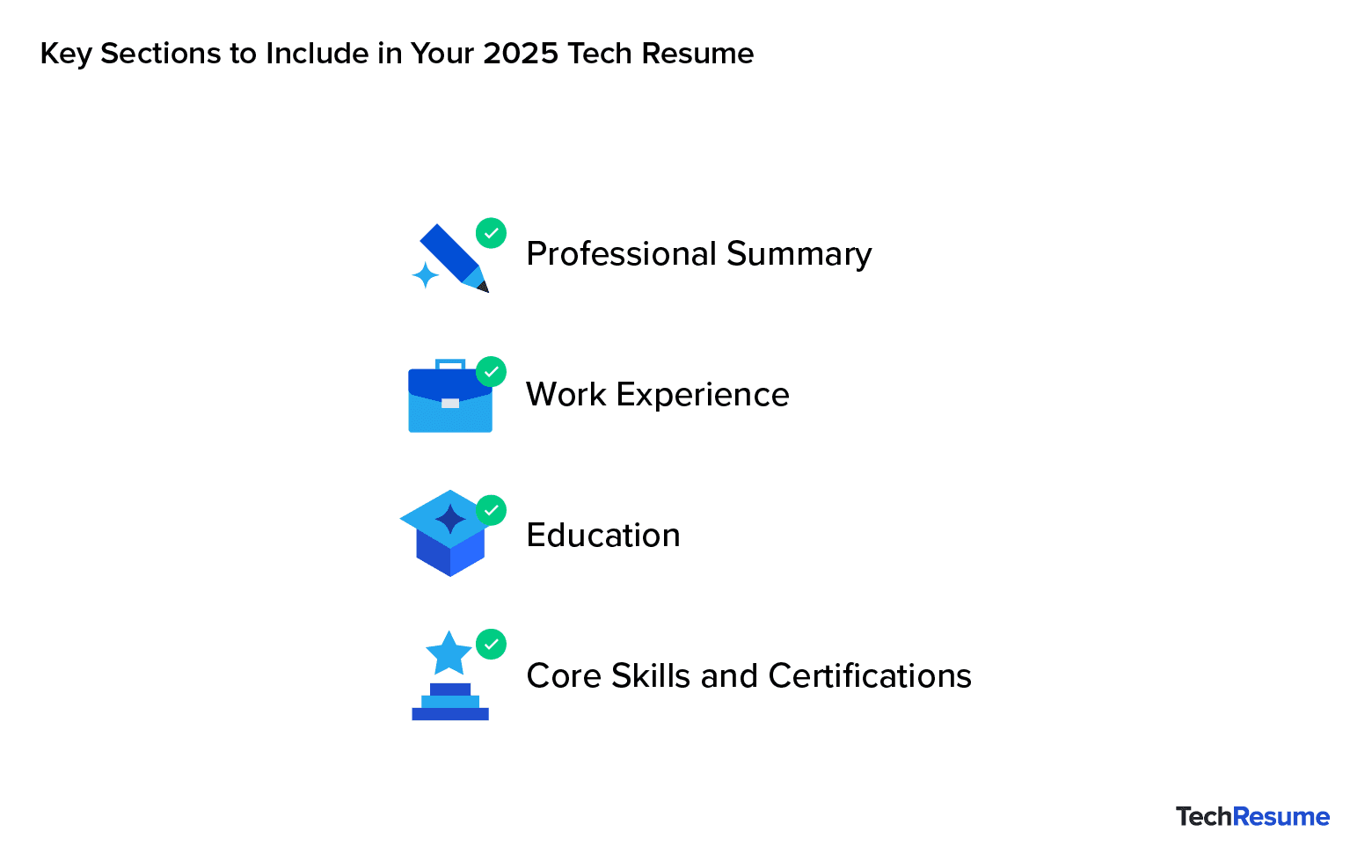
- Short paragraph summarizing your technical focus, experience level, and key differentiators
- Recommended for candidates with five or more years of experience
- Avoid buzzwords or filler language—be specific and aligned with your target role
- Don’t include detailed results or metrics—save them for the work experience section
- Include links to your GitHub and LinkedIn profiles in the header of your resume—these are now standard for technical roles, especially for developers, data scientists, and engineers.
- Use reverse-chronological order, starting with your most recent role
- Include 5-10 bullet points per role, with more for recent roles and fewer for older or less relevant ones
- Use present tense for current roles, and past tense for previous ones
- Remove irrelevant roles or those that no longer reflect your career direction
- Avoid general task lists—make each bullet result-oriented
- Include the degree name, institution, and (optionally) the year of graduation
- Keep this section short, especially if the degree is older than five years
- Include GPA only if it’s high, recent, and from a relevant program
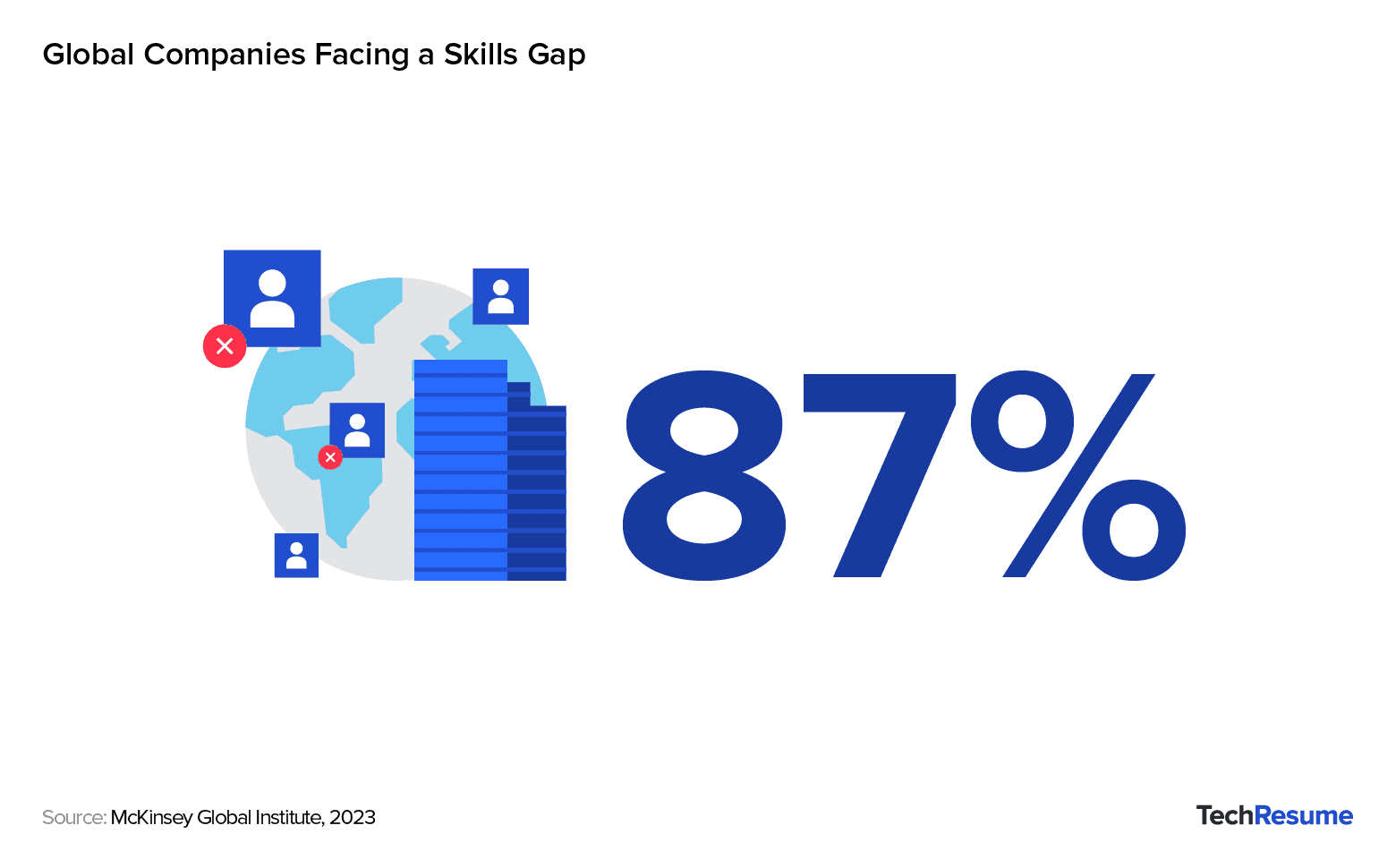
Forward-looking organizations are moving toward skills-based hiring models, as emphasized by Deloitte’s recent analysis of workforce trends. McKinsey reports that 87% of companies globally report a widening skills gap, particularly in digital and technical domains, fueling a shift away from degree-based hiring toward skills-based evaluations.
For tech professionals, this section is non-negotiable. Recruiters and ATS systems rely on it to quickly assess technical fit. List specific tools, frameworks, programming languages, and environments you’re proficient in—e.g., React, Terraform, PostgreSQL—not general terms like “web development” or “software design.”
"Your skills section is prime real estate for both ATS software and human reviewers. I often decide in 10 seconds whether to keep reading based on how clearly the tech stack is presented."
— Marisa Goldberg, Senior Director of Recruiting at Toptal
How to structure it effectively:
- List up to 20 role-relevant technical skills in a comma-separated format.
- Only include skills that are reflected elsewhere in your resume.
- Certifications can be included inline with skills or listed as a short section if necessary.
- This section also serves as a keyword hub for ATS optimization.
Use these only if they add professional value:
- Volunteer Experience & Affiliations: Keep descriptions short (1-2 lines), no bullets.
- Publications, Awards, or Professional Development: Keep entries relevant and concise.
- Personal Sections (e.g., hobbies, references): Avoid—they don’t add hiring value.
The reverse-chronological format remains the gold standard for tech resumes in 2025—and for good reason. It’s familiar to recruiters, easy for ATS software to scan, and highlights recent, relevant experience first. Unlike hybrid or functional formats, which can obscure career progression or confuse parsing systems, a straightforward chronological layout offers structure without complexity.
Modern resume formats should eliminate unnecessary sections, such as objective statements or personal hobbies. Every section should contribute professional value, whether through measurable results, technical proficiencies, or certifications.
A tech resume should ideally be no more than two pages. While senior professionals may require additional space to showcase their experience, resume length alone isn’t what recruiters prioritize. Instead of trimming important content or adjusting formatting to fit space constraints, candidates should focus on clarity, removing general descriptions, consolidating older education entries, and refining bullet points to one line where possible.
Even minor issues can disrupt ATS parsing or distract hiring managers. Follow these resume ATS format best practices to make your resume as effective—and scannable—as possible.
Formatting Do’s
- Use reverse-chronological order to highlight your most recent experience first
- Start with a concise professional summary that aligns with your target role
Formatting Dont’s
- Don’t use objective statements (e.g., “Seeking a challenging role in a growth-oriented company…”)—they’re outdated and often too generic to provide real value to recruiters or ATS systems
- Don’t list irrelevant or outdated jobs or degrees
- Don’t include personal details like a photo, hobbies, or references
- Don’t overuse technical jargon or generic buzzwords
- Don’t exceed two lines per bullet point
- Don’t change font size or spacing to cram in more content—cut instead
- Don’t use inconsistent date formats or mixed formatting styles
- Don’t use stylized layouts that may break in ATS or confuse recruiters
According to a 2025 report from Gartner, hiring managers and recruiters prioritize candidates who list specific, in-demand tech skills using the same terminology as job postings. ATS platforms are designed to scan resumes for specific ATS keywords and patterns that match the job description. If your resume doesn’t include the correct language or buries it too deep in dense paragraphs, it may be filtered out before it ever reaches a hiring manager.
Keywords include technical skills, tools, frameworks, certifications, and job titles. For tech roles, this might include languages like Python or Go, tools like Docker or Jenkins, or platforms like GCP or Azure. ATS software isn’t just looking for whether a skill is mentioned—it also considers where it appears, how often it’s used, and whether it aligns with other parts of your resume.
The most efficient way to identify keywords is to review the job description closely and note repeated terms, required tools or platforms, and the way responsibilities are framed. Then, incorporate those keywords naturally into your resume, especially within the “Core Skills” section and throughout your bullet points and summary.
The “Core Skills and Certifications” section plays a vital role in keyword optimization. It surfaces your most relevant capabilities in a concentrated, scannable format, making it easier for ATS software to pick up key qualifications quickly. Ideally, limit this list to 15–20 targeted skills that reflect your background and the role you’re applying for.
Pro Tip: For tech professionals—especially engineers and developers—highlight technical proficiency early. Include a dedicated “Core Skills” section before the “Work Experience” section so recruiters can quickly determine whether you meet the role’s technical requirements before reviewing your full background.
When it comes to tech resume trends and formatting, attention to detail and tailoring content to the role are no longer optional—they’re essential. Following proven formatting guidelines and applying the right keywords significantly improves a resume’s performance with both ATS systems and human reviewers.
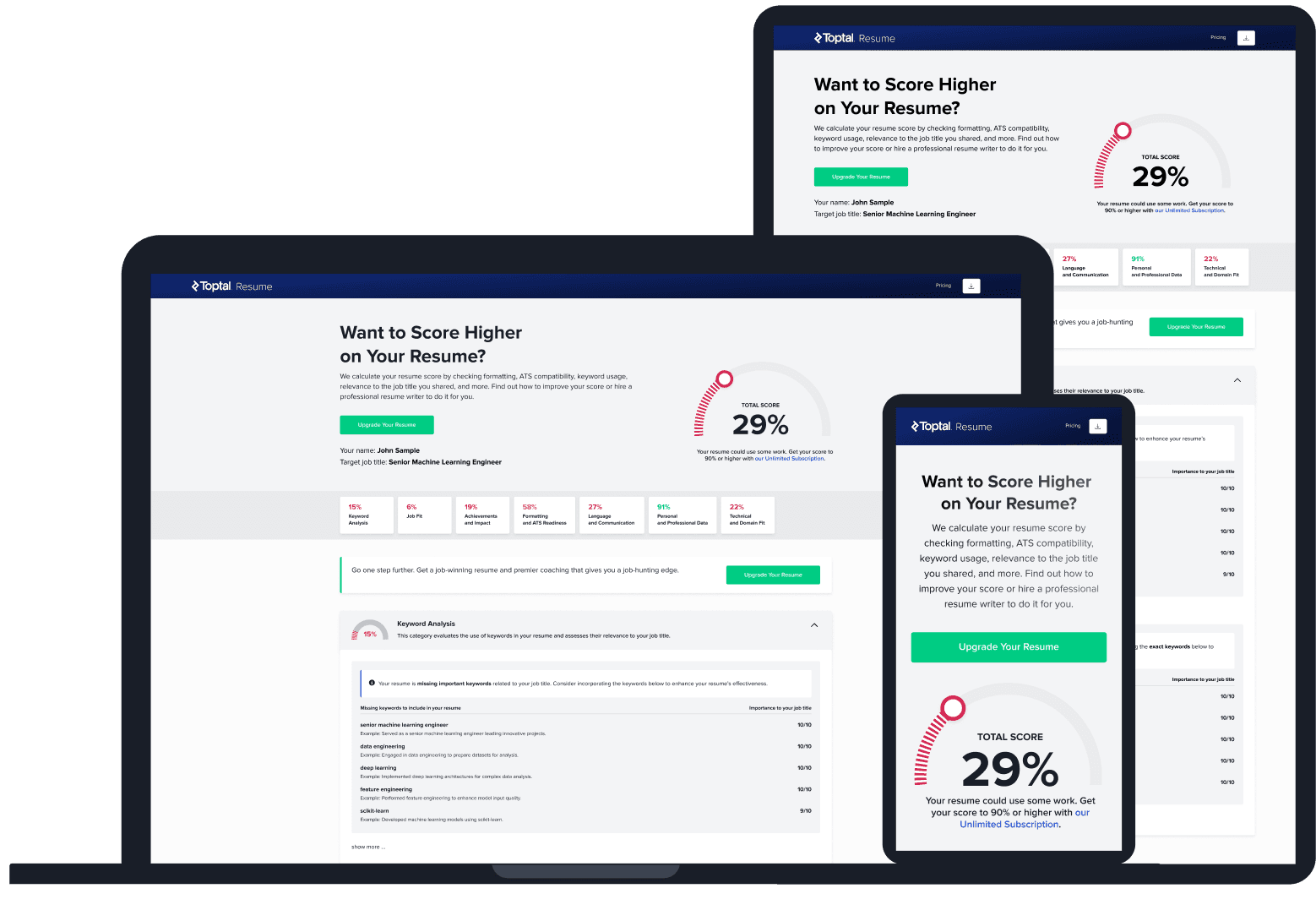
Tools like Toptal Resume’s ATS score checker can help identify exactly where a resume falls short—from missing keywords to formatting inconsistencies—so candidates can make targeted improvements. These adjustments ultimately increase the resume’s chances of passing ATS filters and progressing in the tech hiring process.