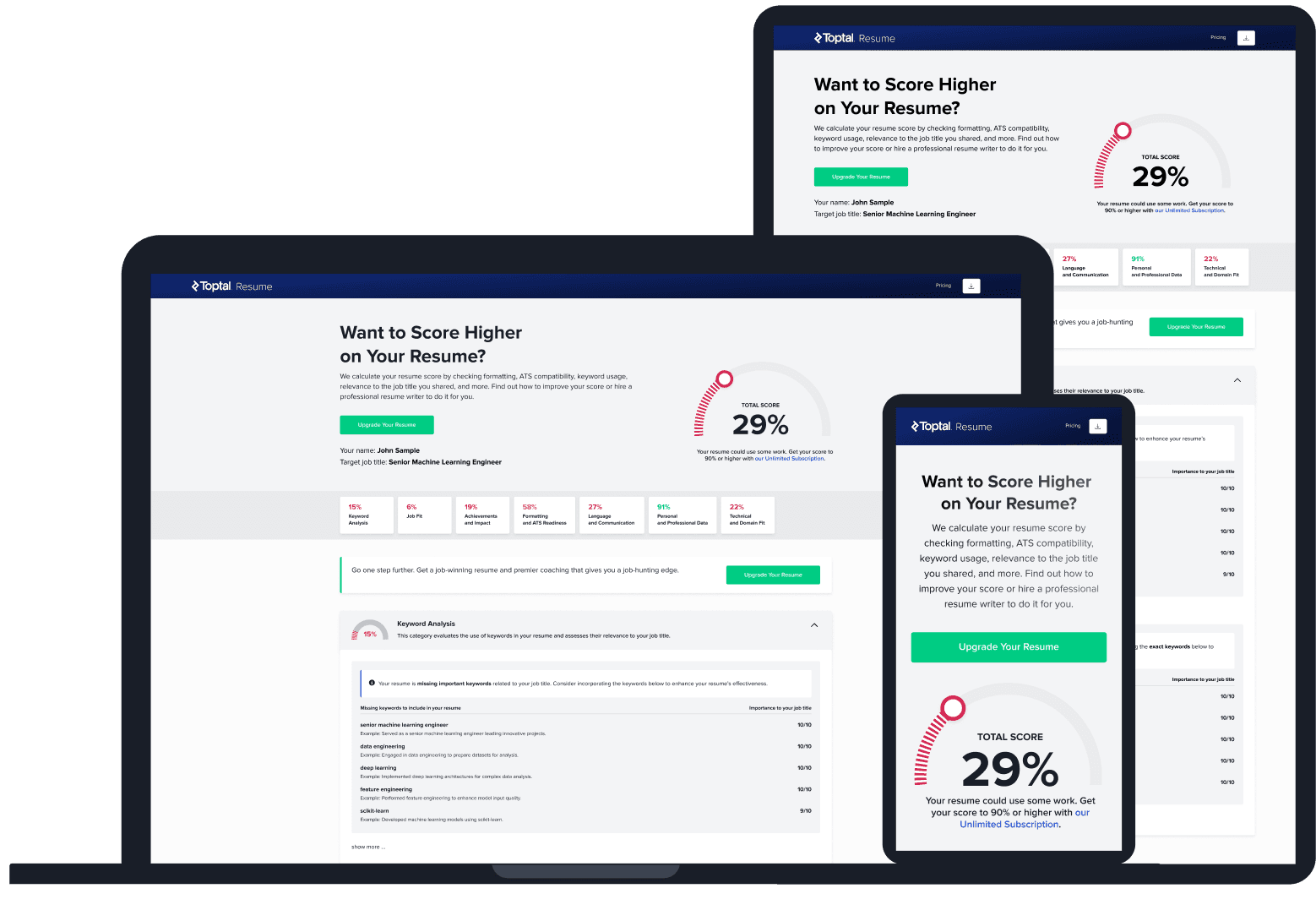
One of the biggest frustrations for job seekers is being overlooked before they even have a chance to interview. The reason often lies with Applicant Tracking Systems (ATS), the software that screens and sorts resumes at scale.
These systems are designed to help employers efficiently manage high volumes of applications. However, they often filter out resumes based on formatting inconsistencies, missing keywords, or structural issues, regardless of the candidate’s actual qualifications.
For tech applicants, this means that even a well-crafted resume may never reach a tech recruiter’s desk. ATS platforms act as digital gatekeepers, scanning and ranking submissions to identify the most relevant tech candidates. While this process streamlines tech recruitment for employers, it creates a significant challenge for applicants trying to stand out with their tech resume.
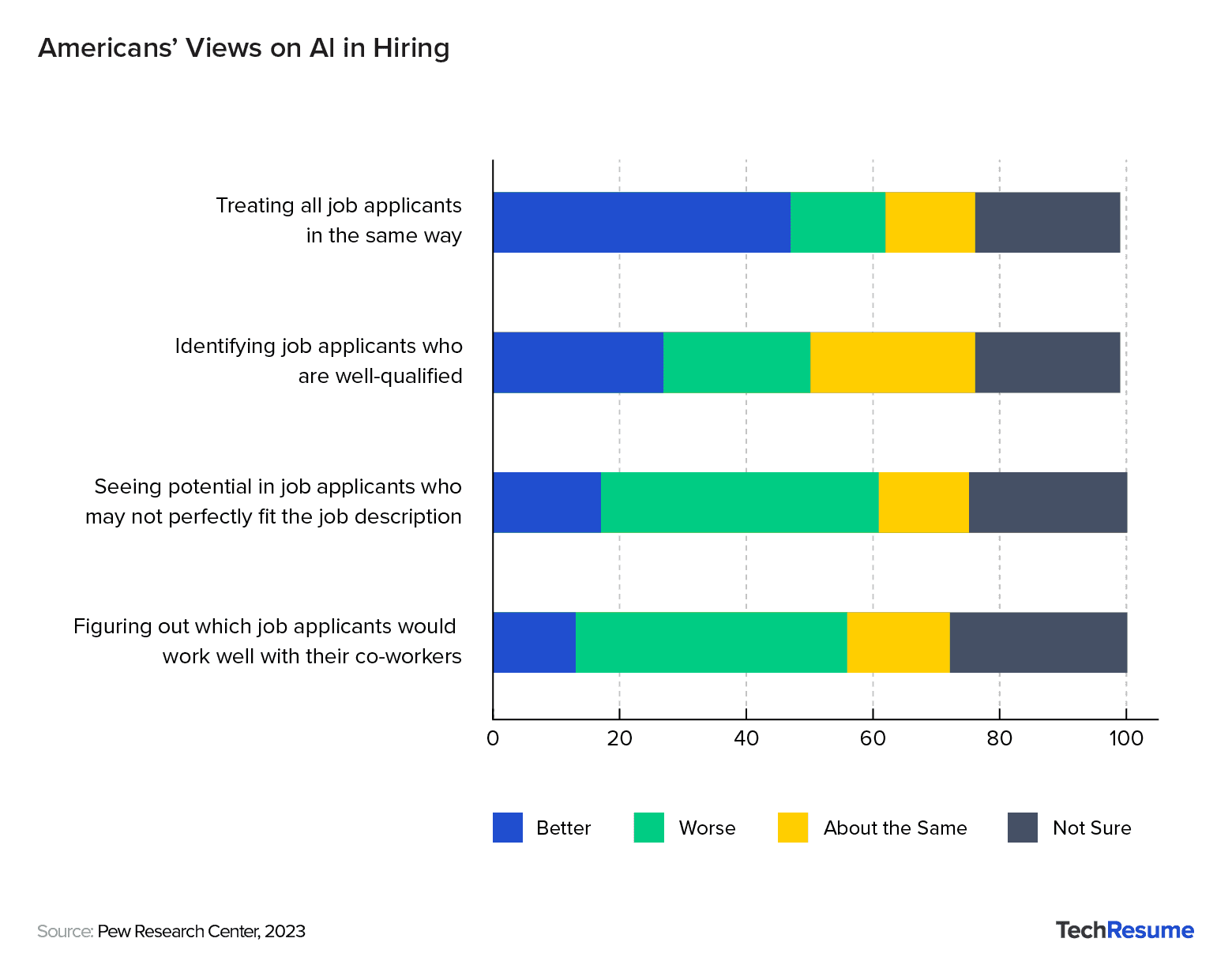
A 2023 Pew Research Center study highlights the growing impact of this shift. Nearly half of Americans (47%) believe AI would do a better job than humans at treating all job applicants equally, though far fewer think AI is better at spotting potential or evaluating cultural fit. This underscores both the cautious trust in algorithmic screening and the importance of optimizing resumes so they perform well in these systems.
Fortunately, the rise of ATS resume checkers (also known as ATS score checkers) is helping to address this issue. These tools provide tech job seekers with actionable insights by analyzing resumes against ATS algorithms and highlighting areas for improvement, thus increasing the likelihood of passing the initial screening.
This guide will explore what an ATS resume checker is, how it works, and how you can use these resume score checkers to improve your ATS resume score, helping you create an ATS-friendly resume that not only clears the initial filters but also stands out to tech recruiters.
An ATS resume checker evaluates your tech resume based on how well it aligns with the job description, starting with keyword relevance. It scans your resume for specific terms and phrases that match the role’s requirements, mimicking how Applicant Tracking Systems prioritize keyword density to determine candidate suitability. If your tech resume lacks the necessary keywords, it may never make it into the hands of a tech hiring manager.
Equally important is formatting—clean, machine-readable layouts are essential. Overly complex resumes with extraneous graphics, columns, or unconventional headers can confuse the system, resulting in parsing errors and a lower score.
Beyond keywords and formatting, the resume checker also assesses overall job fit by looking at the context of your experience. Instead of only checking for the presence of specific terms, it analyzes how your technical skills, project outcomes, and career progression align with the role’s seniority level and responsibilities.
For example, listing “Python” as a keyword shows a skill match, but demonstrating “5 years of experience leading Python-based automation projects” signals a stronger fit for a senior engineering role.
It also reviews whether your listed achievements tie directly to the responsibilities of the target job (e.g., improving system scalability or leading agile sprints). This kind of contextual analysis ensures that your resume demonstrates not only the right keywords but also the right depth and relevance of experience. A well-optimized tech resume that meets both keyword and contextual fit criteria is far more likely to pass ATS filters and make a strong impression during the brief window of human review.
“Using an ATS resume checker can really mean the difference between your resume getting noticed or getting overlooked. A good resume checker helps spot missing keywords, formatting glitches, and other issues that might stop your resume from reaching the right people. When candidates take the time to run their resume through one before applying, they’re giving themselves a much better shot at getting seen by hiring teams.”
— Marisa Goldberg, Senior Director of Recruiting at Toptal
Generic resumes often score poorly because they lack the targeted language and structure that ATS systems prioritize. By customizing your tech resume for each role (aligning your skills, experience, and achievements with the specific job description), you significantly boost your ATS score and your chances of advancing to the next stage.
ATS scores are a useful barometer for how your resume will fare during the ATS filtration process. Remember, even after passing through ATS filters, your resume still faces the human test–and higher-scoring resumes are more likely to rank at the top of recruiter searches. Most recruiters use ATS platforms to search for candidates using specific keywords and filters. A resume with a high ATS score is more likely to appear in those search results, increasing visibility and improving your chances of landing an interview.
Harvard Business Review reports that recruiters often spend less than 10 seconds scanning a resume before deciding whether to move a candidate forward. This makes optimizing for both ATS compatibility and human readability equally essential.
“Think of an ATS resume checker as an easy way to see your resume through a recruiter’s lens. It gives you insight into what might be missing, so you can make edits before you apply.”
— Marisa Goldberg, Senior Director of Recruiting at Toptal
The ATS scoring process is a multi-step journey. While the process may seem intimidating, understanding the fundamentals can help you master the system.
Begin by uploading your resume (ideally a PDF or Word document) and the job description you're applying for. A good ATS resume checker requires both pieces of information because its analysis is highly contextual.
The same tech resume could receive a high ATS score for a "Senior Software Engineer" role at one company but a low score for a "Technical Team Lead" position at another, based entirely on the targeted keywords and requirements of each job description.
Content Extraction and Parsing
Once you've provided the necessary documents, the system gets to work. It uses advanced algorithms to extract the text from your tech resume, meticulously parsing each section to identify your name, contact information, work history, skills, and education. This process mimics how a real ATS reads and organizes your data.
This is where the magic happens. After parsing your tech resume and job description, the ATS resume checker algorithm cross-references the extracted information with the job description. It assigns a resume score based on a weighted analysis of several factors that are meant to rate the alignment of your work history and skills to the role you are applying for, including:
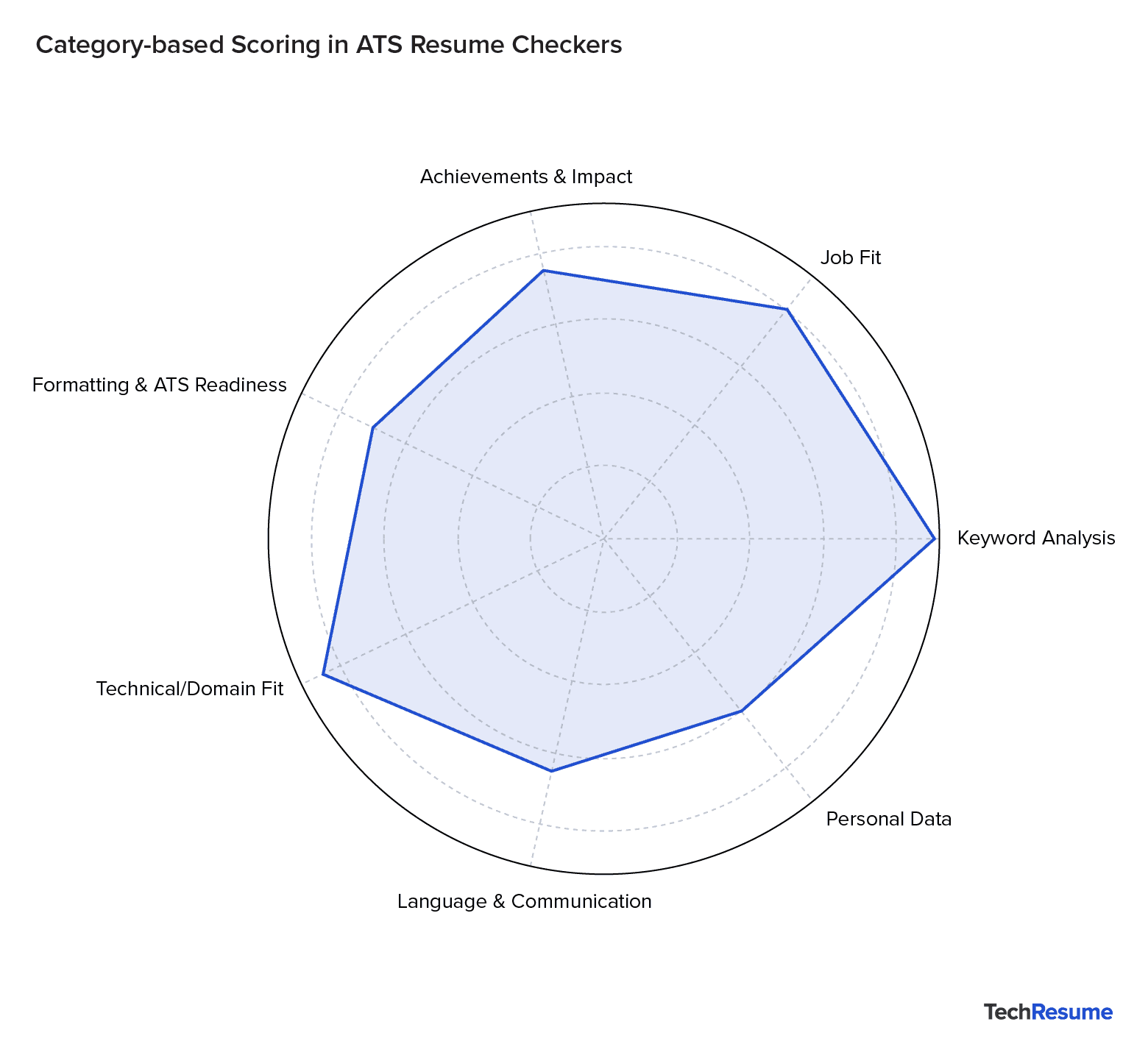
The final ATS score is a numerical representation of how well your resume is optimized to pass the initial screening. But it’s more than just a number; it’s a strategic insight into your resume’s readiness for real-world hiring systems. A strong resume score indicates that your resume is aligned with the job description, formatted for machine readability, and contains the right mix of keywords, achievements, and technical relevance.
For candidates, the ATS score serves as a benchmark for the relevance of their resume. Many interpret it as a direct reflection of their chances of making it past the digital gatekeeper and into the hands of a recruiter. A high ATS score can boost confidence, while a low resume score offers a clear roadmap for improvement.
Instead of having to guess what might be wrong, candidates receive targeted feedback that helps them refine their tech resume with precision, whether it’s adding missing skills, restructuring formatting, or improving clarity and tone.
This feedback loop is especially valuable in competitive job markets, where even minor optimizations can make a big difference. By understanding how their resume performs against ATS filters, tech candidates gain a tactical advantage: they can tailor their applications to specific tech roles, increase their visibility, and reduce the risk of being overlooked due to technical mismatches or formatting issues.
Moreover, ATS resume checkers help job seekers develop better resume-writing habits over time. They learn to think like recruiters and systems, prioritizing clarity, relevance, and impact. This not only improves their chances of landing interviews but also enhances their overall professional presentation across platforms like LinkedIn, GitHub, and personal portfolios.
Pro Tip: Treat the ATS score as guidance, not a measure of perfection. Focus on improvement areas rather than chasing a “100% match”.
Many common tech resume mistakes have little to do with your qualifications and everything to do with how you've presented them. SHRM reports that many qualified candidates are rejected by ATS platforms simply because their resumes don’t contain the exact keywords listed in job descriptions, even when they have the necessary skills to succeed.
An ATS score checker is an excellent tool for catching these errors:
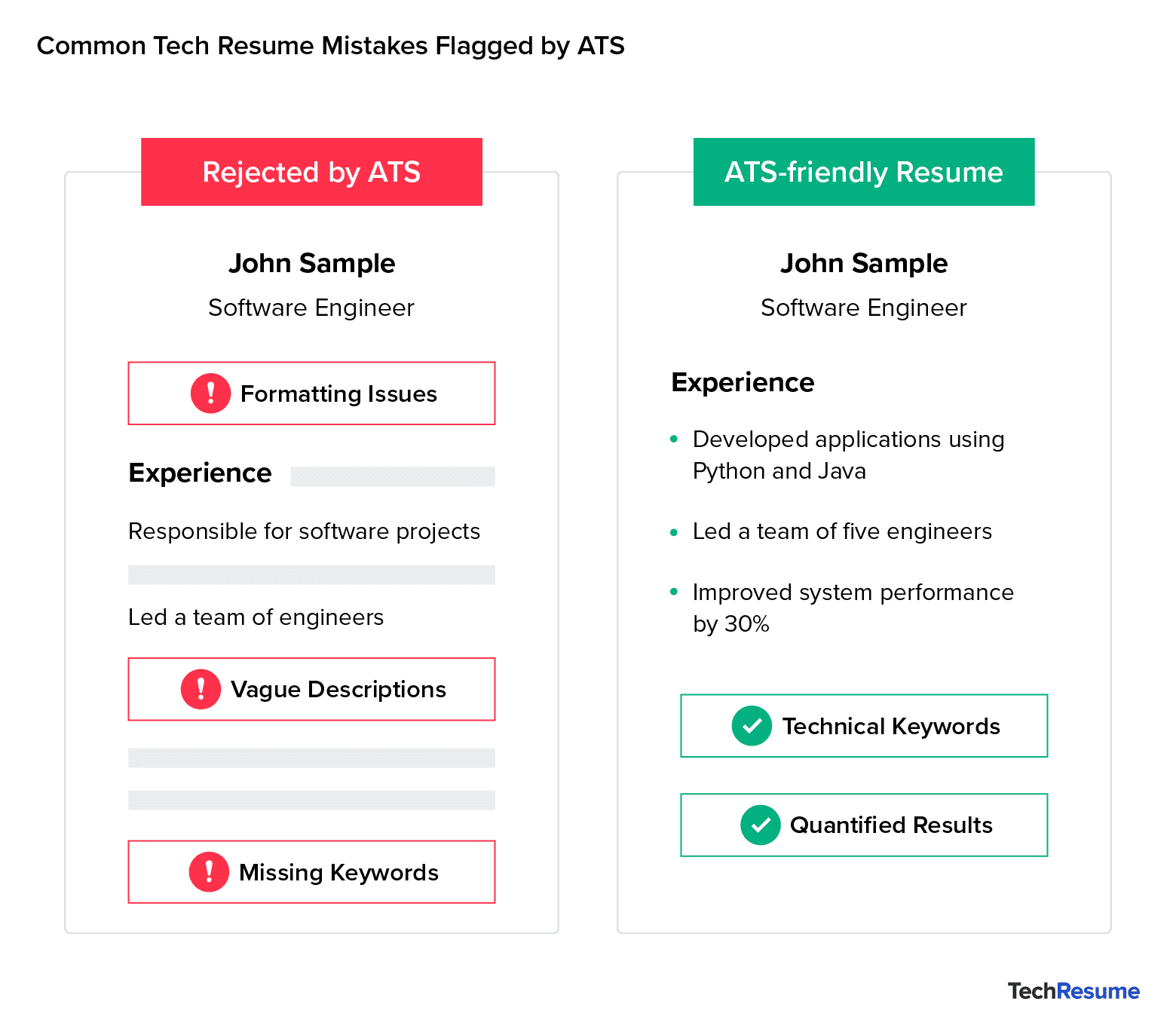
- Formatting Issues: A significant percentage of resumes are rejected by an ATS due to simple formatting errors. This includes using complex tables, graphics, or columns that the system cannot parse.
- Missing Keywords: Leaving out critical keywords from the job description is a surefire way to get a low score.
- : While keywords are essential, unnaturally overusing them can also get your tech resume flagged. The system is smart enough to detect this tactic.
Using an ATS score checker is an iterative process. It's not a one-and-done solution, but rather a powerful feedback loop to help you perfect your resume.
Begin by uploading your resume and the job description. The checker will give you an initial resume score and highlight areas for improvement, such as missing keywords and formatting issues.
Use the resume checker’s feedback to make targeted changes. Add quantifiable achievements to your work experience, adjust your wording to naturally incorporate technical keywords—like programming languages, frameworks, and tools—and simplify your layout to a single-column format.
As Harvard Business Review notes, employers increasingly use AI to screen resumes, and candidates need to align their applications with the exact keywords and skills listed in job descriptions. Using the same language that companies highlight makes it more likely your tech resume will pass AI filters and reach a tech recruiter.
After making your revisions, run your tech resume through the ATS checker again to see if your score has improved. You may need to repeat this process several times, tweaking your resume each time to maximize your resume score. The goal is to strike a balance between ATS optimization and readability for human recruiters, who will ultimately review your resume.
Whether you use a simple resume ATS checker or a more advanced ATS score tool, the objective is the same: refine your tech resume until it balances optimization and readability.
Pro Tip: Always keep a “master resume”—tailor each version to the job using the resume checker before submitting.
Before you hit “submit,” run through this final checklist to ensure your tech resume is ready for both ATS and the tech recruiter:
- Format: Your tech resume is in a single-column, clean format, preferably a PDF or simple Word document.
- Keywords: You’ve included role-relevant technical keywords from the job description, such as cloud platforms, programming languages, or security certifications.
- Quantified Achievements: Your tech accomplishments are supported by quantifiable data and metrics.
- Cleanliness: There are no graphics, images, or unnecessary tables.
- Score: Your resume score has improved after your revisions.
Running your tech resume through an ATS resume score checker at this stage ensures that you’ve addressed formatting, keywords, and clarity before applying.
An ATS score checker is a powerful tool, but it’s only one step in the job search process. Your ultimate goal is a resume that speaks to both a machine and a human.
If you’re searching for a free ATS score checker online, Toptal Resume’s ATS score checker helps you quickly identify formatting issues, missing keywords, and other factors that could hold your application back. Test your resume now with Toptal Resume’s free ATS score checker and see how close you are to landing your next tech interview.