Get Your Resume Now
Our AI resume builder creates strong resumes with ATS-friendly templates.
A range of 2 to 5 tailored applications on the days you search is a solid starting point. Here's how to adjust it to your time and situation, with a sample routine.

AUTHOR
Borislav Stojkov
Principal Resume Writer
Borislav Stojkov is a Principal Resume Writer at Toptal Resume. His professional track record includes personally reviewing and rewriting more than 2,000 resumes for professionals across industries. In his direct work with clients and the development of AI-based resume-writing services, he focuses on ATS-optimized structure, modern template design, and recruiter-aligned writing and formatting standards.
Sending 2 to 5 applications a day is a good, realistic approach, but the exact number should always be adjusted to your specific situation to achieve optimal results. This range is the most common one you'll find online, but the advice in this guide and the reasoning for why it's practical and advisable are based on context from real numbers and backed by experience working with job applications and candidates.
It's not only a question of how many jobs to apply for per day, but how many tailored applications you should and can send out. Focusing solely on the number, regardless of quality, will likely make the whole journey longer, and we'll show you how to take a more strategic approach.
Also, the range applies to a full-time search, which not everyone can afford, so you should set your own target. Although looking for a job is a full-time job, it doesn't just include submitting applications, but also follow-ups, screening questions, networking, and so on. Before setting your target to two, three, or five applications a day, let's see what's behind the plain numbers.
Although there’s no single number, a few well-tailored applications on the days you search are a useful starting point. In addition to our hiring experience, the data gathered and analyzed in this section contextualize the initial recommendation to send 2 to 5 applications per day, depending on the time available and how quickly you can go. Matching an application can take from a half to a full hour, and people spend 1 to 3 hours on their job hunt.
The need to balance quantity and quality is clear: volume is necessary, as a successful search involves sending many applications to land a few interviews, while generic applications easily disappear in the era of AI writing and AI applying. Before diving into hard numbers, the table below helps you map out your situation, expectations, and targets.
| Your Situation | Trends/Conditions | What It Means for You |
|---|---|---|
| Searching full-time | More time for job search, but it tends to last for months. | A higher daily number is more realistic, but save time for tailoring and breaks. |
| Searching while employed | Less time and energy for job search. | Send fewer, highly matching applications and set a daily time for applying. |
| Early career | Younger job seekers tend to send more applications, but the search is shorter. | Expect to send more and keep a main resume version that you can adapt quickly. |
| Specialized or tech roles | Longest searches with more applications reported. | Be ready for a longer search and focus on best-matched roles. |
According to the United Way NCA's 2026 survey of 1,000 U.S. job seekers, the average search lasted about 6.6 months, with applicants submitting about 63 applications and landing about 5 interviews. What's more practically significant for our question about how many jobs to apply for per day are the findings that an application took about 44 minutes on average and that most people spend 1 to 3 hours a day job hunting (on the days they search). About two in three applications got no response at all.
As we mentioned earlier, the situation isn't the same for everyone, which is one reason you should adjust the goals to suit your own. By age, as reported in the same survey, the youngest job seekers sent out the most applications (about 76) and had the shortest search. By industry, tech job seekers submitted the most applications (104) and searched for 9.7 months. It's the longest of any industry, and U.S. Bureau of Labor Statistics data for October 2026 show a similar pattern, with the information industry having the longest median unemployment duration.
On the employer side, we have significant data from Ashby, an applicant tracking software company that analyzed about 109 million applications on its platform. Their 2026 Talent Trends Report shows that each application is roughly half as likely to lead to an interview compared to five years ago, and that rate is lower for technical roles (3.6% compared to 4.7% for business roles). The report also presents another important finding: the number of applications per hire roughly tripled over the last five years, and many talent teams report that AI-generated applications submitted by automated tools have risen. This raises another important question that this guide will address: how to use AI in your job search to balance quality and quantity.
What all these numbers suggest is that it's a numbers game, but you have to play it smartly. It's reasonable to advise sending out as many as you can, but be prepared for silence, as employers now receive far more applications than before and a smaller share of applications ends in an interview than before. That also means that you should strengthen your applications, and one of the best ways to do so is to tailor them for each job.
Finally, the research data indicates what people do, and not necessarily what they should do. The averages aren’t recommended targets, but pieces of information that can help you design your own strategy.
It's reasonable to assume that sending out more applications per day will increase your odds of landing an interview, but there are risks to it. If you reduce the time spent on a single application too much, it may lead to applying to many low-fit jobs or sending out resumes that aren't tailored for the role you're applying for. So, it doesn't come down to sending many applications daily, but to sending as many strong ones as you can. In short, the key is job matching and resume tailoring.
While job hunting, candidates often put a lot of pressure on themselves and end up feeling exhausted. Instead of asking, "How many jobs should I apply to a day?" ask, "How many strong applications can I send out a day?" Finding the right balance between quantity and quality without burning out is key.
Inge Miscevic, Principal Career Coach, Toptal Resume
In our complete guide on resume tailoring, we've proposed an efficient method for resume tailoring that you can apply in your daily routine. Before you start editing your resume, you should carefully read the job requirements to assess your fit for the job to avoid wasting your time on an application that is unlikely to be a success. Winning in the numbers game isn't just increasing the number of cards, but playing with strong ones.
Before raising your targets on how many job applications you should submit per day, consider this quick checklist that can explain a response rate that is lower than you expected:
As noted earlier, searching for a job doesn't include only the time from seeing a job posting to submitting your resume. In the sections that follow, we'll help you create a daily job-search routine to optimize your efforts.
As research confirms, many job seekers feel that applying for jobs is a full-time job (67% of respondents in the United Way report mentioned). As every productive working day should be carefully planned to achieve efficiency and avoid burnout, the following sections offer a proposed application block you can adjust to structure your application day. It's a starting point for you to adapt, and each action can vary depending on how much time you can invest, whether you have a strong base resume, or whether you use additional resume and job-search tools in the process.
Before elaborating on each step, the following table summarizes a proposed "application hour."
| Step | Time | What to Do |
|---|---|---|
| Read and map | 15 min | Analyze the job description and map the requirements (skills, experience, expected outcomes). |
| Tailor | 30 min | Tailor your resume to demonstrate your job fit (adjust the summary, a few bullets, the skills section). |
| Apply and track | 5 min | Log the application in a sheet, including the date, company, role, resume used, and follow-up date. |
| Buffer | 10 min | Take a break, or, if early in the application day, use it for follow-ups. |
Using the hourly blocks, your application day can be structured as follows:
| Applications Submitted | Time Needed | What It Includes |
|---|---|---|
| 1 | About 1 hour | One block + follow-ups |
| 2 | About 2 hours | Two blocks, one break, optional follow-ups |
| 3 | About 3 hours | Three blocks, two breaks, optional follow-ups |
| 5 | About 5 hours | A full job-search day (can be split between morning and afternoon) |
The initial step in any job application is reading the job description and the requirements listed in the posting carefully. Your job here is to determine two things: whether they match your experience and skills, and, if the answer is yes, whether your resume clearly demonstrates the fit. To be sure about both, you can use an ATS resume checker to map out what's expected and what you have quickly.
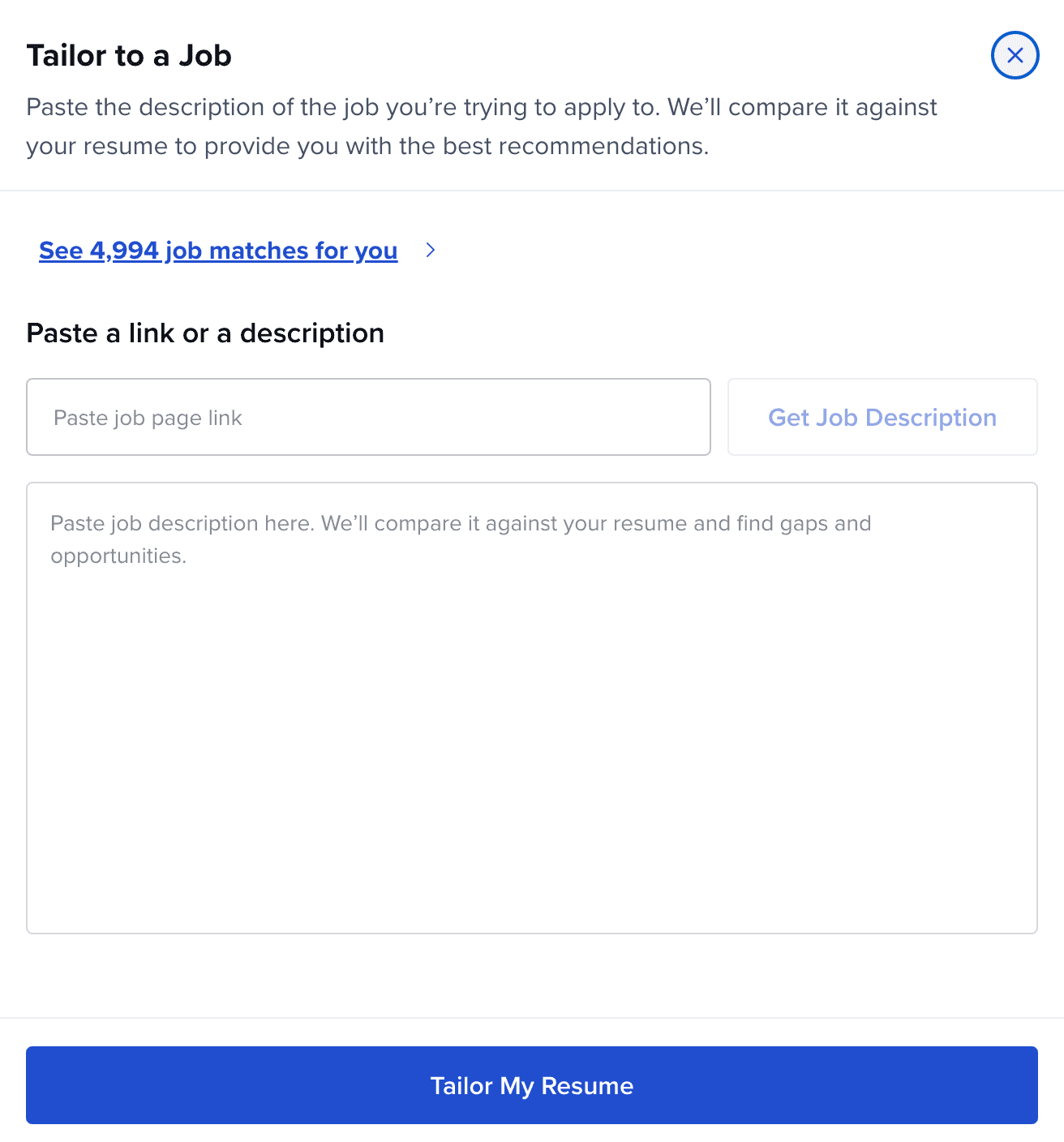
The second step, as already mentioned, is the most important one: tailoring your resume to the target role. The tailoring pass we suggest, and that could become a part of your daily routine, typically includes adapting the professional summary to the specific role, reordering and reframing a few of the most important bullet points, and creating a curated skills section. In our experience, the proposed 30 minutes should be enough for this step.
There are quite a few tools available to help you speed up the process. Toptal Resume's AI resume builder, besides helping you create your resume from scratch or generally improve your current one to match your target role better, also includes a resume tailoring feature against a specific job posting. It analyzes the job description against your resume and provides tailored suggestions for each section.
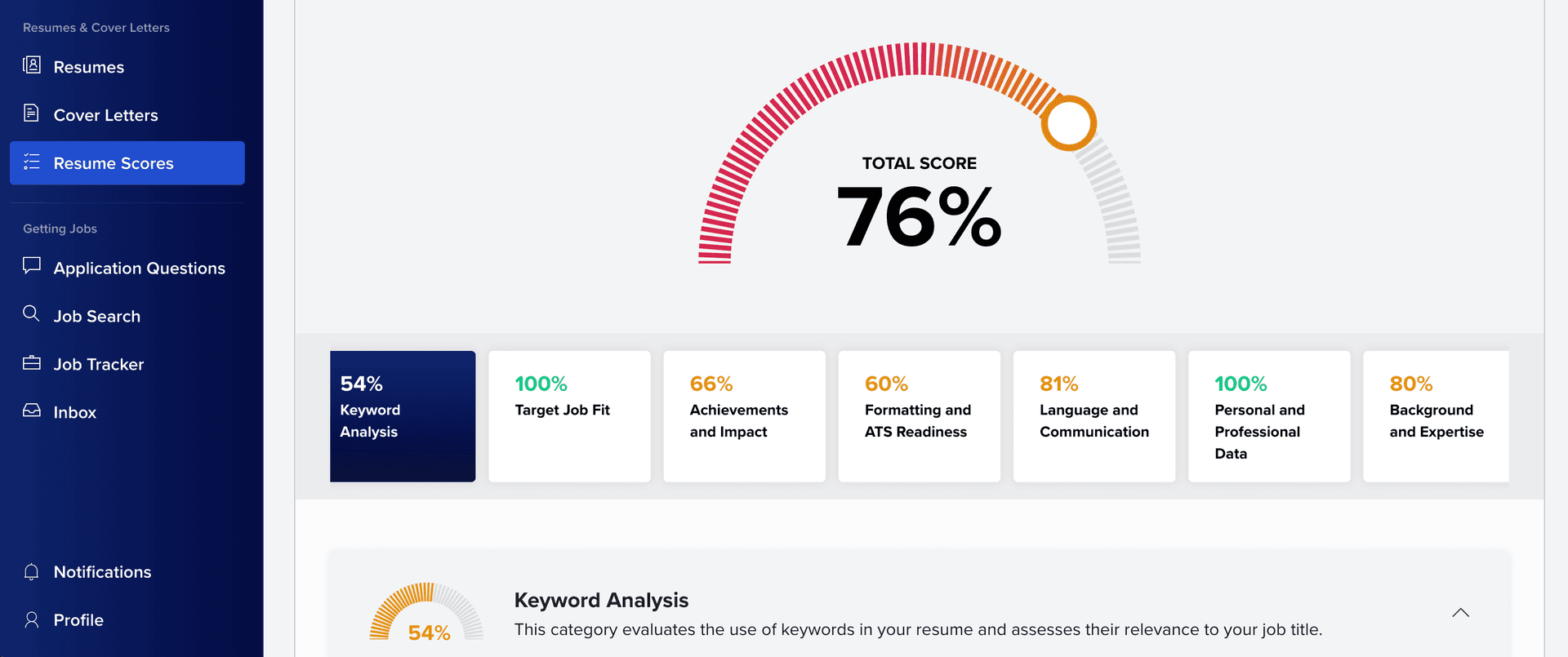
Once you've tailored your resume for the application you’re working on, you can run it again through Toptal Resume's ATS resume checker within the same platform to confirm you've done a good job before you apply.
Applying for jobs has changed with the rise of AI, just as every other aspect of our lives has. According to a Gartner survey of 3,290 job candidates, four in ten (39%) used AI during the application process, most often to generate text for their resume (54% of those who used AI) and cover letter (50%). In addition to resume writing tools, there are many AI tools that not only help you track your applications but also allow AI to apply for jobs on your behalf.
As is the case with all the other AI-supported uses, the decisive point is how you use the AI. It's reasonable to assume that sending out dozens of automated applications a day uncritically will lead nowhere. That is why the Toptal Resume platform combines job search and AI application steps with resume building and tailoring in a single platform. This way, you still steer the entire process, while the tools do the heavy lifting. The table below shows how each aspect of the platform facilitates the steps you follow in your job application routine.
| Application Step | How Toptal Resume’s Tools Help |
|---|---|
| Read and map | In addition to the built-in ATS resume checker, the job search feature in the platform offers job postings that match your resume, and you apply directly from your account. |
| Tailor | You can tailor your resume to any job posting listed in the platform, or you can use those found elsewhere to adapt your resume. |
| Apply and track | The Auto Apply feature gathers screening questions for you to answer as needed, submits the application, and logs application details in the job tracker in your account. |
When using automated application tools, set the search filters for the roles you're targeting, the locations (or remote vs. hybrid work), or salaries offered, so the tool doesn't send applications to jobs you wouldn't want. Also, many such tools can struggle with eligibility questions, such as work authorization, required licenses, and other screening criteria.
Tracking your applications is an essential part of your job application process. It not only helps you avoid duplicate applications but also helps you figure out what works in your applications and how to time your follow-ups. Every item in your tracking sheet should include the date, company, role, resume used, and follow-up date. As shown in the image below, the applications you send through Toptal Resume are automatically tracked in your account, including all necessary data.
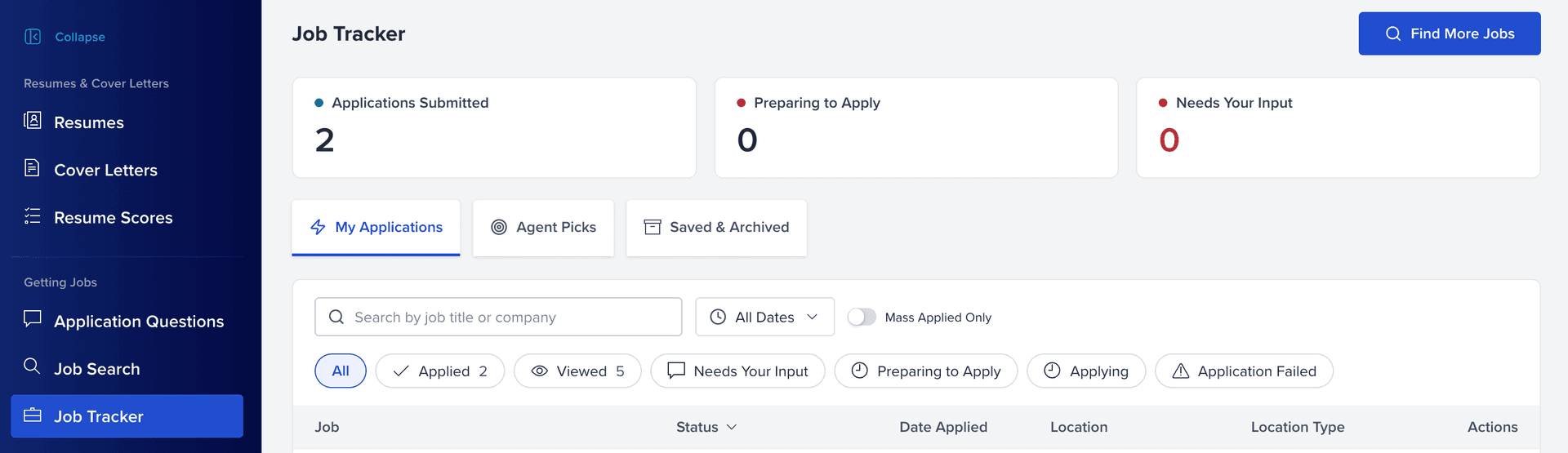
Your progress measurement should also include whether you received a reply or were invited to an interview, so you can have the full picture and adjust your targets accordingly.
Your work doesn't end with submitting your resume. Although following up after sending your applications might feel invasive to some job seekers, we recommend keeping this step in your job application routine for a few reasons: besides showing initiative, it keeps you on the recruiter's radar and helps you stand out among other candidates.
That said, it has to be well-timed, addressed to the right person, and meaningful rather than generic. For more details, read our complete guide on when and how to follow up after applying for a job.
Another important job search strategy is networking, and one of the most common ways to do that is by building your LinkedIn presence. In addition to establishing connections with other professionals in your field, it can help you get noticed even without applying or stay visible between job searches. You can also use your LinkedIn profile to reach out to recruiters after submitting a job application.
So, the answer to the question “how many jobs should I apply to per day?” depends on how many strong, tailored applications you can fit into your schedule, and one well-thought-out and executed application can be more efficient than a dozen poor ones. In an era when job searching requires greater volume, the key is to find a way to avoid increasing quantity at the expense of quality. Apply to jobs that are a strong fit, always tailor your resume for each application, and track your work.
Define your job application routine and be consistent and patient. To speed up the time required for each application, you can take advantage of AI-based tools, but always be on top of what you do to avoid sending many low-fit applications that are less likely to lead to an interview. Toptal's resume and job-search platform can help you create tailored applications and keep track of your job search in one place.
Use our resume builder to create a resume that highlights your experience and achievements. Our AI resume builder will write bullet points for you and give you recommendations for how to make your summary stronger. Start now.
Read Next
Interview Prep
From ATS to Interview: Ensuring Your Resume Passes Automated Screening
Most resumes get screened out before a recruiter sees them. Learn the ATS-friendly formatting techniques that get your resume noticed.

By Audrey Goodson Kingo
Career Expert
Audrey Goodson Kingo is a book author and a renowned journalist covering careers and HR. She has advised insurance giant Aon on work-life balance and shared her expertise with CNN, Good Morning America, MSN, and more.
Job Market Trends
The Perfect Tech Resume in 2027: Key Trends, ATS Keywords, and Formatting Tips
A standout tech resume meets modern ATS standards. Explore proven formatting tips, ATS keywords, and 2027 trends to land your next interview.

By Tracie Close
Job Search & Career Strategist
Tracie Close is a job search and career strategist specializing in job search optimization, resume writing, and employer branding. With more than 16 years of experience supporting recruiters, HR teams, and job seekers, she brings deep insights into hiring practices and applicant tracking systems (ATS). She holds a Bachelor of Arts in Communications and Writing Arts from Rowan University and has led digital strategy projects for global tech firms.
Tools & Services
Resume Checker vs. ATS Score Checker: What’s the Difference?
Not all resume tools serve the same purpose. Learn the difference between a resume checker and an ATS score checker to reach the right recruiters.
By Audrey Goodson Kingo
Career Expert
Audrey Goodson Kingo is a book author and a renowned journalist covering careers and HR. She has advised insurance giant Aon on work-life balance and shared her expertise with CNN, Good Morning America, MSN, and more.