
8 Critical Soft Skills Every Developer Should Have
In a work environment increasingly driven by artificial intelligence, engineering “soft skills” have become a more important hiring focus. Human judgment is essential in new specializations like prompt engineering and machine learning. Empathy, critical thinking, and communication abilities are also necessary for managing the ethical risks of Al.

In a work environment increasingly driven by artificial intelligence, engineering “soft skills” have become a more important hiring focus. Human judgment is essential in new specializations like prompt engineering and machine learning. Empathy, critical thinking, and communication abilities are also necessary for managing the ethical risks of Al.

Sandra Petrova
Sandra is a Senior Content Editor, particularly interested in the future of work. Her most valuable talent is searching under every rock to discover important information which she incorporates into well-written, insightful posts. When she’s not typing in Google Docs, you can find her reading a fantasy novel, binging on Netflix, or watering her plants.
In a work environment increasingly driven by artificial intelligence, engineering “soft skills” have become a more important hiring focus. Human judgment is essential in new specializations like prompt engineering and machine learning. Empathy, critical thinking, and communication abilities are also necessary for managing the ethical risks of Al.
For example the ability to program software is a hard skill, while friendly cooperation with all stakeholders on the team is a soft skill.
Below is a list of the most important soft skills for software developers. It also includes a detailed explanation of those skills and how they can make a programmer a perfect fit for your software company.
Table of Contents
- Problem-solving skills and critical thinking
- Communication skills
- People and interpersonal skills
- Self-awareness
- Self-learning
- Accountability
- Time management
- Emotional intelligence
- Conclusion
Problem-solving Skills and Critical Thinking
If you take a step back and look at software development skills from a broader perspective, you’ll realize that it really is about solving complex problems.
It’s about designing operating systems, maintaining bookkeeping software systems, or fixing bugs.
Sooner or later in their careers, software developers will come across a complex issue.
How a developer handles a problem will affect your company and the project they’re working on.
If you’re putting together an engineering team, look for developers who can challenge themselves to solve a complex problem, as one of the crucial programmer soft skills. Ones who motivate themselves to think creatively and come up with unorthodox approaches.
Critical thinkers will understand that the problem they’re facing could have solutions that aren’t immediately obvious. They’ll assess alternative solutions and proceed with the best choice for the project.

Communication Skills
Whether a developer has a full-time role or works remotely, they should be able to communicate efficiently with other people. Other people include users, project managers, or team members.
If your company allows remote work, ensure that the developer has strong speaking skills for explaining concepts to various project stakeholders and presenting information during meetings. They should understand how to communicate well with people of all backgrounds and cultures.
It’s also important for a developer to understand that what they say and how they say it can have an impact on how people feel about them.
For example, let’s say that a developer disagrees with how their client wants to proceed with a certain project.
Instead of saying: “I am the developer, and this is how I do things”, they should try to acknowledge the client’s idea but suggest a better way of doing things in a polite and professional way.
They might say: “Based on my experience, I think we can implement your idea in a better way.”
And it doesn’t mean that they only have to have good spoken communication skills. We live in a world of Slack, email, and instant messaging, so developer soft skills regarding communication address online communication as well.
Developers often need to interact through writing, and written communication abilities are an important soft skill for programmers. They should be able to share their thoughts, opinions, ideas, or written reports in clear, well-written language.
People and Interpersonal Skills
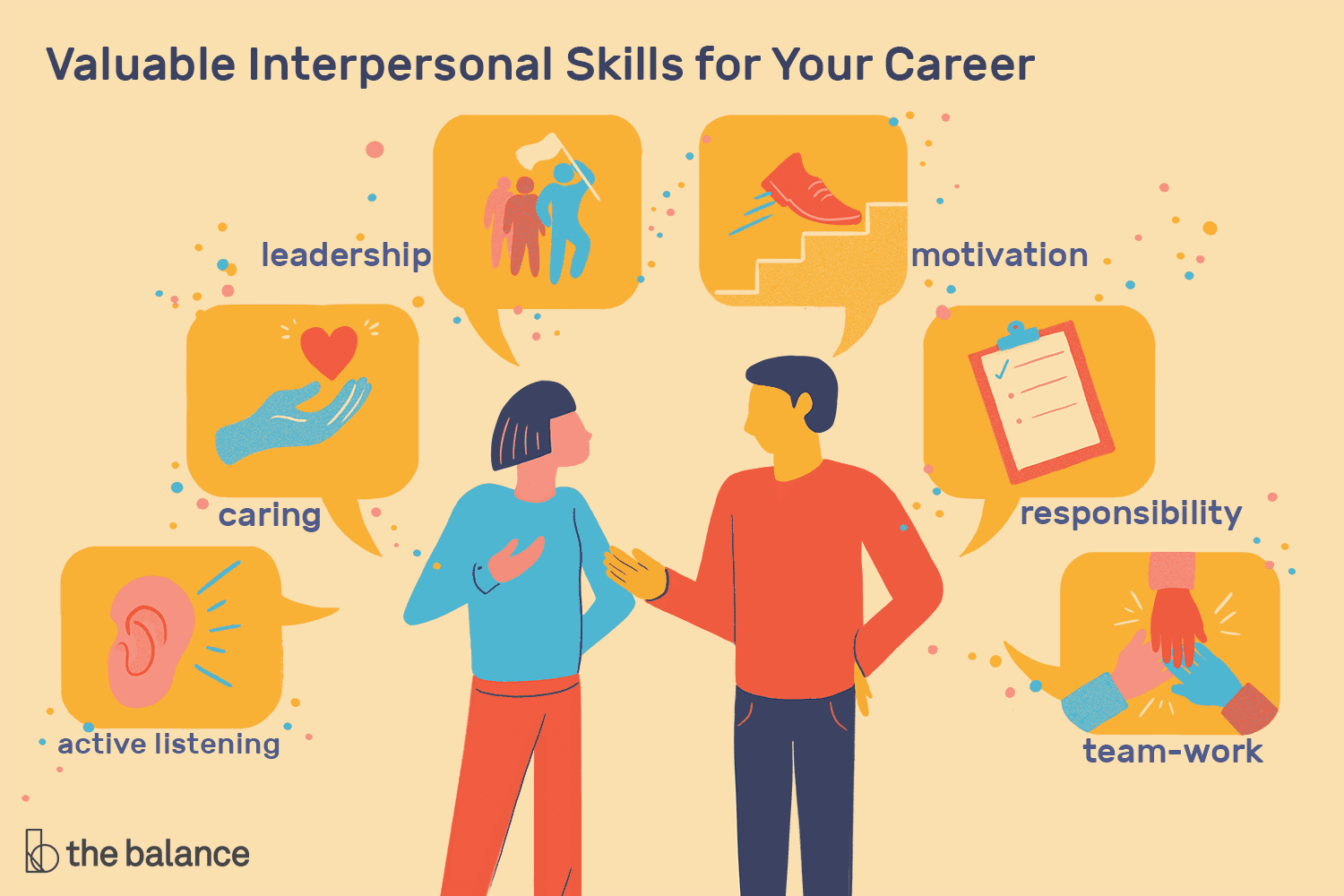
At the end of the day, you might have the best coder working on your project, but it amounts to little if your web developer’s soft skills don’t work well with other members of the team.
This means they will need to have good people skills and interpersonal skills as a software developer.
A developer must master soft skills for developers such as patience, empathy, communication, and time management. Because sometimes, team interactions and cohesiveness matter more than the code they write.
When putting together an engineering team with software engineer soft skills, you may want to check if the team members can have conversations with each other, if each member can efficiently interact with others, or if they think together as a group.
They should be able to resolve issues fast, be comfortable working with each other, and compromise as needed.
Self-awareness
Developers should be confident in the things they know and humble about the things they don’t.
Being open about skills that need improvement shows true confidence, which is why self-awareness is an important soft skill to look for in a software developer.
When a developer is aware of their weaknesses, they can seek proper training and mentorship from their colleagues or manager.
When people refuse to admit that they don’t know something, it’s often a sign of insecurity.
When a developer is secure enough to acknowledge their weaknesses, it’s a sign of emotional maturity.
Being confident about the things they do know is an equally important skill. Self-confidence allows developers to explain their ideas well, make fewer mistakes, and face any criticism head-on.
Self-learning
Self-learning skills are especially important for developers, as continuous upskilling is an important part of the job. Self-learning abilities equip people to identify problems and discover effective solutions on their own.
There are thousands of developers who enter the tech world without a formal computer degree and succeed, thanks to their strong engineering soft skills.
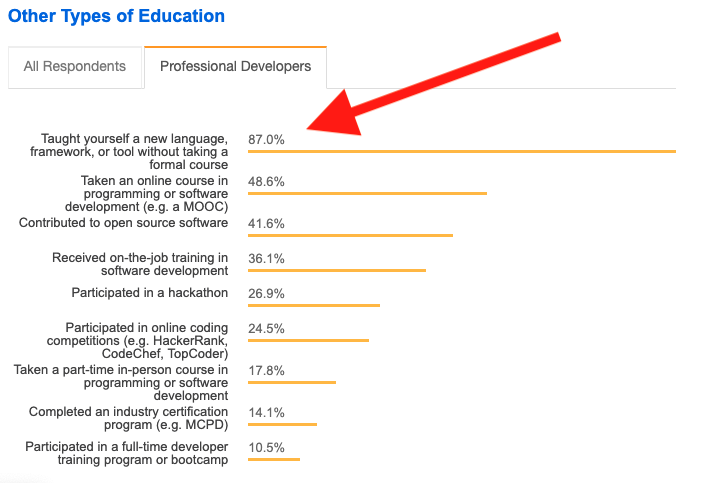
According to a StackOver Flow Survey, 87% of respondents taught themselves a new programming language or new technology.
When a person is passionate and curious about a subject, there’s nothing preventing them from attaining the skills to become a software developer with a lot more knowledge.
As the information technology landscape is constantly changing, developers must keep up-to-date with current trends and news.
Whether it’s learning a new language or dabbling in new technology, continuously learning and studying are good soft skills for a software engineer to possess.
Self-learning helps coders broaden their problem-solving thinking and avoid getting stuck in a roadblock. Additionally, learning new things is far easier now, thanks to the wealth of freely available software on the Internet.
From taking online courses to taking advantage of resources such as StackOverflow and GitHub, developers can keep their skills up-to-date.
Accountability
Developers make mistakes.
Some will be more impactful than others.
Some might even go unnoticed.
However, accepting and taking ownership of one’s mistakes is a soft skill you should be looking for in a programmer.
Mistakes will happen, but developers should use that as an opportunity to learn from them and not repeat them again.
Keep in mind that accountability is a two-way street. If admitting mistakes is not well-received by the management at your company, and if people are punished for making mistakes, then your company is also to blame for the lack of accountability.
Time Management
Developers are always working on a project that’s time-bound. In some cases, they’re even tasked with managing a team. Or, maybe they’re working remotely.
Good time management skills are essential. Being time-conscious helps a developer meet deadlines and offer exact estimates.
Clients look for punctuality and expect deadlines to be met.
If a developer says, “this will take ten weeks,” and then takes five more days, that’s fine. But if a developer is still not done after those extra five days and needs more time, then this is a sign of poor time management skills.
Only by employing people with good time management skills will you be able to successfully finish any given tasks and projects.
Emotional Intelligence
Emotional intelligence is one of the most important soft skills. 75% of hiring managers say they value an employee’s emotional quotient (EQ) over their intelligence quotient (IQ).
Emotional intelligence improves communication, management skills, and problem-solving.
For instance, employees with high EQ can keep cool under pressure, while those with low EQ often have passive or aggressive communication styles.
Moreover, emotionally intelligent people have greater empathy, resolve conflicts, and listen when someone gives them constructive feedback.
On the other hand, emotionally unintelligent people don’t work well as a team, dismiss others’ ideas, and don’t take responsibility for their errors.
So, the next time you’re hiring a developer, make sure you check for emotional intelligence skills.
An emotionally intelligent person will be an adept listener, ask a lot of questions, and display curiosity. They’ll maintain direct eye contact, smile genuinely, and mirror your gestures.
Conclusion
These are the must-have skills for software developers, and all the soft skills outlined in this post complement each other. Having good communication skills can lead to better collaboration and team cohesiveness. Being self-aware of one’s strengths and weaknesses can improve one’s accountability skills. And the result is a well-rounded developer with strong potential.
And a well-rounded developer who possesses both technical software engineer abilities and soft skills will be crucial for the future of work. Studies suggest that if companies invested more training time to improve their team’s soft skills, the number of jobs at risk from automation could be cut in half.
Use this list as a guide for the developer soft skills for developers you should look for when hiring, and consider investing in proper soft skills training. Because creating the future workforce is the responsibility of every CEO. Only those leaders who understand the importance of soft skills in programming and embrace the challenge will get to experience the greatest gains in growth and innovation.
FAQs
Q: What are soft skills?
Soft skills or people skills, are a mix of interpersonal and social skills, professional attitude, and character traits. These include communication, time management, critical thinking, emotional intelligence, etc.
Q: Why are soft skills for software developers important?
Software developers deal with many different types of clients and projects. Soft skills like excellent communication, patience, and time management help build great relationships with both colleagues and clients.
Q: What is the most essential soft skill?
There is no one soft skill that can be considered the most essential. From problem-solving abilities to advanced emotional intelligence, all are important complements to a software engineer’s hard skillset. Even the best technical developers require strong communication soft skills to collaborate with a team.