
The Future of Engineering Management: How AI Is Changing the Game
The integration of Artificial Intelligence (AI) into software engineering is revolutionizing management practices in the field. This transformation demands an effective AI strategy for successful implementation.

The integration of Artificial Intelligence (AI) into software engineering is revolutionizing management practices in the field. This transformation demands an effective AI strategy for successful implementation.

Tosho Trajanov
Tosho is a co-founder at Adeva, with over a decade of experience in the tech industry. He has partnered with diverse organizations, from nimble startups to Fortune 500 companies, to drive technological advancements and champion the effectiveness of cross-cultural, distributed teams.
The integration of Artificial Intelligence (AI) into software engineering is revolutionizing management practices in the field. This transformation demands an effective AI strategy for successful implementation.
AI coding assistants like ChatGPT, Amazon CodeWhisperer, and GitHub Copilot are at the forefront of this change. These tools are adept at a range of functions, from generating code for complex problems to optimizing existing code and creating documentation.
This technological evolution is reshaping the role of software engineering managers. Today’s managers are tasked not only with leveraging these AI tools to boost productivity but also with navigating the unique challenges they present.
As AI continues to advance, it necessitates a blend of technical skills and strategic management from leaders in the field. The emergence of AI in engineering management is altering more than just operational tactics; it’s transforming the core of leadership and strategy in technology sectors.
Table of contents
- The Rise of AI in Engineering
- Immediate Opportunities and Challenges
- Legal and Ethical Considerations
- The Future of Programming and the Engineer’s Role
- The Evolving Skill Set of Engineers
- Preparing for the AI-driven Future in Engineering Management
- Conclusion
The Rise of AI in Engineering
The landscape of software engineering is undergoing a significant transformation as AI-powered programming tools become increasingly effective. These advanced technologies are reshaping how code is written, tested, and deployed, which signals a new era in software development. AI tools, characterized by their ability to learn and adapt, are not just auxiliary aids but are becoming core components in the developer’s toolkit.
A GitHub survey underscores this trend, revealing that 92% of developers use AI coding tools in their workflows. What’s more, 70% reported significant benefits from using these tools.
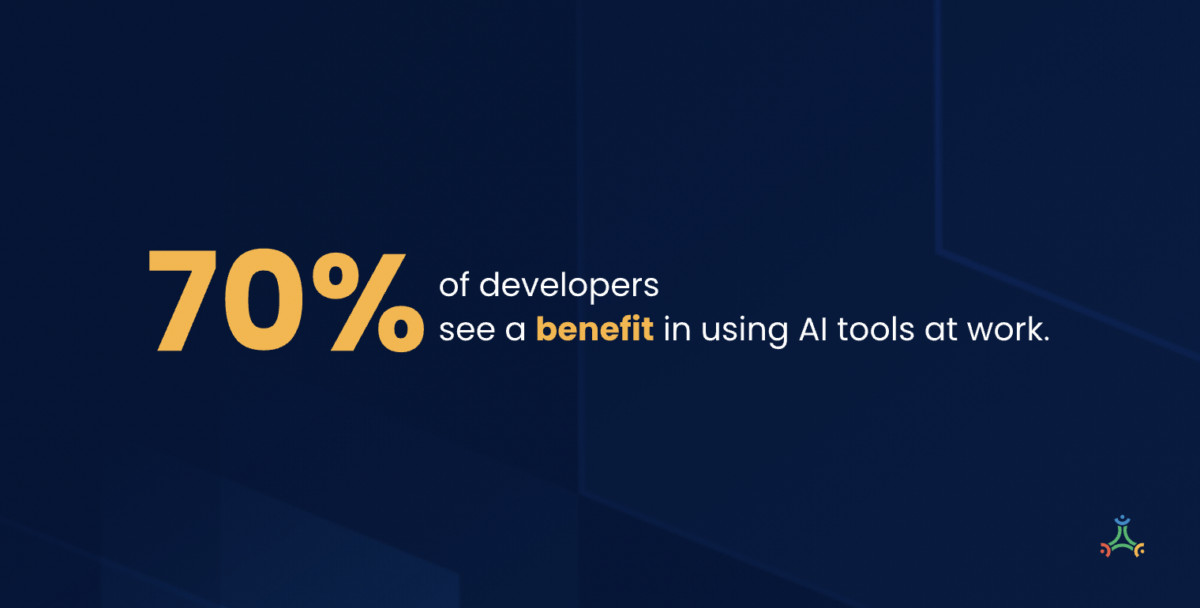
Image source: GitHub
AI assistants are becoming more adept at handling complex coding tasks. This advancement can lead to improved code quality, faster development, and fewer production issues.
Their capability to understand and generate human-like code has bridged a significant gap in software development. This makes them invaluable for both routine and complex programming challenges.
The increasing use of AI tools by developers is not just a change in coding practices; it’s a fundamental transformation in software engineering. As these tools improve, they’ll enhance individual developers’ skills and transform how teams collaborate and manage projects. The growth of AI in engineering goes beyond advanced tools; it’s about creating a more efficient, innovative, and cooperative work environment.
Immediate Opportunities and Challenges
Integrating AI into engineering creates a landscape filled with both opportunities and challenges for managers and teams. This section will explore the key aspects that require immediate focus.
Opportunities
Adapting to AI tools has become an urgent necessity for engineering managers. With 92% of developers already using AI coding tools in their workflows, the pressure for managers to quickly familiarize themselves with these technologies is clear.
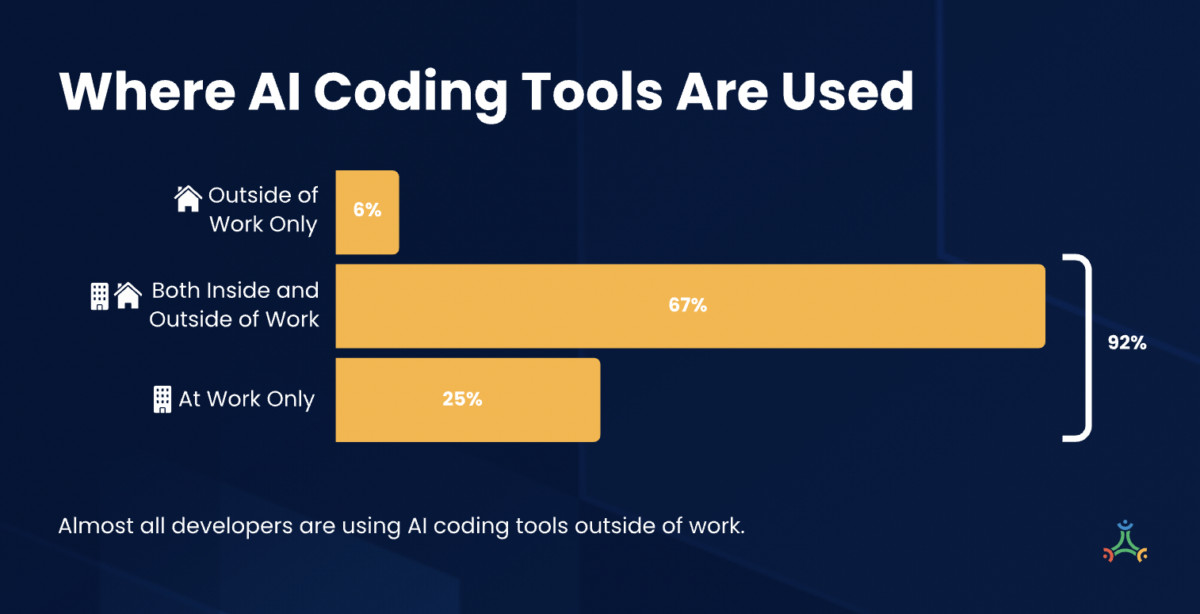
Image source: GitHub
This adaptation isn’t just about keeping pace; it’s a strategic imperative. Managers must thoughtfully integrate AI tools into existing processes to boost efficiency and maintain a competitive edge in an increasingly AI-driven industry.
Alongside this, the potential of AI to elevate productivity is immense. One of the most notable areas where AI is making its mark is in enhancing team collaboration. In fact, more than 80% of developers anticipate that AI coding tools will lead to more collaborative team environments. This prediction isn’t just about improving how teams work together; it’s about reshaping the entire collaborative process.
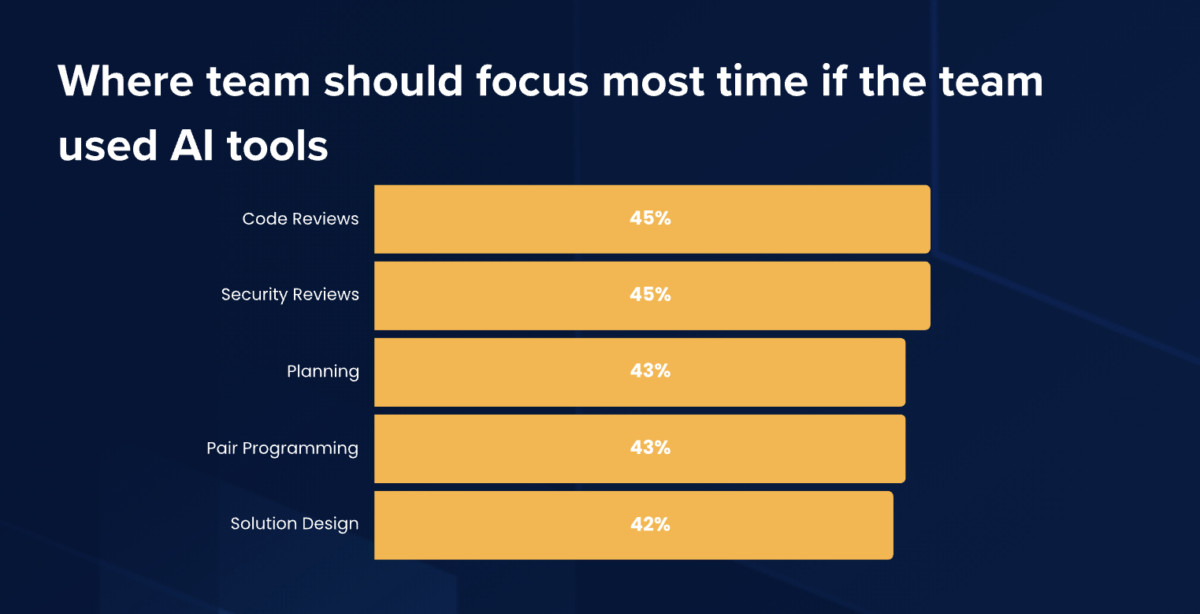
Image source: GitHub
Moreover, AI tools are set to significantly enhance the quality and speed of software development, illustrating the profound impact of AI on software development. By improving code quality and accelerating development timelines, these tools offer engineering teams a substantial advantage. This improvement in project delivery is a transformative shift that can redefine how engineering projects are executed.
Challenges
When it comes to AI and engineering, setting realistic expectations is key. Recognizing that AI is still largely in an experimental phase is crucial for managers and teams alike. This understanding is vital for setting achievable goals and managing expectations effectively.
It’s important to remember that while AI offers significant advantages, it also has its limitations. Balancing the excitement and potential of AI with a grounded understanding of its current capabilities ensures a more balanced and pragmatic approach to its adoption in the engineering process.
Along with expectation management, addressing the training needs and potential resistance is equally important. There’s a clear and present need for training engineers not just in the usage of AI tools but also in understanding their capabilities and limitations. This training is essential to maximize the benefits of AI, allowing teams to leverage these tools effectively and efficiently.
Change, especially one driven by technology, often meets resistance. It’s important for managers to anticipate and address concerns related to AI, such as job security or the complexity of learning new tools. These concerns, if unaddressed, can become significant barriers to the successful integration of AI in engineering workflows.
Legal and Ethical Considerations
As AI becomes more integrated into engineering management, it raises a range of legal and ethical issues that must be carefully addressed.
The integration of AI tools in engineering processes raises questions around data confidentiality and proprietary information. Engineering managers must ensure that the use of AI coding tools complies with data protection laws and respects intellectual property rights, especially given the collaborative nature of these tools.
Furthermore, the evolving legal landscape around AI use presents another layer of complexity. Managers need to stay informed about current and impending legislation, particularly regarding AI ethics and responsibility. For instance, how AI-generated code is used and the accountability for its outputs can have legal implications. This becomes even more critical as AI tools become increasingly autonomous in decision-making.
The Future of Programming and the Engineer’s Role
The future of programming, heavily influenced by AI, is poised to transform the essence of software engineering. Predictions about AI’s impact suggest a significant shift from traditional programming to more AI-driven methodologies. This transition is expected to redefine the roles and responsibilities of engineers at all levels.
One of the most compelling arguments for integrating of AI into programming is economic. The cost-effectiveness of AI tools that can perform complex coding tasks faster and more accurately makes a strong case for their adoption. This economic efficiency could lead to AI tools partially replacing certain engineering roles, particularly those involving routine coding tasks.
For junior developers, this shift could mean a greater focus on learning to work alongside AI, understanding its capabilities, and refining skills in areas where human oversight is crucial. Senior developers might see their roles evolve into overseeing and integrating AI solutions, focusing on complex problem-solving, strategic planning, and ensuring the ethical use of AI.
In this AI-augmented landscape, both junior and senior developers will need to adapt, acquiring skills to work effectively with AI tools. The emphasis will likely shift toward skills like problem definition, system design, and AI oversight rather than just coding proficiency.
As we look to the future, it’s clear that AI will not only change how programming is done but also reshape the role of the engineer in fundamental ways. The challenge and opportunity for engineers will be to navigate this change. They must learn to leverage AI to enhance their work while maintaining the human insight essential to successful software development.
The Evolving Skill Set of Engineers
The arrival of AI in software engineering is changing how we code and reshaping the skill set required for engineers. As AI handles more routine coding tasks, the importance of advanced skills like architecture design and complex problem-solving will become more evident.
These skills, which involve a deep understanding of systems and the ability to conceptualize and solve intricate challenges, are becoming crucial for engineers in an AI-dominated landscape.
This technological shift is also steering engineers towards roles that demand greater decision-making and problem-defining capabilities. Engineers are required to be more adept at defining the scope and nature of problems, understanding where and how AI can be applied effectively, and making strategic decisions about the use of technology in solving these problems. This shift emphasizes the importance of critical thinking and strategic planning skills in engineering roles.
Another emerging challenge for engineers is the ability to review and understand AI-generated code. As AI becomes more involved in code generation, the role of the engineer evolves from creator to reviewer and validator of AI-generated outputs. This requires a new set of skills – engineers must now be able to critically assess AI-generated solutions to ensure they meet the required standards and align with project objectives.
Preparing for the AI-Driven Future in Engineering Management
As the engineering sector rapidly embraces AI, adapting to manage both human and AI resources becomes essential for engineering managers. This new era demands a flexible approach in which managers not only guide their teams but also effectively orchestrate AI tools to enhance productivity and innovation.
Developing strategies for integrating AI into existing workflows is a critical step. This integration involves understanding the strengths and limitations of AI tools and seamlessly incorporating them into current processes. Managers must evaluate where AI can add the most value, whether in automating routine tasks, aiding in complex problem-solving, or optimizing the overall workflow.
However, this technological shift does not diminish the importance of traditional engineering management skills. In fact, balancing these foundational skills with the challenges introduced by AI becomes more crucial. Managers need to maintain their focus on team dynamics, mentorship, quality control, and project management while also becoming adept at navigating AI-related complexities.
Conclusion
As we reflect on the evolving role of AI in engineering management, it’s evident that we are at the start of a transformative era. The potential trajectories of AI integration bring both uncertainty and excitement. While the path forward may not be entirely clear, the possibilities for innovation and efficiency are undeniably compelling.
The future of engineering with AI is characterized by a dynamic interplay between human ingenuity and machine intelligence. This balance between managing human teams and AI systems will be central to the success of engineering projects. As we navigate this new landscape, the ability to adapt and blend traditional management skills with an understanding of AI will be crucial.
The journey into an AI-augmented future in engineering management is as challenging as it is exhilarating. Embracing this change requires a visionary approach, one that harmonizes the strengths of both humans and AI to redefine the boundaries of what’s possible in engineering.
FAQs
Q: Will engineering management be replaced by AI?
AI is unlikely to fully replace engineering management, as it complements rather than substitutes the decision-making, creativity, and leadership skills that human managers provide.
Q: How is AI going to change engineering?
AI will change engineering by automating routine tasks, enhancing design and analysis processes, and fostering more efficient project management, leading to increased innovation and productivity.
Q: What is the future of engineering management?
The future of engineering management is centered on integrating AI and advanced technologies. This integration emphasizes strategic decision-making, improved team collaboration, and the development of skills to effectively manage both human and technological resources.