
Game-changing Digital Transformation Frameworks
Digital innovators have a competitive advantage. Consumers, channels, and businesses have embraced digital technologies, and digital transformation is reshaping entire industries. Enterprises must remain focused on constant innovation, or risk falling behind.

Digital innovators have a competitive advantage. Consumers, channels, and businesses have embraced digital technologies, and digital transformation is reshaping entire industries. Enterprises must remain focused on constant innovation, or risk falling behind.

Sandra Petrova
Sandra is a Senior Content Editor, particularly interested in the future of work. Her most valuable talent is searching under every rock to discover important information which she incorporates into well-written, insightful posts. When she’s not typing in Google Docs, you can find her reading a fantasy novel, binging on Netflix, or watering her plants.
Digital innovators have a competitive advantage. Consumers, channels, and businesses have embraced digital technologies, and digital transformation is reshaping entire industries. Enterprises must remain focused on constant innovation, or risk falling behind.
Digital transformation is not just about technology, it’s about refining your business strategy through planned, strategic organizational change. This includes developing new business models, supported by technology.
This organizational change can be managed through digital transformation frameworks. They help leaders, marketers, and technologists build innovative organizations that adapt to change more easily and deliver better experiences for both employees and customers.
Why Do Companies Need a Framework for Digital Transformation?
Digital transformation carries a number of opportunities for companies that are willing to embrace it. A more flexible, responsive, and interconnected company is capable of making informed decisions in the future.
Companies that embrace a digital transformation journey will experience the following benefits:
- Pinpoint growth opportunities
- Identify innovation opportunities
- Discover new sales opportunities
- Apply the most effective marketing tactics for their business
- Find advantages over digital competitors
- Select the most suitable technology for the transformation
- Gain data-driven decision-making insights
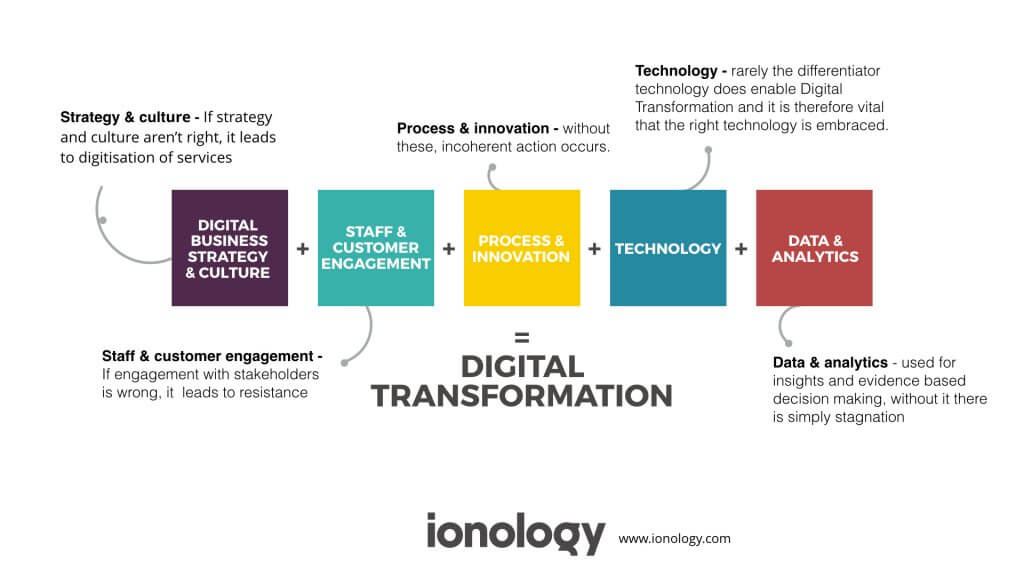
What Will a Digital Transformation Framework Help You Achieve?
In its essence, the aim of a digital transformation framework is to create a sense of order amid the chaos. Here are some insights into how a digital transformation framework can help your business:
- Analyze your core strategy. What problem are you trying to solve? Where do you want to see your business in 5 years? What is it that you do differently than your competition?
- Analyze your customers. How high is the demand for your product or service? What is your customers’ intent? Understanding their intent helps you meet their needs.
- Evaluate your competitors. Who are your competitors? What is the size of their business? What makes them unique? How do they rank online? This data will help you find a niche you can own.
- Examine your resources. Understand their availability and how to leverage them to get what you need. Your resources, including time, skills and budget, will determine your digital transformation journey.
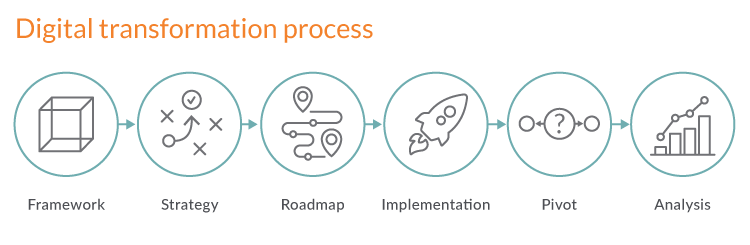
What Skills Do You Need to Work in a Digital Transformation Framework?
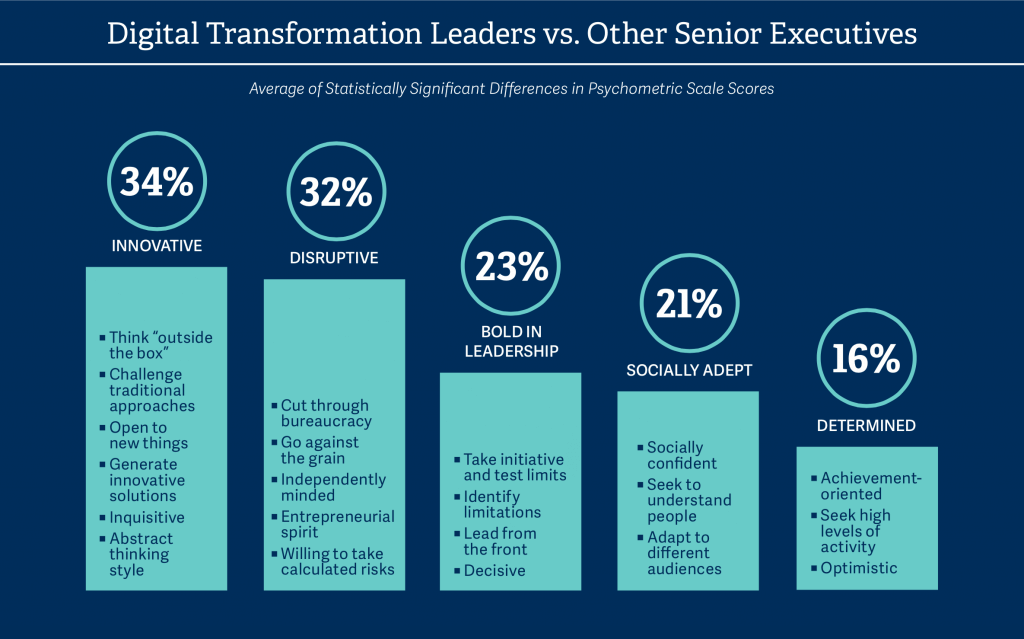
A substantial budget and a talented workforce are appreciated during a digital transformation, but strong digital transformation leadership is most important
A company might have a lot of money to invest, but without a good digital transformation leader most teams will struggle. Digital transformation leaders are not afraid to ask questions. They know how to properly diagnose the situation and have the courage to drive innovation.
They understand business growth and how to move a company forward. Their skills, ambition, and vision for the future are a boon to any company going through digital transformation.
Accenture found that digital transformation leaders tend to have a better understanding about the importance of growth-focused strategies than their peers. They see digital transformation as something profound and crucial:
- 40% of digital transformation leaders focus on digital growth, compared to 23% of their tech colleagues.
- A Digital transformation leader’s growth focus is geared toward sales, new sales channels, new products and services, and improved customer experiences.
- Digital transformation leaders agree that access to a wide range of digital technologies is important.
- Interest in digital transformation is worldwide. Respondents from around the world said they expect digital technology to drive either complete or significant business transformation.
Best Examples of Digital Transformation Frameworks
There are a number of different digital transformation frameworks and models available. Some are easy to apply while others are more complex. Let’s take a closer look at how some mature organizations have transformed their business to help you understand what your business needs to consider in order to stay competitive.
Digital Transformation at Cisco
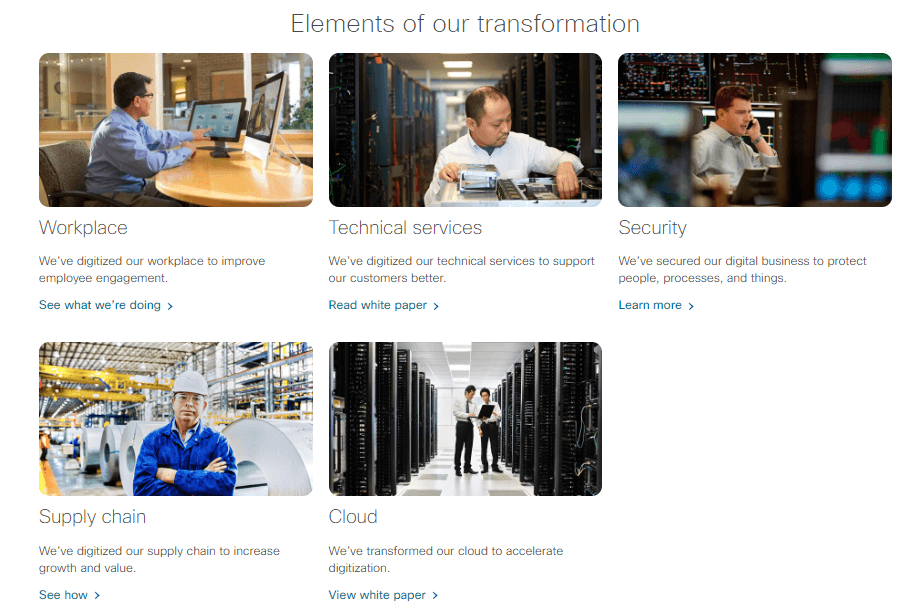
In the past three years, Cisco has analyzed all aspects of its business and started its transformation into a digital organization. They have digitized their workplace, services, supply chain, and security.
- Workplace: They created an activity-based environment and empowered their employees with collaborative technology and IoT applications. This has led to a 17% increase in employee satisfaction and engagement.
- Supply chain: Cisco digitally connected multiple partners and suppliers, enhancing collaboration for improved delivery cycles. This increased productivity by 35%.
- Services: Support services are connected by virtual spark rooms that let customers collaborate with experts in real time. This reduced their issue resolution time by 90%.
- Security: By installing tools that provide threat analytics and traffic network management, Cisco blocks nearly 4.5 billion threats per day.
Digital Transformation at McKinsey
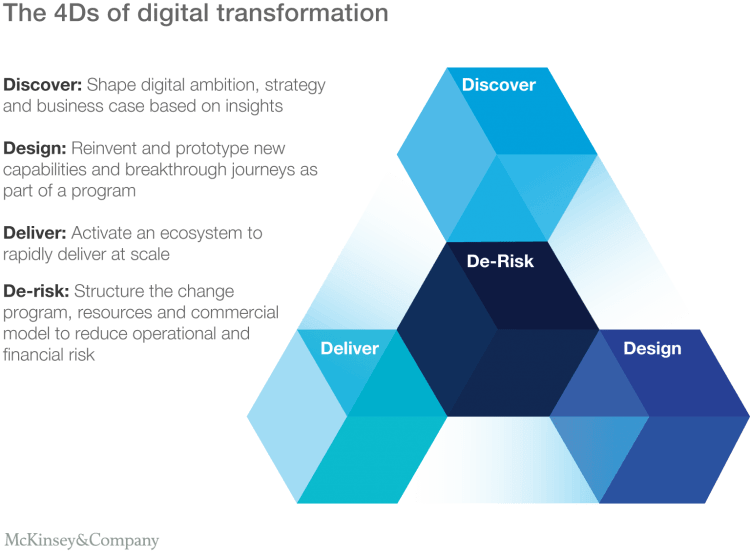
According to the McKinsey framework, the 4D’s of digital transformation are :
- Discover: Develop your business strategy based on insights.
- Design: Creation and prototyping of breakthrough experiences focused on the customer journey.
- Deliver: Develop a network of partners who can help you scale rapidly.
- De-risk: Structure the reinvention process to minimize risk.
Well-applied digital improvements in one area of an organization can lead to improvement across the entire company. For example, improved connectivity with customers can lead to new digital products and services. Upgrading a digital channel could lead to significant improvement in customer-data richness and enhance marketing effectiveness.
Digital Transformation at Accenture
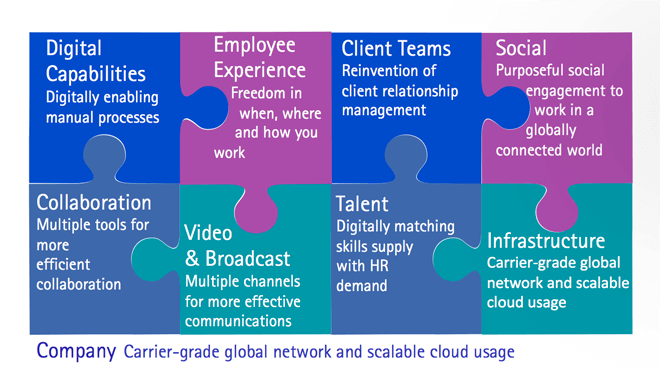
Accenture has digitally transformed its organization across all departments to create a more effective, innovative, and disruptive enterprise:
- The company has digitally enabled its manual processes.
- Employees have the freedom to choose when, where and how they work.
- Their client-relationship management process has been reinvented.
- More collaboration tools have been added for improved communication.
- They’ve aligned team interaction with purposeful social engagement principles for a more connected workplace.
- The company opened multiple channels for more effective collaboration.
- They started using technology to match employee skills with HR demand.
- Accenture has also introduced a carrier-grade global network and scalable cloud usage.
The Power of Reinvention
Digital transformation is a powerful form of reinvention. When implemented effectively, it can improve employee productivity, reduce operating costs, streamline operations, and enhance customer experiences. Organizations that embrace digital transformation are often better positioned to adapt to changing market demands, respond more quickly to new opportunities, and remain competitive in an increasingly digital economy.
To sum up:
- Digital transformation is about redefining your entire business strategy.
- The system for this type of organizational change is called a digital transformation framework.
- Digital transformation frameworks can create a more flexible, responsive, and interconnected company.
- Digital transformation frameworks aim to create a sense of order amid the chaos.
- A company might possess all the money in the world, but if it lacks a good digital transformation leader, that company might have trouble going through change.
- There are a number of different digital transformation frameworks and models, some of which are easy to apply while others are more complex.
- Digital transformation frameworks like the ones used by leading companies, including Cisco, McKinsey, and Accenture, can help organizations understand the changes that their businesses need to address in order to stay competitive.