
IT Engagement Models: A Complete Guide
Recruiting is more than filling open positions. It is a detailed system that, when built properly, helps companies find top talent quickly and consistently. The difference between effective recruiting and simply filling positions lies in data-backed decision-making. The right metrics reveal bottlenecks, pinpoint areas for improvement, and help teams build a smoother, more effective recruitment pipeline

Recruiting is more than filling open positions. It is a detailed system that, when built properly, helps companies find top talent quickly and consistently. The difference between effective recruiting and simply filling positions lies in data-backed decision-making. The right metrics reveal bottlenecks, pinpoint areas for improvement, and help teams build a smoother, more effective recruitment pipeline

Ann Kuss
Ann is a growth-oriented tech leader with more than 13 years of experience building and scaling remote teams for startups and global brands. She has helped companies expand internationally across 17 countries. A Kyiv-Mohyla Business School graduate and MIM Kyiv alumna, Ann is also an active mentor supporting the development of junior tech talent.
Table of Contents
- What Is an IT Engagement Model?
- The Evolution of IT Engagement Models
- How to Choose the Best Engagement Model for Your Business
- Final Thoughts
- FAQ
Choosing the right IT engagement model is a critical decision for companies scaling technical teams, outsourcing software development, or filling specialized roles. The model you choose affects project timelines, costs, team structure, communication, and overall delivery quality.
In today’s fast-moving technology landscape, businesses need flexible ways to access technical expertise while maintaining control over outcomes. Whether you need a dedicated development team, project-based support, staff augmentation, or full outsourcing, each engagement model offers different benefits and trade-offs.
In this guide, we’ll break down the main types of IT engagement models, their pros and cons, and how to choose the right approach for your business needs.
What Is an IT Engagement Model?
Hiring the right tech talent goes beyond finding skilled developers. It also requires choosing the right collaboration structure. An IT engagement model defines how businesses and IT service providers work together, shaping everything from project scope and communication to cost structures and delivery timelines.
Understanding IT Engagement Models
At its core, an engagement model is a framework that dictates how a company collaborates with external or in-house tech teams. It determines key aspects of project execution, including:
- Level of involvement: How much control does the company retain?
- Cost structure: Will the engagement utilize fixed, time-based, or resource-based payment frameworks?
- Project flexibility: Is the model suited for evolving needs or fixed-scope projects?
Different models suit different business needs. Some companies require full-time, dedicated teams for ongoing development, while others need short-term project-based solutions with clear deliverables. The right approach depends on factors like budget, timeline, and internal capabilities.
Why Choosing the Right Model Matters
Selecting the wrong engagement model can lead to delays, cost overruns, and misaligned expectations. A startup looking for rapid prototyping, for example, may struggle with a rigid, fixed-cost structure. Conversely, an enterprise seeking long-term product development may benefit from a stable, dedicated team model rather than hiring ad hoc freelancers.
Choosing the right model affects:
- Scalability: Can you quickly adapt to changing project demands?
- Efficiency: Are workflows optimized for collaboration?
- Quality control: Does the model support consistent output and accountability?
A well-defined IT engagement model helps businesses align expectations, optimize resource allocation, and improve overall project success. As businesses increasingly integrate big data recruitment into hiring strategies, selecting the right model ensures they attract and retain top talent while maintaining cost efficiency.
How IT Hiring Is Changing Engagement Models
Hiring strategies have evolved, reshaping how businesses structure tech collaborations. Companies now use predictive analytics, AI-powered candidate assessments, and market trend analysis to select the most efficient engagement models. This shift helps in:
- Forecasting hiring needs: Identifying skill gaps before they affect project timelines.
- Optimizing resource allocation: Aligning engagement models with real-time business demands.
- Reducing hiring risks: Ensuring the chosen model matches the project scope and budget.
For example, companies analyzing hiring trends can determine which IT staffing services provide the best balance of cost and efficiency. By assessing past hiring success rates, project outcomes, and financial constraints, businesses can make data-driven decisions when selecting an engagement model.
In the next section, we’ll explore the four main engagement types and compare their viability.
The Evolution of IT Engagement Models
As businesses grow and technology advances, companies are rethinking how they structure IT collaborations. Rather than relying on rigid frameworks, they now prioritize flexibility, cost efficiency, and scalability in their engagement strategies.
One crucial aspect of this shift is selecting the right engagement model based on factors such as project scope, budget, and required expertise. By assessing past project performance, resource allocation, and industry demands, companies can refine their approach and choose the model that offers the best balance of control and efficiency for their initiative.
Big Data in IT Hiring
Traditionally, hiring in tech was based on resumes, interviews, and instincts. Now, big data adds precision and predictability to the process.
Companies analyze data to:
- Identify skill gaps before they become hiring bottlenecks.
- Forecast project demands and adjust team sizes accordingly.
- Evaluate candidates based on performance metrics rather than just experience.
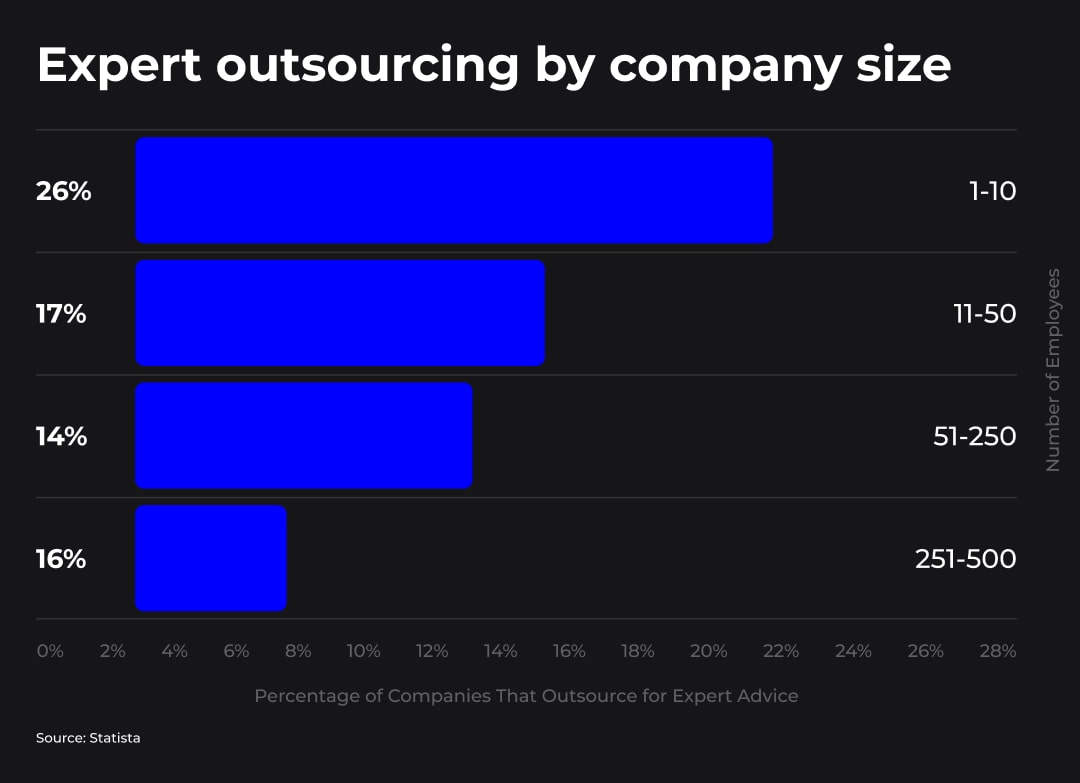
Expert outsourcing
Many companies, especially smaller ones, outsource expert review to improve hiring decisions. Smaller companies often lack in-house expertise and turn to external consultants to guide hiring and engagement model selection. On the other hand, larger businesses may have internal HR teams but still leverage big data to refine their strategies.
How IT Engagement Models Align With Business Needs
The right IT engagement model depends on project scope and requirements. To make an informed choice, businesses must evaluate their operational goals and resource availability.
- Dedicated team model: Ideal for ongoing projects with evolving requirements. This model ensures long-term collaboration, providing stability and deep expertise.
- Staff augmentation: Typically used when scaling up or down based on project demands. Companies can fill skill gaps quickly while maintaining control over project management.
- Project-based model: Best for short-term projects with a clearly defined scope. This model ensures cost control without the need for long-term commitments.
- Managed services: Well-suited for businesses needing end-to-end IT solutions. Managed services reduce management efforts while ensuring consistent service delivery and performance.
By assessing past project outcomes, businesses can select the optimal engagement model to meet their specific engagement needs.
The Future of IT Hiring and Engagement Models
As AI and automation advance, IT hiring strategies are becoming more precise and adaptable.
Future trends may include:
- AI-driven engagement model selection based on company needs and project complexity.
- Automated workforce planning to optimize staffing levels and resource allocation.
- Predictive analytics to assess team productivity and project success rates.
Companies that integrate these technologies into their hiring processes will improve efficiency and reduce risks by selecting IT engagement models that align with their long-term business goals.
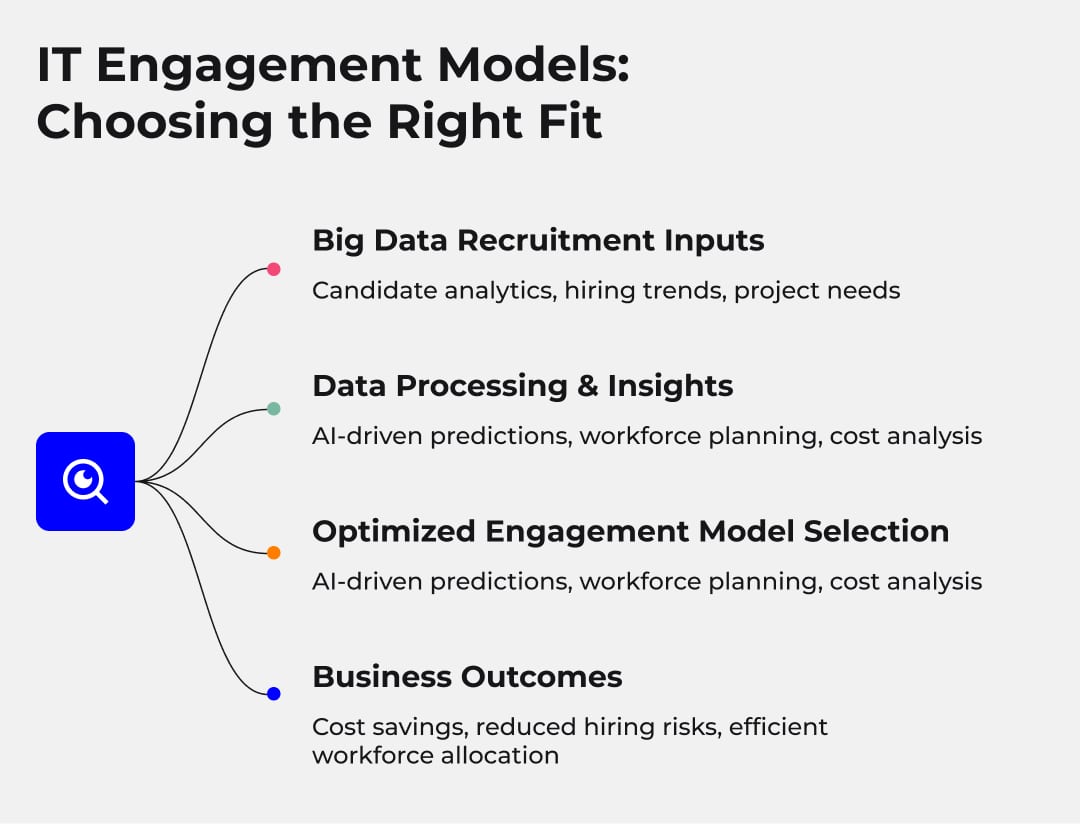
IT engagement models
Comparison of the four primary engagement models
Engagement Model | Features | Best For | Engagement Model Example |
Fixed Price |
|
| A software development firm builds an e-commerce website for a client for $50,000. The project has a clear scope and a set budget. |
Time and Material |
|
| A mobile app development company creates an app for a client, charging based on time and resources spent, as the scope is subject to change. |
Dedicated Team |
|
| A tech consulting firm assigns a dedicated team of developers, designers, and project managers for a 12-month project, providing continuous support and development. |
R&D Center |
|
| A company partners with an R&D center to support long-term product research under its own brand. The center operates as an extension of the company’s internal team while expanding access to specialized technical talent. |
A well-defined engagement model ensures efficient resource allocation, cost-effectiveness, and better project outcomes. By documenting every aspect of the engagement model, your company can avoid costly miscommunications and ensure a smooth, efficient collaboration.
Miscommunication often happens when assumptions replace documentation. Many companies rely too much on verbal updates or scattered emails instead of maintaining a central document that outlines project goals, expectations, and technical requirements. Without a written record, misunderstandings arise, and project scope creep becomes a real issue. A shared document or project management tool (like Notion, Asana, or Confluence) helps ensure that all parties stay on the same page. This should include technical specifications, timelines, and a log of past discussions. When both the company and the IT partner can refer back to the same source of truth, thereʼs less confusion, fewer repetitive questions, and more time spent on execution rather than clarifications.
Shane McEvoy Digital Marketing Strategist, Flycast Media
Engagement Model Comparison: Pros and Cons
All engagement models have their strengths and weaknesses. Some offer stability and predictability, while others provide flexibility and adaptability.
Below is a comparison of the four models, highlighting their advantages and drawbacks.
Pros and Cons of IT Engagement Models
Engagement Model | Pros | Cons |
Fixed Price |
|
|
Time and Material |
|
|
Dedicated Team |
|
|
R&D Center |
|
|
How to Choose the Best Engagement Model for Your Business
Selecting the right IT engagement model is a strategic decision that impacts project efficiency and long-term success. Below is a step-by-step guide to help you make an informed choice.
1. Define Project Requirements
Start by identifying the scope and complexity of your project. Ask yourself:
- Is the project well-defined or will it evolve over time?
- Do you need a quick solution or a long-term commitment?
- Will you require continuous development and maintenance?
If your project has clear deliverables and a fixed scope, a Fixed Price model may be the best choice. If requirements are likely to change, a Time and Material model or a Dedicated Team is more suitable.
2. Assess Budget Constraints
Budget plays a critical role in selecting an engagement model. Some businesses need cost predictability, while others prefer flexibility in spending.
- Fixed price models work best for businesses with a set budget.
- Time and material models allow for flexibility but can lead to fluctuating costs.
- Dedicated team models require ongoing investment but offer scalability.
- R&D centers demand a higher upfront cost but can reduce development costs in the long run.
Evaluating your financial capacity helps avoid overspending while ensuring you get the right expertise.
3. Consider Long-term vs. Short-term Needs
Think about whether your project requires a one-time solution or continuous development.
- Short-term projects work best with a fixed-price model or time-and-materials model.
- Long-term needs (such as SaaS platform development) benefit from a dedicated team or R&D center, ensuring stable collaboration and retention of expertise.
If you expect future scaling, opting for a flexible model, like IT staff augmentation services, can be a smart move.
4. Use Big Data Insights for Data-Driven Decisions
Big data analytics can refine your hiring and engagement model selection by analyzing:
- Past project outcomes and team performance.
- Industry benchmarks and hiring trends.
- Cost-effectiveness of different engagement models in similar projects.
Effective communication and collaboration with an external IT partner are essential for optimizing operations and driving growth. To ensure success, organizations should define clear objectives and expectations, outlining specific goals, deliverables, timelines, and performance metrics. This approach minimizes miscommunication and aligns both parties toward a shared vision, as demonstrated by a retail company that successfully collaborated with an IT firm to develop a CRM system.
Mohammed Kamal Business Development Manager, Olavivo
Setting clear expectations is essential, but tracking outcomes ensures the right engagement model works in practice.
Final Thoughts
Choosing the right IT engagement model requires balancing project scope, budget, and business goals. By following these steps, your company can align its hiring strategies with the right model.
FAQ
What is engagement in the IT industry?
In the IT industry, engagement refers to the structure of collaboration between a business and an external service provider, such as a software development company or IT consultancy. It defines how teams work together, how projects are managed, and how resources are allocated. The right engagement model ensures efficiency, cost-effectiveness, and alignment with project goals.
What are the main types of IT engagement models and how do they differ?
There are four primary IT engagement models, each designed to fit different business needs:
- Fixed price: A structured model with a set budget and clear project scope. Fixed price models are best for well-defined, short-term projects.
- Time and material: A flexible approach where costs are based on actual work and materials used. Ideal for projects with evolving requirements.
- Dedicated team: A long-term collaboration where a team is assigned exclusively to a client’s project. Dedicated team models are suitable for projects like ongoing software development.
- R&D center: A fully integrated offshore development team that operates under the client’s brand.
Each model varies in terms of control, cost, and flexibility, making it essential to choose based on project scope and business goals.
How do I choose the right engagement model for my project?
Selecting the best engagement model depends on several factors:
- Project scope: If your project has fixed deliverables, a fixed price model is ideal. If requirements may change, a time-and-materials or dedicated team approach may work better.
- Budget constraints: A fixed-price model ensures predictable costs, while time-and-material and R&D centers provide greater flexibility but require ongoing investment.
- Long-term versus short-term needs: For short-term projects, fixed price or time and materials models are best. For continuous development, dedicated team models or R&D centers offer stability.
- Big data insights: Analyzing hiring trends, past project performance, and cost efficiency can help businesses make data-driven decisions.