
Why Software Engineers Quit and How to Retain Them
Quitting is a natural part of anyone’s professional path. Sooner or later, and for different reasons, software engineers may decide to quit their jobs and seek better positions elsewhere. But the impact on business is often significant, especially if the resignation comes from an experienced, long-standing team member.

Quitting is a natural part of anyone’s professional path. Sooner or later, and for different reasons, software engineers may decide to quit their jobs and seek better positions elsewhere. But the impact on business is often significant, especially if the resignation comes from an experienced, long-standing team member.

Ann Kuss
Ann is a growth-oriented tech leader with more than 13 years of experience building and scaling remote teams for startups and global brands. She has helped companies expand internationally across 17 countries. A Kyiv-Mohyla Business School graduate and MIM Kyiv alumna, Ann is also an active mentor supporting the development of junior tech talent.
Table of Contents
- Why Are Software Engineers Quitting Software Engineering?
- The Best Ways to Encourage a Tech Team Not to Quit Software Engineering
- Why Are Professionals Leaving Software Engineering?
- Do Software Engineers Quit More Often Than Other Professionals?
- FAQ
Quitting is a natural part of anyone’s professional path. Sooner or later, and for different reasons, software engineers may decide to quit their jobs and seek better positions elsewhere. But the impact on business is often significant, especially if the resignation comes from an experienced, long-standing team member. It may take several months to hire a new software engineer, and additional time will be required to get them up to speed. Project delays and maintenance issues contribute to the replacement costs of hiring a software engineer, with estimates ranging from 50%-200% of an engineer’s monthly salary.
The repercussions of losing a software engineer can be far-reaching, which is why many businesses place proactive focus on effective retention strategies for software engineers.
Companies that want to retain experienced team members need to understand why software engineers quit and what they can do to reduce turnover.
Why Are Software Engineers Quitting Software Engineering?
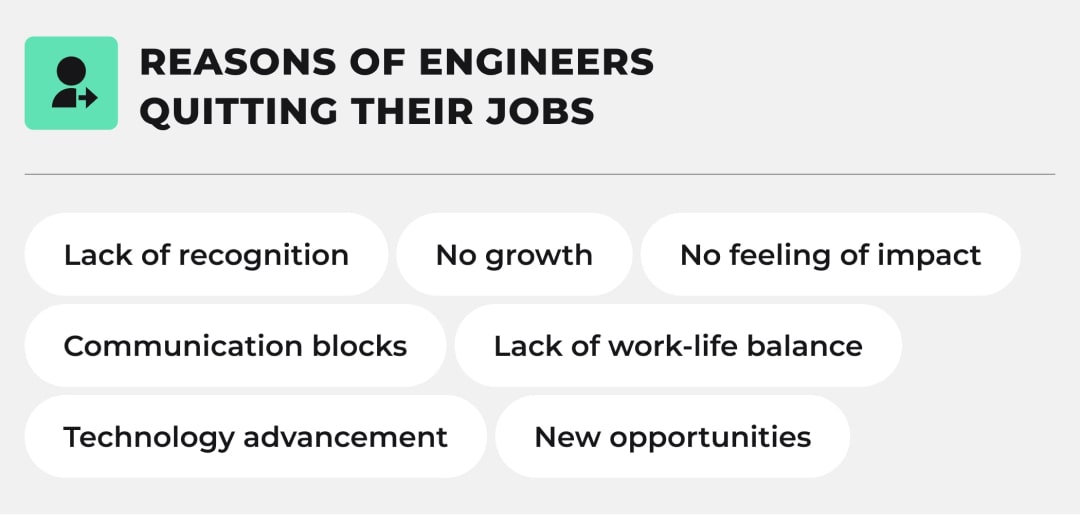
Lack of Recognition
The Gallup 2026 State of the Global Workplace report shows employee engagement declining year over year, currently sitting at its lowest level since 2020. Feeling recognized and appreciated is one of the top reasons that people stay with their current employer, yet 40% of employees say they feel demotivated by a lack of recognition.
These are the same reasons that tech engineers are quitting large companies. They often hold a great deal of project responsibility without receiving proper recognition for their role in project success.
No Possibility for Growth
Opportunities to learn and grow are important considerations for any professional. Employee engagement research shows that development and growth opportunities are consistent drivers of employee engagement, performance, and innovation. Without meaningful career opportunities, engineers feel stagnant and begin seeking roles that offer better professional advancement.
The tech industry is changing. New developments and solutions are a constant. Tech professionals are looking for challenging work with access to new knowledge and significant career growth opportunities.
No Feeling of Impact
Almost every professional wants to feel they are making a difference, both in their company and in their industry. The futile feeling of effort without impact can push tech professionals to question their career choice and quit software engineering. Software engineering requires many frequent, monotonous tasks, and without corresponding room for creativity, burnout can happen fast.
Communication Blocks
Effective communication can increase retention, while poor communication is another reason why tech professionals quit software engineering.
The development process should work like a well-oiled machine, which is impossible without streamlined communication. When engineers end up managing multiple projects that lack clear communication channels, tasks become misaligned, mistakes increase, and projects are delayed, leading to professional frustration and job dissatisfaction.
Tech Engineers Are Quitting Large Companies Because There Is No Room for Inventiveness and Creativity
The tech industry is rarely seen as a creative one, but making every solution user-friendly requires a high level of creativity and inventiveness, especially in development and UI/UX design.
Seventy-five percent of workers say their creative potential is not fully realized, while 80% of professionals say they feel pressured to be productive rather than creative at work.
Heavily regulating a software engineer’s work without leaving room for creativity will lead to burnout and high churn within the tech team. And some experienced senior developers are quitting software engineering altogether.
No Work-life Balance
A lack of work-life balance is a core reason tech executive engineers are quitting. Remote work was meant to improve work-life balance, but remote employees report working overtime more often than in-office teams. Addressing the issue early and taking measures to prevent burnout within your tech team will help you retain valuable engineers.
Burnout is a significant factor in software engineers leaving the field, and preventing it starts with fostering autonomy, flexibility, and purpose. Engineers thrive when they have ownership of their work, the flexibility to balance their personal and professional lives, and a clear sense of purpose. A supportive culture, regular check-ins, and recognition for their contributions can go a long way toward reducing burnout and improving retention.
Jamie Frew CEO at Carepatron
Companies may consider collaborating with talent management services to help monitor workloads, distribute tasks evenly, and ensure engineers maintain a healthy work-life balance.
With constant overtime, unrealistic deadlines, and unsustainable demands, it’s no surprise that software engineers reach the burnout stage. Eventually, they’re forced to reconsider their role and seek healthier work environments.
For some, the relentless pressure and demands of an engineering career become so overwhelming that they quit engineering completely.
The most common reasons software engineers quit or change careers:
- Overwork and burnout: Constant overtime and excessive workloads lead to burnout among software engineers, pushing talented professionals to seek healthier roles.
- Unrealistic deadlines: Pressure to meet tight timelines creates stress and frustration, reducing job satisfaction.
- Unsustainable demands: Work that disrupts personal time leaves engineers with little room for rest or hobbies, making the role unsustainable.
Are Software Engineers Quitting Because of the Rise of AI?
The adoption of AI across sectors and development areas has raised concerns among specialists, pushing them to reconsider their roles. For some, the pressure to reskill or shift focus can feel overwhelming, leading them to quit engineering entirely.
The Rise of AI and Job Displacement Concerns
As AI tools become more proficient at tasks like debugging, testing, and basic coding, many software engineers worry about being replaced. This is of particular concern to those in junior positions and environments where the company prioritizes cost-cutting and efficiency.
Pressure to Reskill Amid Rapid AI Growth
The dynamic environment of AI requires specialists to continually upskill and stay up to date with evolving platforms and technologies. The anxiety of falling behind or competing in an increasingly crowded market can drive engineers to seek roles with less reskilling pressure.
Shifting Roles and Loss of Creativity
AI adoption often shifts engineers’ focus from coding to higher-level tasks like system architecture, AI tool integration, and data pipeline management. While some embrace these changes, others feel disconnected from the creative, hands-on work they once enjoyed. This shift can make software engineering feel boring for some, especially if repetitive or automated tasks completely replace opportunities for innovation.
Moral and Ethical Dilemmas in AI Development
Engineers are increasingly conflicted about the ethical questions raised by AI technologies. Concerns about bias, misuse of surveillance, or negative societal impacts can cause moral dissonance, particularly if company practices don’t align with their personal values. This discomfort drives some engineers to seek new opportunities that better align with their ethics.
AI-driven Career Shifts and New Opportunities
The rise of AI has opened pathways for professional reinvention beyond traditional software engineering.
Many software engineers see AI advancements as an opportunity, not a threat. Some engineers are pivoting to careers in AI research, machine learning engineering, or data science. Others choose to explore entrepreneurial ventures or take on freelance work with innovative products.
Unrealistic Expectations Around AI’s Capabilities
Companies often overestimate AI’s capabilities, believing it can solve complex problems effortlessly. This misconception leads to unrealistic deadlines and increased pressure from management, which can force a software engineer to quit in favor of a better-managed company environment.
The Best Ways to Encourage a Tech Team Not to Quit Software Engineering
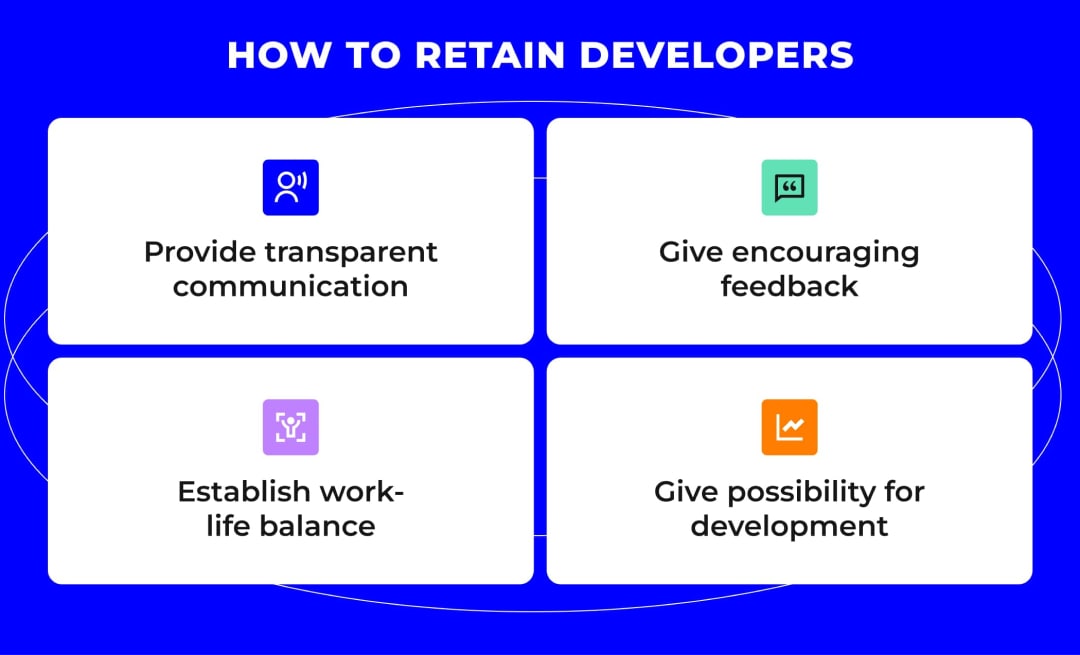
Establish Streamlined Communication
Clear, streamlined channels of communication are a must for successful engineering workflows, especially when the team is partially or fully remote.
Provide Encouraging Feedback
When the code works perfectly and the new updates increase website traffic, do you celebrate the work of your tech team?
Tech engineers are quitting large companies in part because they lack feedback, encouragement, and recognition of their contributions behind the scenes. Don’t forget to acknowledge their part in a successful launch, along with the marketing and product teams.
Ensure Work-life Balance
Components of developers’ retention
Here’s how companies can help software engineers achieve a well-balanced professional and personal life:
- Monitor workloads to make sure tasks are evenly distributed.
- Conduct anonymous satisfaction surveys to gather feedback on team workload and pressure points.
- Use task-distribution software like Asana or Trello to streamline project management.
- Understand the team’s challenges and adjust the deadlines accordingly.
Setting clear schedules and making sure everyone’s workload is even are simple steps companies can take to improve their tech professionals’ work-life balance.
Reduce Hiring Costs Through Retention
Technology teams work in high-stress environments with higher-than-average industry turnover rates of 13% to 18%. High turnover in tech comes with steep hiring replacement costs estimated at 50% to 100% of an engineer’s annual salary.
These costs include recruitment expenses, onboarding, and training time for the new hire, but it’s the productivity gaps, missed deadlines, and loss of internal knowledge that cost companies the most.
Tech team retention strategies create calmer, more focused tech environments where engineers feel appreciated and properly challenged without overwhelm. When companies invest in recognition programs, provide proper work-life balance, and offer growth opportunities, they’re able to maintain a stable, productive tech team while sparing the recruitment and downtime costs of high-tech turnover.
For companies that need more flexibility during a transition or when scaling a team, IT staff augmentation services offer a reliable way to access skilled engineers while keeping hiring costs under control.
Why Are Professionals Leaving Software Engineering?
Why are developers quitting? The most common reasons software engineers cite for leaving the industry include the constant pressure to hit short deadlines, the persistent demand to upskill, and the growing career instability caused by the rise of AI-assisted coding. Many are leaving the industry and choosing less demanding careers.
Though widespread burnout is common, a secondary truth is that an engineer’s interest plateaus. They’ve built the same applications and solved the same problems for years. Boredom creeps in, and if their company doesn’t offer growth opportunities, an engineer may look for a new challenge elsewhere.
Do Software Engineers Quit More Often Than Other Professionals?
Compared to more stable traditional sectors, software engineers do change positions more frequently. There are several reasons:
- High demand for talent
- Competitive job opportunities
- Fast-paced nature of the industry
Being in demand gives software engineers more flexibility to consider different roles or work environments or to seek a higher-paying position elsewhere. This mobility makes retaining top engineering talent a unique challenge for companies. Proactively addressing workload, work environment, and individual team members’ needs will help build a healthy, stable tech team.
FAQ
How can companies improve software engineer retention?
Companies can improve retention by prioritizing work-life balance and offering competitive compensation and benefits. They can invest in professional development and create a positive, supportive work environment where engineers feel valued and empowered.
Are engineers quitting due to better opportunities in startups or freelancing?
Yes, many engineers leave for startups or freelancing opportunities due to the greater flexibility and autonomy they offer, or for the chance to work on innovative projects. Roles in startups often provide faster career growth and higher job satisfaction for engineers than freelance work.
Do engineers leave due to a lack of remote work opportunities or flexibility?
Yes, engineers value remote work and flexible schedules. Companies that don’t offer these options risk losing talent to competitors that do. Flexibility has become a key factor in tech team job satisfaction, directly impacting retention rates.