Resume Examples
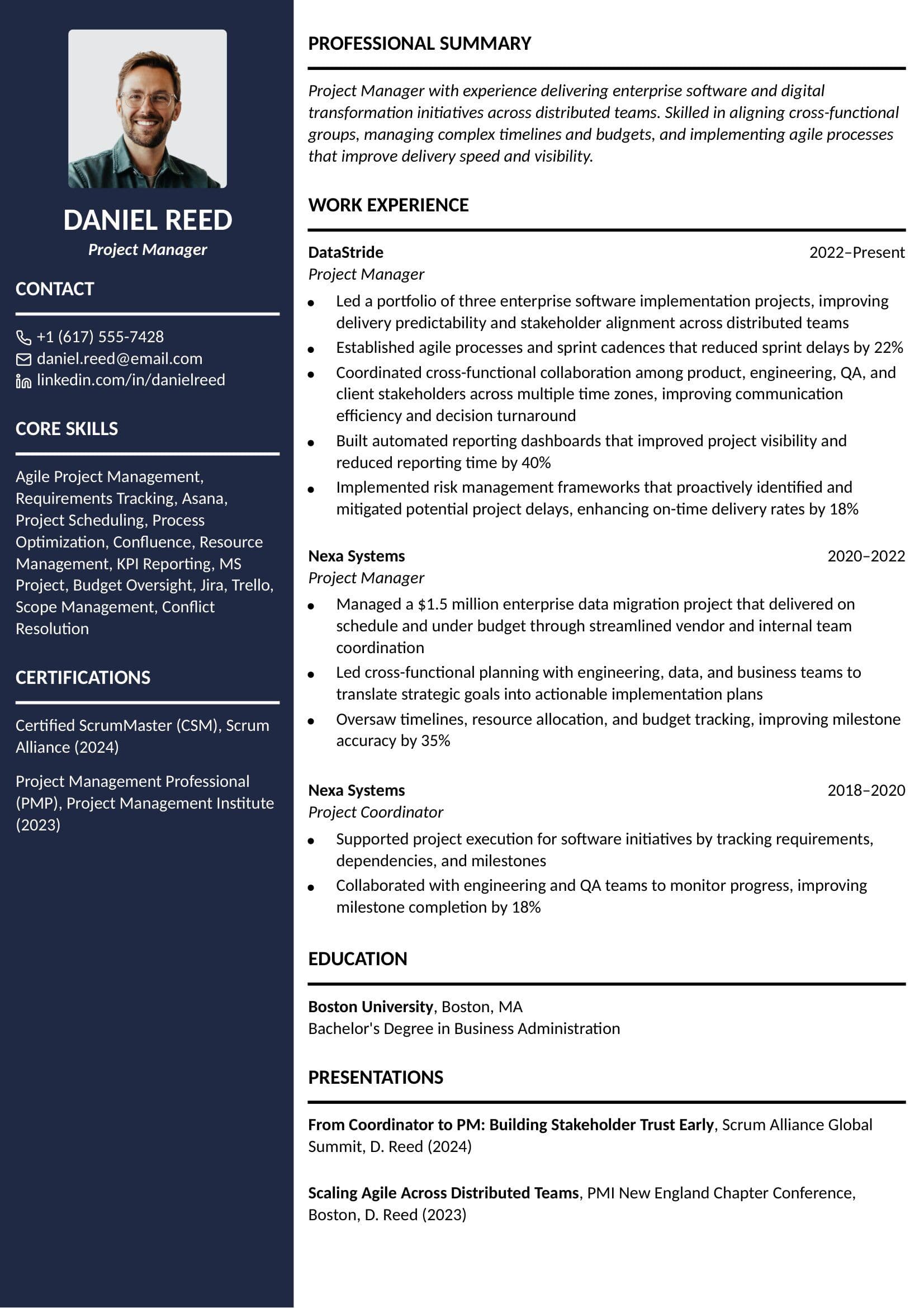
Project Manager
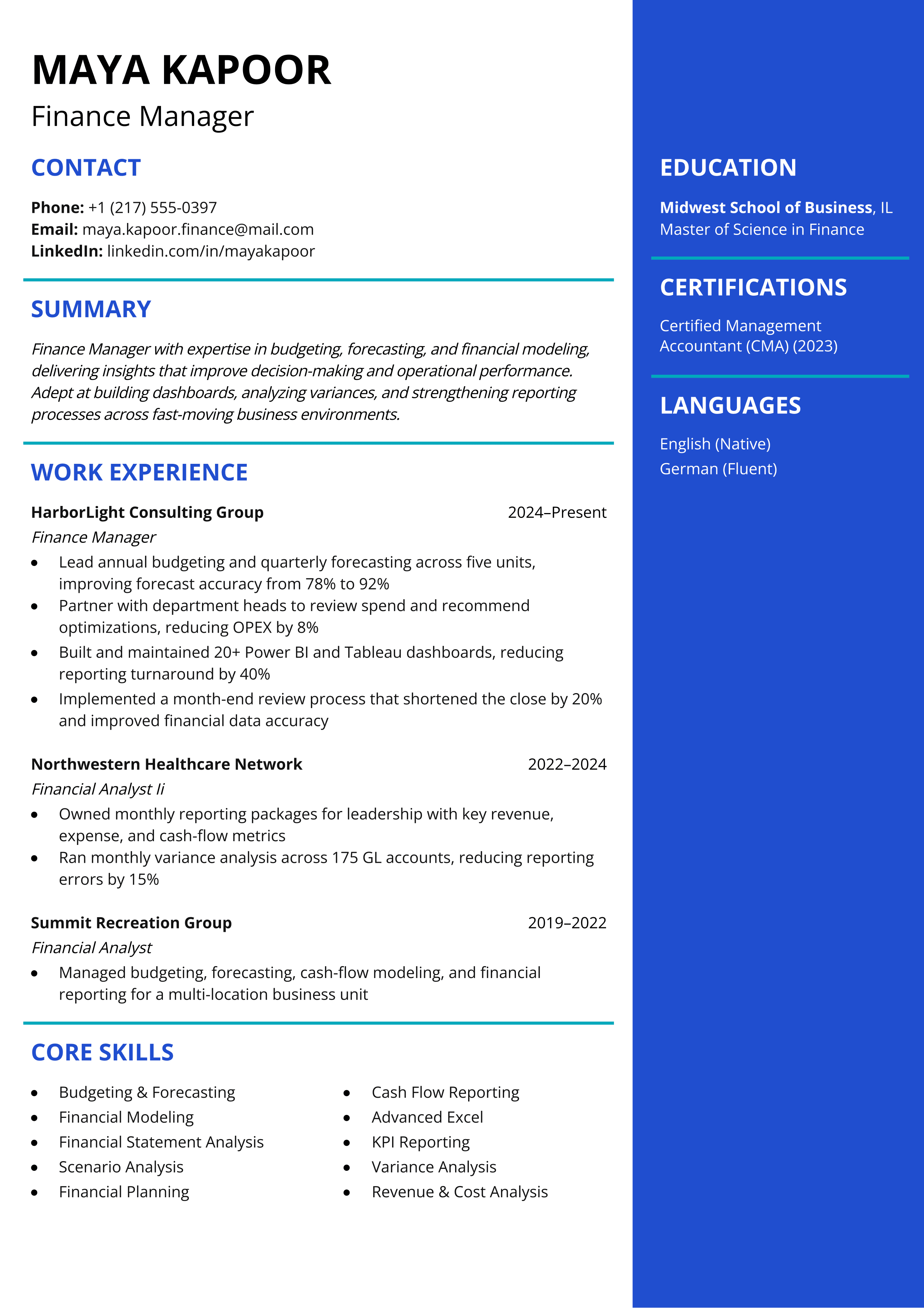
Finance Manager
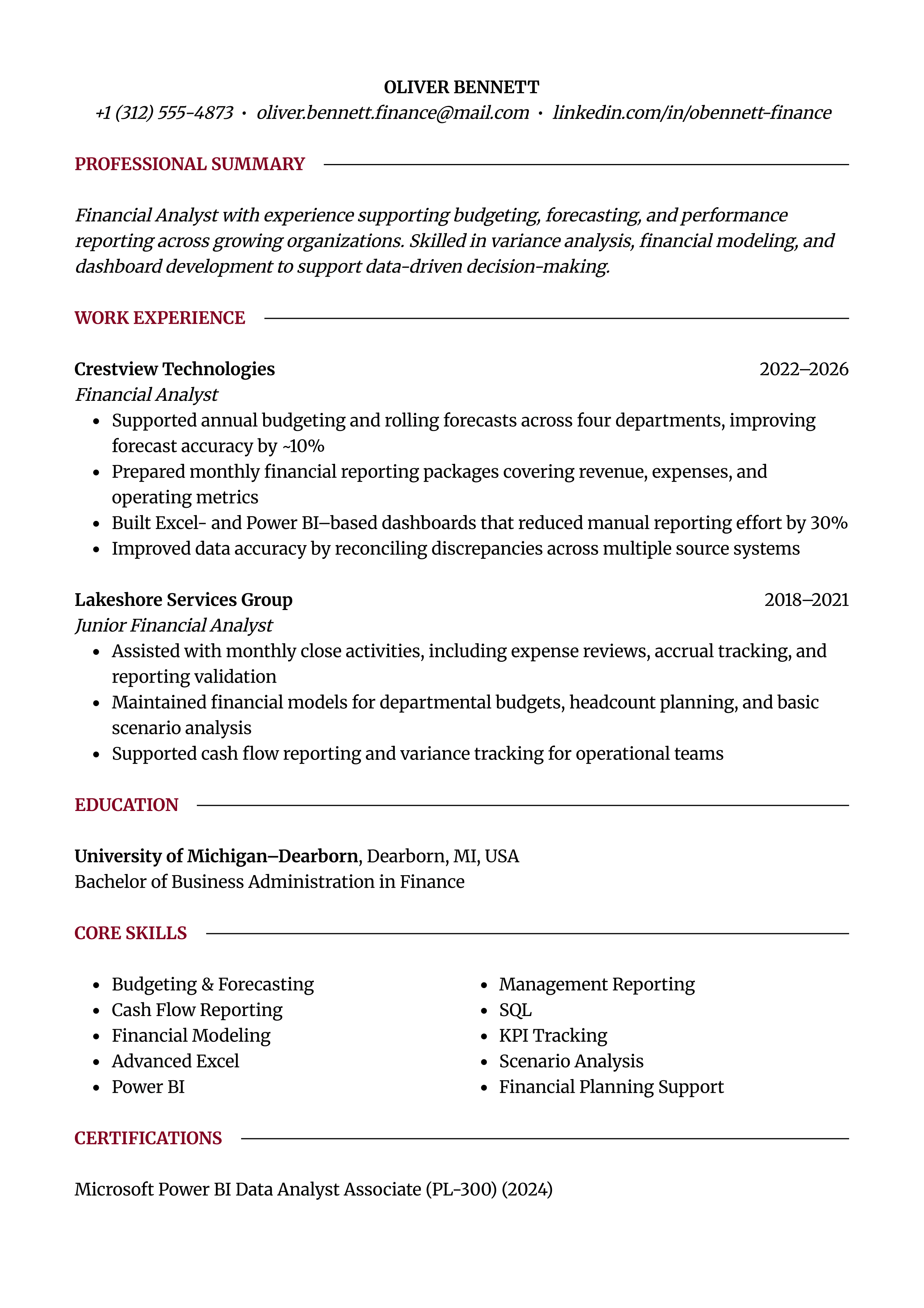
Financial Analyst
Start Your Resume Now
Use our AI resume writer to craft a professional resume that helps you land a job.
Project Manager
Finance Manager
Financial Analyst
Start Your Resume Now
Use our AI resume writer to craft a professional resume that helps you land a job.
How to Create a Strong Business Resume
Our business resume examples apply to many diverse specialized roles related to business growth and efficiency. Whether you're a business analyst, financial analyst, business operations manager, CEO, or project manager, strong business resumes follow the same writing principles.
All business resume samples start with a strong professional summary, followed by work experience highlighting the candidate's business accomplishments and linking them to the most relevant skills and competencies. The heart of the resume of any business professional is the measurable achievements from past jobs. What you did for a past employer tells the prospective one what you could do for them.
In addition to incorporating compelling content, you should also think through the layout and formatting of your business resume. To make it readable for both hiring managers and applicant tracking systems (ATS), it should look clean and professional.
Professional Summary in Business Resumes
All business resume examples typically start with a professional summary. It's not required, especially for entry-level positions, but it's a great opportunity to briefly summarize your most impressive accomplishments and career identity as a business professional.
Depending on the target company's field and industry, you can also include the most relevant competencies for the job. Remember that it should be concise and effective, similar to what you can see in our project manager, finance, business analyst, or marketing professional resume examples.
Skills Included in Business Resume Examples
The skills section is one of the most important sections of a strong business resume. It shows your key competencies, tools you're proficient with, and so on. That said, it's never enough to simply list them in a dedicated section, but also to mention how you applied those skills in your work descriptions.
If you possess a diverse skill set, you could also group them by categories. For example, you can separate core skills from tools, methodologies, etc. Choose your strongest and most relevant skills.
- Strategic Planning
- Project Management
- Business Analysis
- Financial Analysis
- Stakeholder Management
- Process Improvement
- Cross-Functional Collaboration
- Data Analysis
- Team Leadership
- Operational Planning
Keyword Examples for Business Resumes
When you're applying to a role in the field of business operations, keep in mind that many companies use applicant tracking systems (ATS) in their hiring processes. Their scanners are set to look for specific keywords relevant to the target job and to make initial selections of candidates who are the strongest fit for that position.
Keywords often overlap with the required skills, and the best strategy is to read the job description and identify the most important ones. Include them naturally in your business resume and avoid creating a keyword dump.
- KPI Reporting
- Budget Management
- Forecasting
- Workflow Optimization
- Change Management
- Performance Metrics
- Business Strategy
- Risk Assessment
- Market Research
- Process Automation
Business Resumes ATS Optimization
We've already mentioned the importance of including specific keywords in your business resume for ATS purposes. But keywords are not the only important aspect of ATS optimization. For ATS platforms to be able to scan and sort the content of your resume, the document must be easily readable.
As shown in our business resume examples, business resumes have a clean, professional layout with few decorative elements, tables, or text boxes. All of that could cause problems with ATS. Also, they're structured to include standard resume sections with standard headings and fonts.
How to Design and Format Business Resumes
The corporate world is considered more conservative than the creative sector. So, if you're a business professional targeting a job in finance or business operations, your resume should have a minimalist design without excessive decorative and design elements. Of course, if the company prefers candidates' creative impressions, you can play with the design more freely.
The goal is to focus readers' attention on your professional results, not to make them analyze your design choices. Our business resume examples follow the safest formatting option. For more inspiration and alternative solutions, you can check out our templates page.
Common Mistakes in Business Resumes
- Focusing on describing only your main responsibilities rather than showing your concrete business accomplishments.
- Not using a results-oriented language and action verbs (e.g., "delivered" or "led") but vague constructions like "helped operations."
- Not showcasing your cross-functional collaboration with other teams, such as finance, operations, sales, marketing, or executive leadership.
- Failing to obtain and list business metrics that will quantify the results of your work and data-driven decision-making.
- Not tailoring your resume for the target role, which makes it difficult for recruiters and hiring managers to identify your relevant expertise.
Frequently Asked Questions
The length of business CVs, or business resumes, varies depending on the candidate's professional background. For those entering the job market or targeting more junior positions, such as an early-career business analyst, a one-page resume is usually considered standard. On the other hand, seasoned business professionals and executives can write a longer resume.