Resume Examples
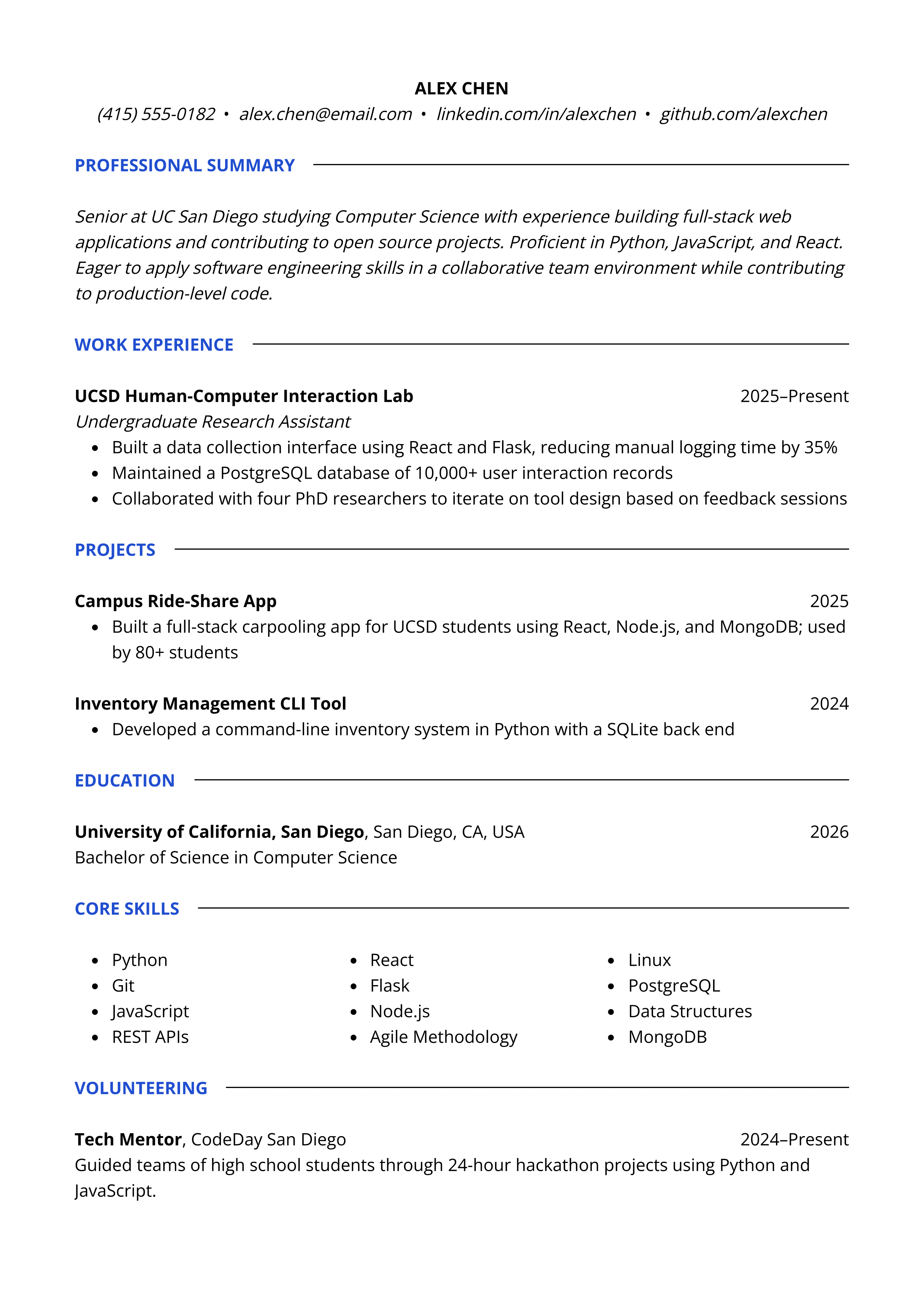
Software Development Intern
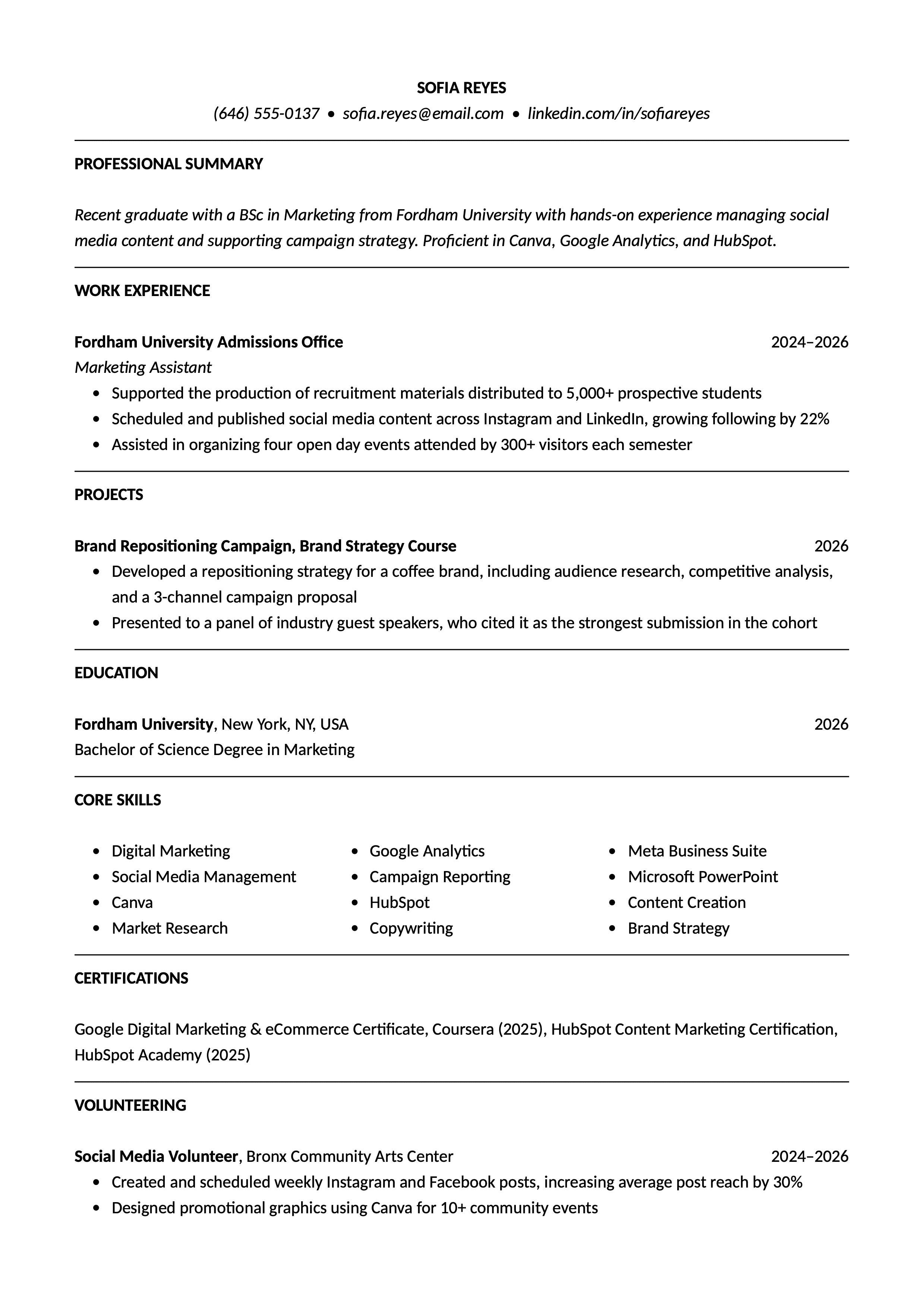
Marketing Intern
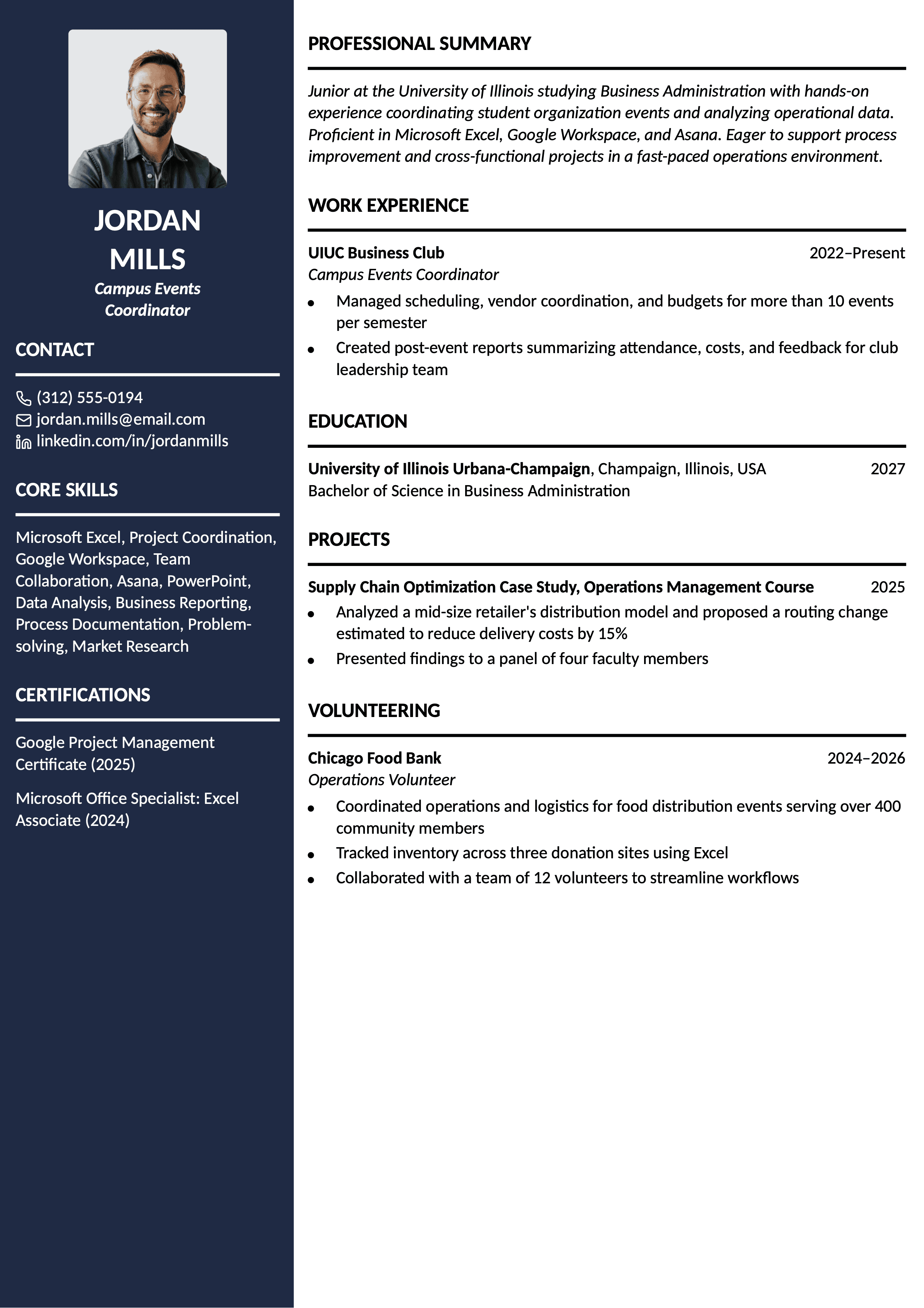
Business Operations Intern
Start Your Resume Now
Use our AI resume writer to craft a professional resume that helps you land a job.
Software Development Intern
Marketing Intern
Business Operations Intern
Start Your Resume Now
Use our AI resume writer to craft a professional resume that helps you land a job.
What Makes a Strong Internship Resume?
A strong intern resume demonstrates your potential, initiative, and the ability to learn quickly. Employers understand that many internship applicants have limited professional experience, so they look for evidence of your academic success, relevant projects, leadership activities, and any transferable skills you might have.
Effective candidates focus on accomplishments rather than simply listing responsibilities. Class projects, research work, student organizations, volunteer experience, freelancing, and part-time jobs can all help show how you applied your skills in real situations.
Recruiters also want context. Include details that help them understand your experience, such as project results, team size, tools used, and measurable results. For example, mentioning that you analyzed data from a survey of 300 students or led a fundraising campaign provides far more value than a generic description like "strong team player."
Including technical skills can strengthen your internship application. Depending on the role, employers may expect familiarity with tools such as Microsoft Excel, Google Workspace, Tableau, Figma, Python, Canva, or project management platforms. Even limited experience with these tools can help demonstrate readiness for an internship environment.
Professional Summary for Interns
For most internship applicants, a professional summary isn't always required, but it can still be useful. Resume objectives used to be common, but are now generally considered outdated. If you choose to include an opening section, use it to briefly explain your academic background, career interests, and the value you can bring to the role.
If you're currently studying, your intern summary should mention your degree program, graduation timeline, relevant coursework or projects, and key strengths. For example, a marketing student might highlight social media campaign experience, while a computer science student could mention software projects, programming languages, or hackathons.
Keep it concise and focused on how your skills connect to the internship rather than what you hope to gain from the opportunity. The strongest summaries immediately show recruiters why you're a relevant candidate.
Key Skills for an Intern Resume
The skills section should reinforce the experience, projects, and coursework already included elsewhere on your resume. Employers want to see a combination of technical abilities, academic knowledge, and workplace-ready soft skills.
Include hard skills that are relevant to the position, such as Excel, PowerPoint, SQL, Python, Adobe Creative Suite, Figma, or Google Analytics. Technical skills are often used by applicant tracking systems and can help your resume appear in recruiter searches.
Soft skills are equally important for internship candidates. Communication, collaboration, problem-solving, adaptability, and time management are frequently mentioned in internship job descriptions because employers are often hiring for potential.
Instead of creating a long list, prioritize the skills that directly support the role you're targeting and can be backed up by examples from your coursework, projects, leadership positions, or extracurricular activities.
- Microsoft Excel
- Data Analysis
- Research Skills
- Project Coordination
- Presentation Development
- Google Workspace
- Market Research
- Social Media Management
- SQL Basics
- Team Collaboration
Resume Keywords for Interns
Many employers use an applicant tracking system (ATS) to organize internship applications before recruiters review them. The most effective ATS keywords come directly from the job description and should match your experience.
Review the posting for keywords related to coursework, projects, technical skills, and leadership experience. Some common examples include data analysis, market research, project coordination, stakeholder communication, and business reporting. If you have experience with tools such as Microsoft Excel, Tableau, Figma, Python, Canva, or Google Analytics, include them within project descriptions and experience entries.
Keyword optimization works best when you support the keywords with real examples. Instead of listing a skill on its own, explain how you used it. An ATS-friendly resume should help both software and recruiters quickly understand what you've accomplished and how your experience connects to the role.
- Project Coordination
- Data Analysis
- Market Research
- Report Preparation
- Process Documentation
- Professional Communication
- Team Collaboration
- Research Support
- Data Visualization
- Administrative Support
ATS Optimization for Intern Resumes
Many organizations use an ATS such as Workday, Greenhouse, or iCIMS to manage internship applications. To ensure your resume can parse correctly, use a simple structure with clear headings and a single-column resume format.
Include keywords that match the target position, especially technical skills, coursework, and project experience. If a job description mentions Excel, SQL, Tableau, Figma, Python, or Google Analytics, highlight your relevant experience using those tools.
Recruiters also value measurable outcomes. Instead of writing "worked on a project," explain the results you achieved. For example, mention that you analyzed 1,000 survey responses, created a dashboard used by 10+ team members, or coordinated an event attended by 300 students. An ATS-friendly resume performs best when strong keywords are supported by concrete examples.
Design & Formatting for Intern Resumes
For most internship candidates, a clean and professional resume format works best. Recruiters often spend just a few seconds reviewing an application, so readability matters more than visual design.
Use a simple resume layout with consistent margins, clear section headings, and an easy-to-read font such as Calibri, Arial, Helvetica, or Garamond. A one-page resume is considered ideal for students and new graduates.
To increase your chances, avoid graphics, icons, and tables that can cause parsing issues. Organize your information logically, placing coursework, projects, and skills where hiring teams can easily find them. Consistent formatting helps recruiters spend less time searching for information and gives them more time to evaluate your qualifications.
Common Mistakes in Intern Resumes
- Listing coursework without explaining projects or outcomes. Add context by describing what you built, researched, or analyzed.
- Leaving relevant projects off the resume rather than including academic, volunteer, and personal projects that demonstrate your practical, transferable skills.
- Using one generic application for every role instead of tailoring keywords and experience to each opportunity.
- Placing technical skills at the bottom of the page. Important tools and software should be positioned prominently so recruiters can find them quickly.
- Omitting leadership experience from clubs or organizations, instead of highlighting situations where you managed events, budgets, teams, or initiatives.
Frequently Asked Questions
A one-page resume is ideal for most internship applicants. Recruiters expect concise applications that highlight education, projects, skills, and relevant experience. If you're a student or recent graduate, one strong page is usually more effective than two pages filled with less relevant information.