Resume Examples
Registered Nurse
ICU Nurse
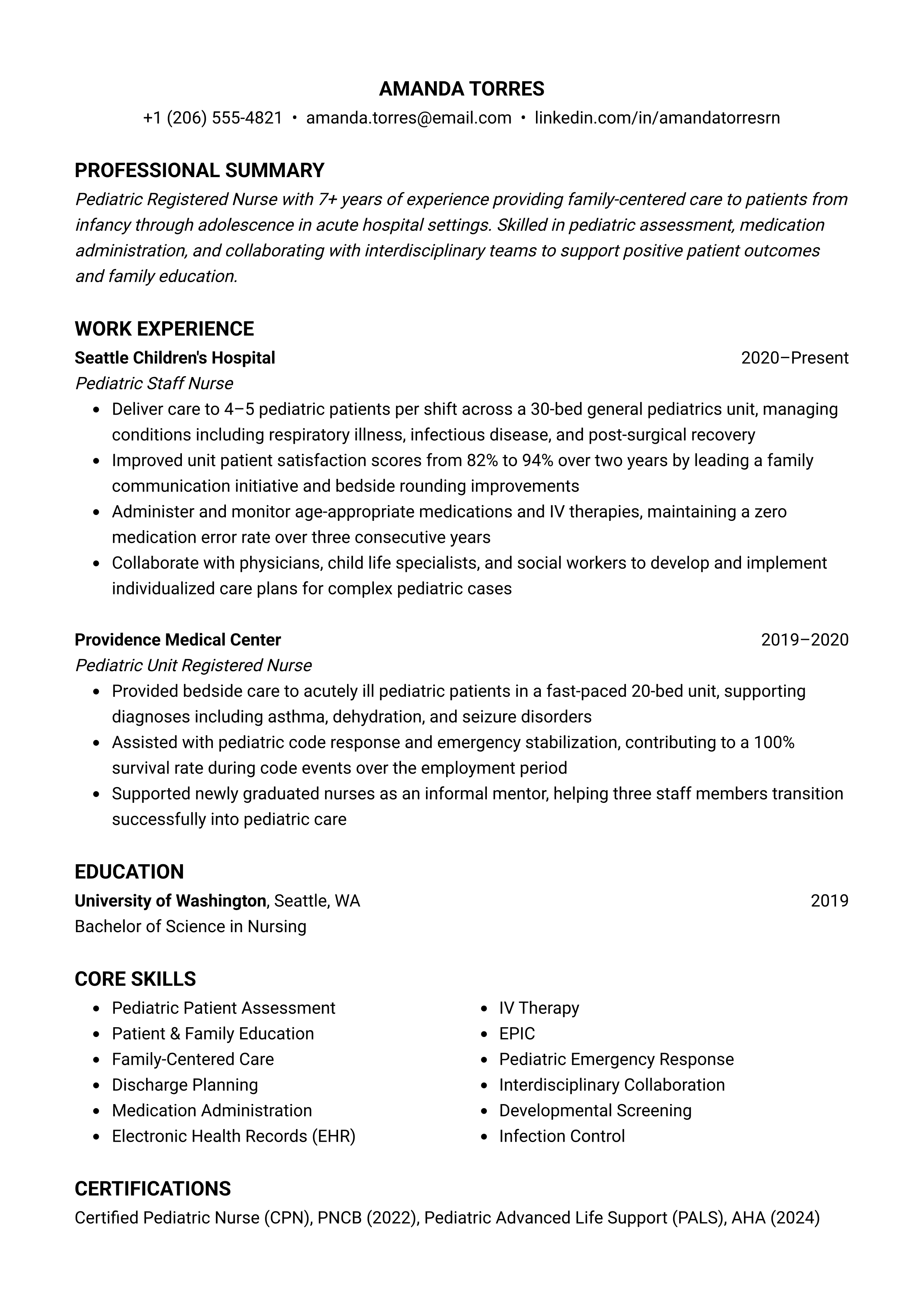
Pediatric Nurse
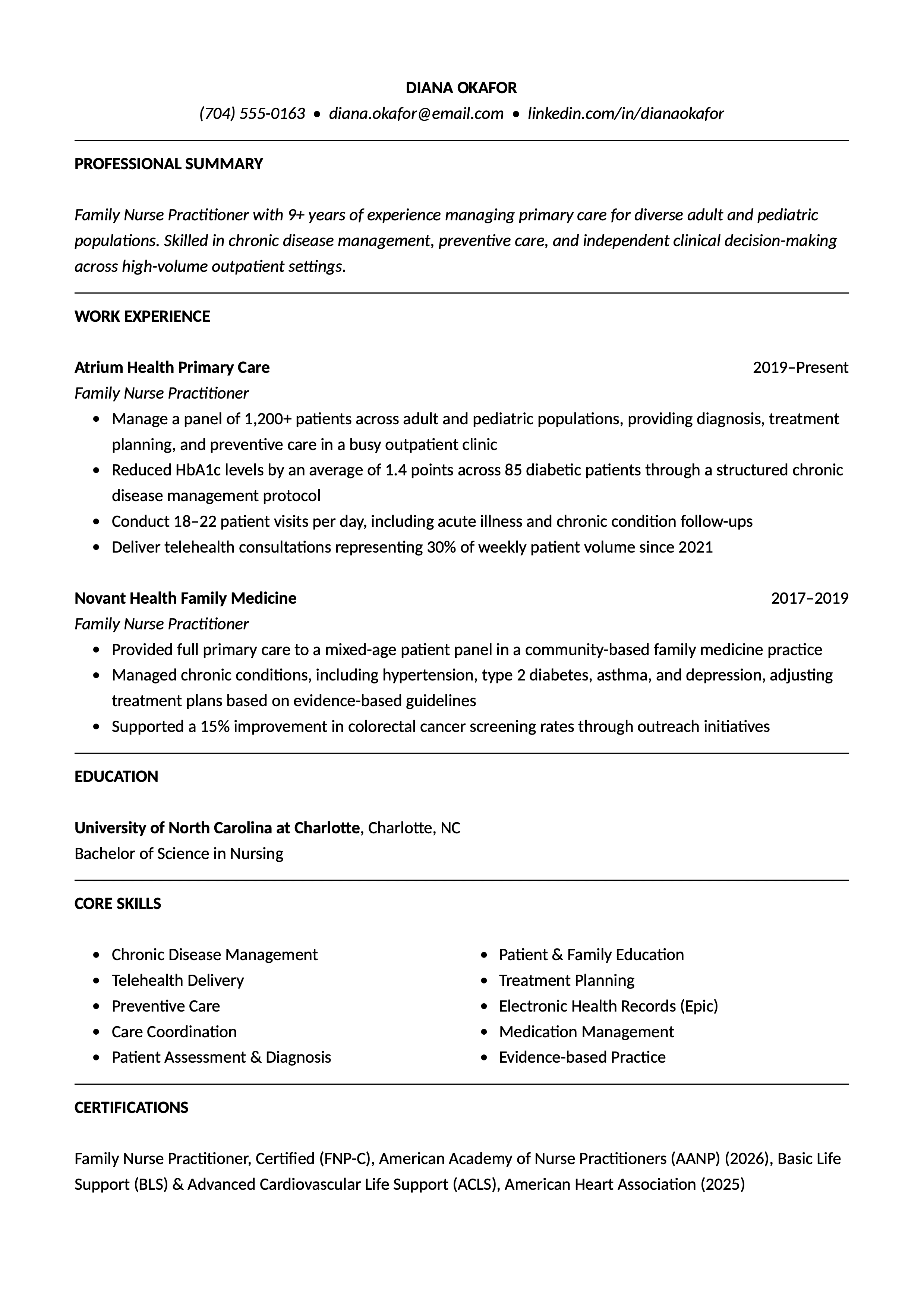
Nurse Practitioner
Start Your Resume Now
Use our AI resume writer to craft a professional resume that helps you land a job.
Registered Nurse
ICU Nurse
Pediatric Nurse
Nurse Practitioner
Start Your Resume Now
Use our AI resume writer to craft a professional resume that helps you land a job.
What Makes a Strong Nurse Resume?
A strong nurse resume clearly shows your clinical experience, patient care skills, and ability to work effectively in fast-paced healthcare environments. Employers want to quickly understand your nursing background, certifications, areas of specialization, and the types of patients or healthcare settings you've worked with.
Your resume should highlight relevant clinical skills, healthcare certifications, medical systems, and patient care experience related to your role, whether that's ICU, ER, pediatric, surgical, telemetry, or general nursing. Including nursing licenses, specialized training, electronic health record (EHR) experience, or other healthcare certifications relevant to your region or specialty can also help employers quickly identify your qualifications.
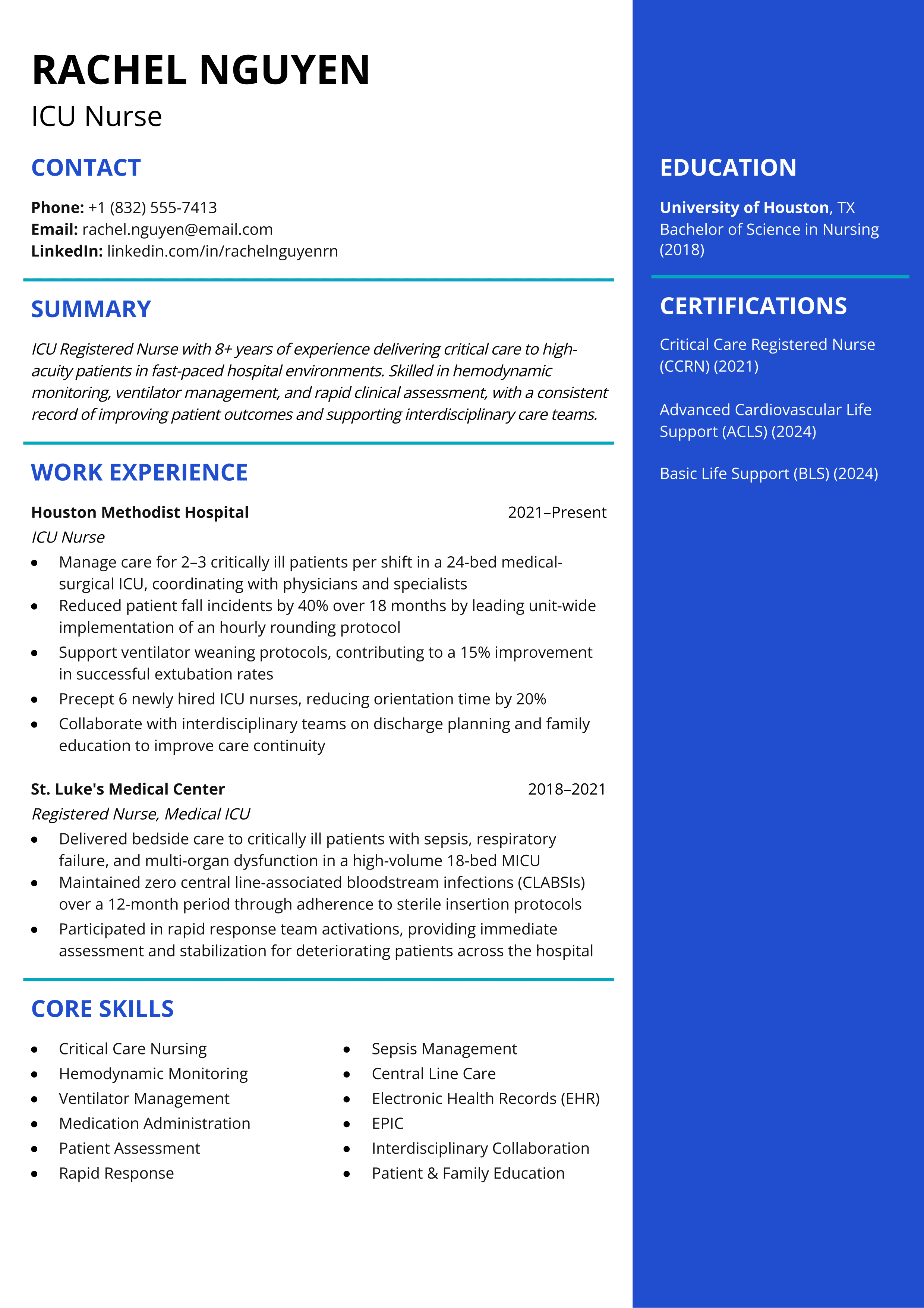
Strong nursing resumes focus on patient outcomes, clinical responsibilities, and measurable contributions instead of only listing daily tasks. For example, you might mention improving patient satisfaction, supporting high patient volumes, reducing medication errors, assisting with critical care procedures, or helping improve care coordination. Clear clinical context and relevant healthcare experience usually make nursing resumes easier for recruiters and nurse managers to evaluate.
Professional Summary for Nursing Roles
For most nursing roles, a professional summary is more effective than a traditional resume objective. Resume objectives are generally considered outdated because they focus more on what the candidate wants, while modern summary sections focus on clinical experience, patient care expertise, and the value you bring to a healthcare team.
A strong summary helps employers quickly understand your nursing background, clinical specialties, certifications, and healthcare environment experience. For example, nurses may highlight acute care, emergency care, surgical nursing, pediatrics, ICU experience, patient education, or care coordination. Mentioning nursing licenses, specialized training, multilingual communication skills, or experience with electronic health record systems can also help employers quickly identify your qualifications.
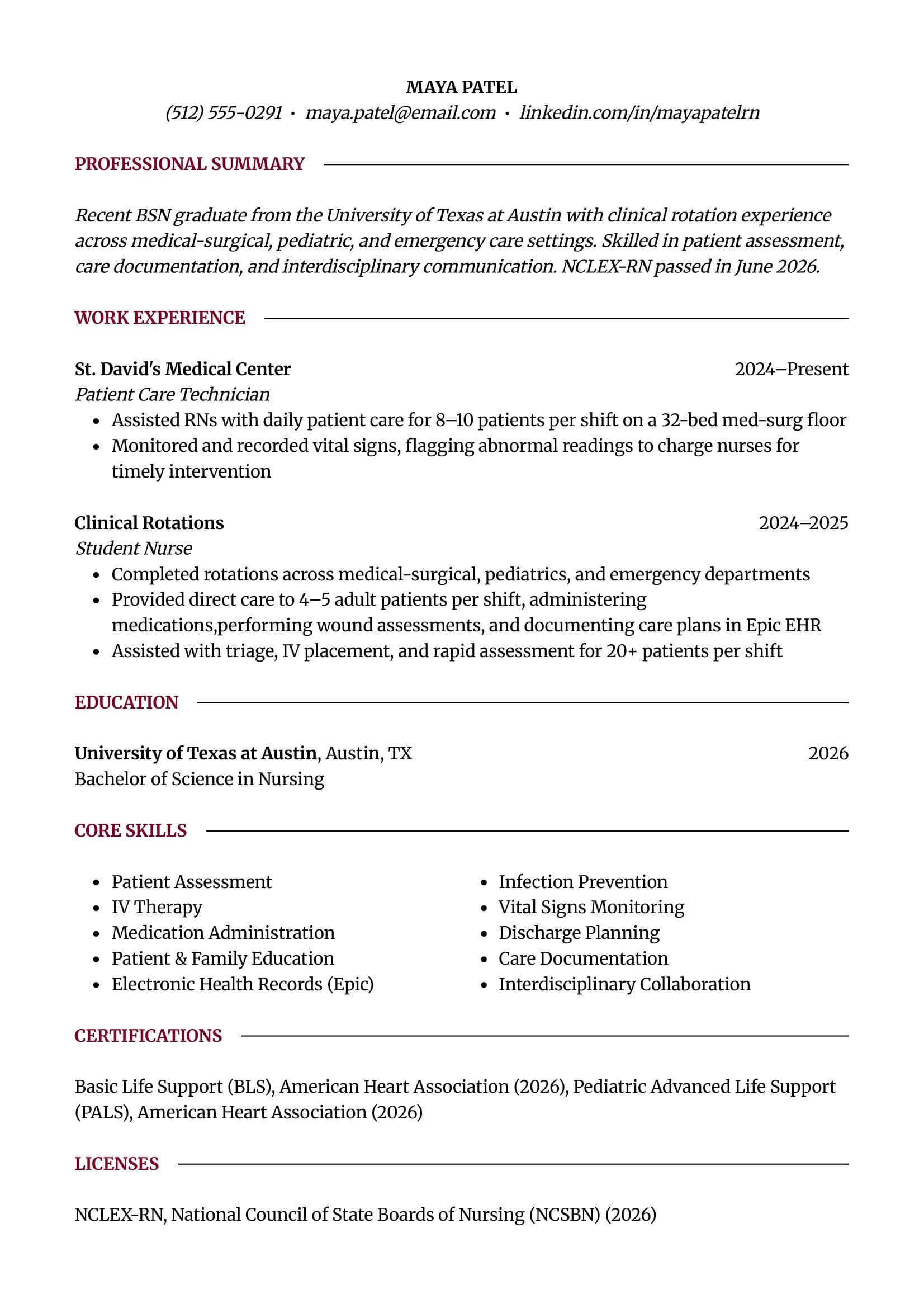
For entry-level nurses or recent graduates, this section can also highlight clinical rotations, internships, healthcare training, certifications, volunteer work, or transferable patient care skills.
Key Skills for a Nurse Resume
A nursing resume should include a balance of clinical skills, patient care competencies, and healthcare-related soft skills that match the role you're applying for. Employers often review the skills section to quickly identify clinical experience, certifications, healthcare systems knowledge, and areas of specialization.
The strongest skills sections focus on practical nursing competencies instead of broad or generic terms. Depending on your background, this may include patient assessment, medication administration, wound care, emergency response, infection prevention, care coordination, or electronic health record systems. Some nursing roles may also require specialized certifications, clinical procedures, or experience with specific patient populations.
It's also important to support your nursing skills with real clinical experience throughout your resume. Employers are usually more interested in how you applied your skills in patient care settings than in a long list of healthcare terms alone.
- Patient Care
- Clinical Assessment
- Electronic Health Records
- Medication Administration
- Infection Prevention
- Care Coordination
- Vital Signs Monitoring
- Patient Education
- Emergency Response
- Clinical Documentation
Resume Keywords for Nursing Roles
The keywords on a nursing resume should match the certifications, clinical skills, healthcare settings, and responsibilities mentioned in the job description while still accurately reflecting your real experience and qualifications. Many healthcare employers use applicant tracking systems (ATS) to help organize applications, so using relevant healthcare terminology can make your background easier to identify and evaluate.
Strong nursing resume keywords often include clinical specialties, patient care responsibilities, healthcare certifications, medical procedures, and care coordination terminology related to your field. For example, nursing roles may mention emergency care, acute care, patient monitoring, medication administration, infection prevention, discharge planning, or interdisciplinary collaboration, depending on the position and healthcare setting.
Instead of adding keywords only for visibility, use them naturally throughout your experience, certifications, clinical training, and skills sections. The strongest resumes connect healthcare terminology to real patient care experience, clinical responsibilities, and measurable outcomes.
- Registered Nurse
- Patient Monitoring
- Care Coordination
- Clinical Documentation
- Acute Care
- Medication Safety
- Patient Advocacy
- Infection Prevention
- Interdisciplinary Collaboration
- Quality Improvement
ATS Optimization for Nurse Resumes
Many healthcare employers use applicant tracking systems (ATS) to help organize and review applications before resumes reach recruiters or hiring managers. A clean, structured resume format makes your qualifications easier to scan and helps healthcare systems correctly identify your clinical experience, certifications, and nursing background.
An ATS-friendly nursing resume usually works best with a simple single-column layout, clear section headings, and standard formatting. Avoid heavy graphics, tables, icons, or overly designed layouts that may create readability issues in systems like Workday, iCIMS, or Taleo.
It's also important to use healthcare terminology naturally throughout your resume, especially in your certifications, skills, and clinical experience sections. For nursing roles, employers often look for nursing licenses, clinical specialties, patient care experience, certifications, and healthcare procedures relevant to the position. Mentioning areas like ICU, ER, pediatrics, surgical care, medication administration, patient monitoring, or care coordination within real clinical examples can help improve both clarity and relevance.
Design & Style Guidelines for Nurse Resumes
Nursing resumes usually work best with a clean, professional layout that makes clinical experience, certifications, and patient care responsibilities easy to review. Recruiters and nurse managers often scan resumes quickly, so clarity and organization are usually more important than creative design elements.
A simple resume format with clear section headings, readable fonts, and consistent spacing is generally the safest choice. Most nursing resumes also benefit from a single-column layout because it improves readability and works better with applicant tracking systems. Certifications, licenses, clinical specialties, and healthcare experience should be easy to identify quickly.
Avoid heavy graphics, excessive colors, complex tables, or decorative layouts that can distract from your qualifications or create formatting issues during online applications. A structured resume layout with concise bullet points and clear clinical information usually feels more professional and easier for healthcare employers to evaluate.
Common Mistakes in Nurse Resumes
- Listing patient care responsibilities without explaining the type of unit, patient population, or clinical environment you worked in.
- Using vague descriptions like “provided patient care” instead of highlighting clinical procedures, patient loads, or measurable outcomes.
- Leaving out nursing licenses, certifications, or renewal details that employers may expect to see clearly listed.
- Including every clinical rotation or training placement instead of focusing on the most relevant nursing experience and specialties.
- Not mentioning experience with electronic health records, clinical documentation, or healthcare systems commonly used in nursing environments.
Frequently Asked Questions
Most nursing resumes should be one page long, especially for entry-level and mid-level roles. Nurses with extensive clinical experience, leadership responsibilities, multiple certifications, or specialized healthcare backgrounds may use two pages if the content remains relevant and easy to review. Focus on the patient care experience, certifications, clinical skills, and healthcare settings most important to the role.