Resume Examples
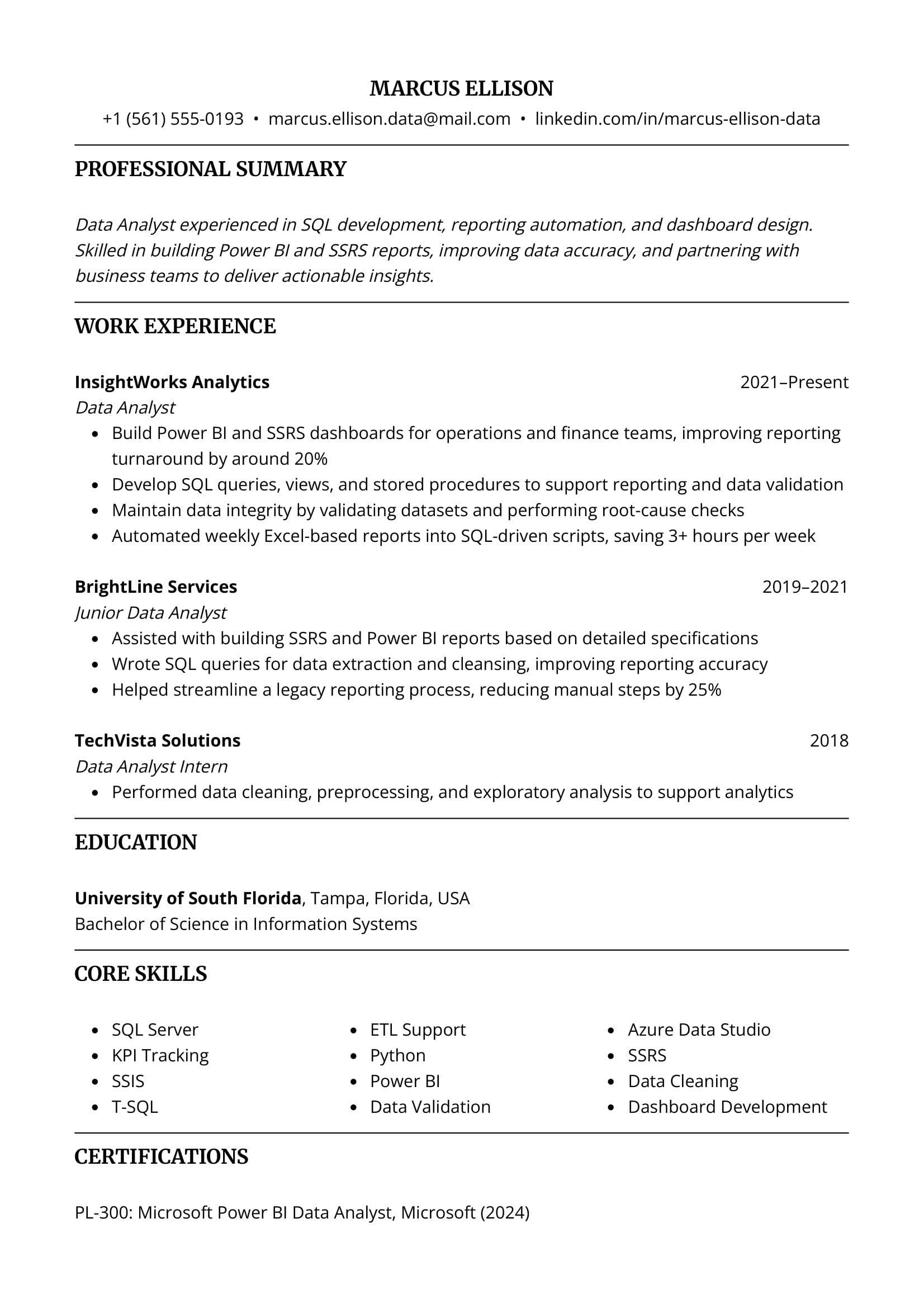
Data Analyst
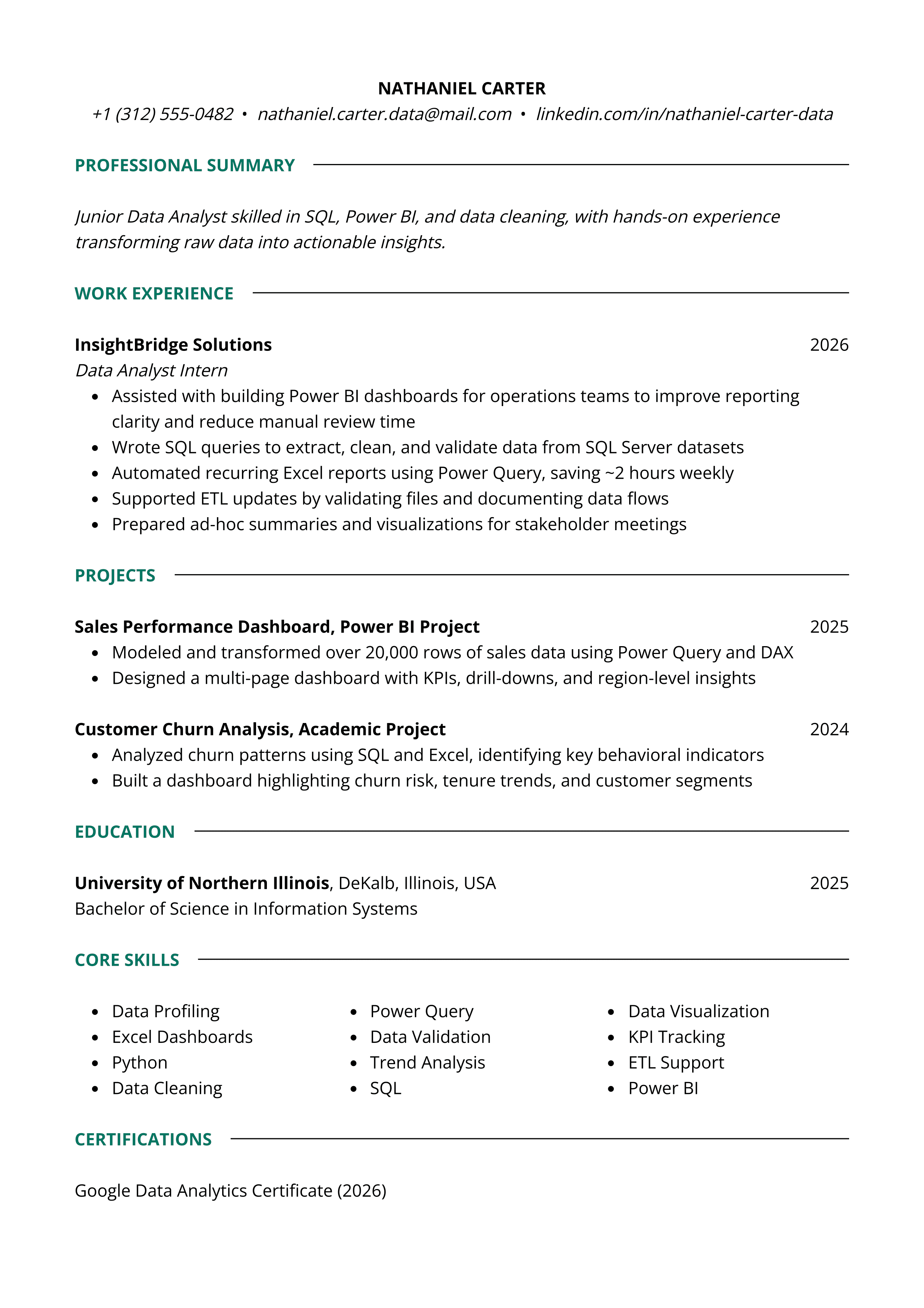
Junior Data Analyst
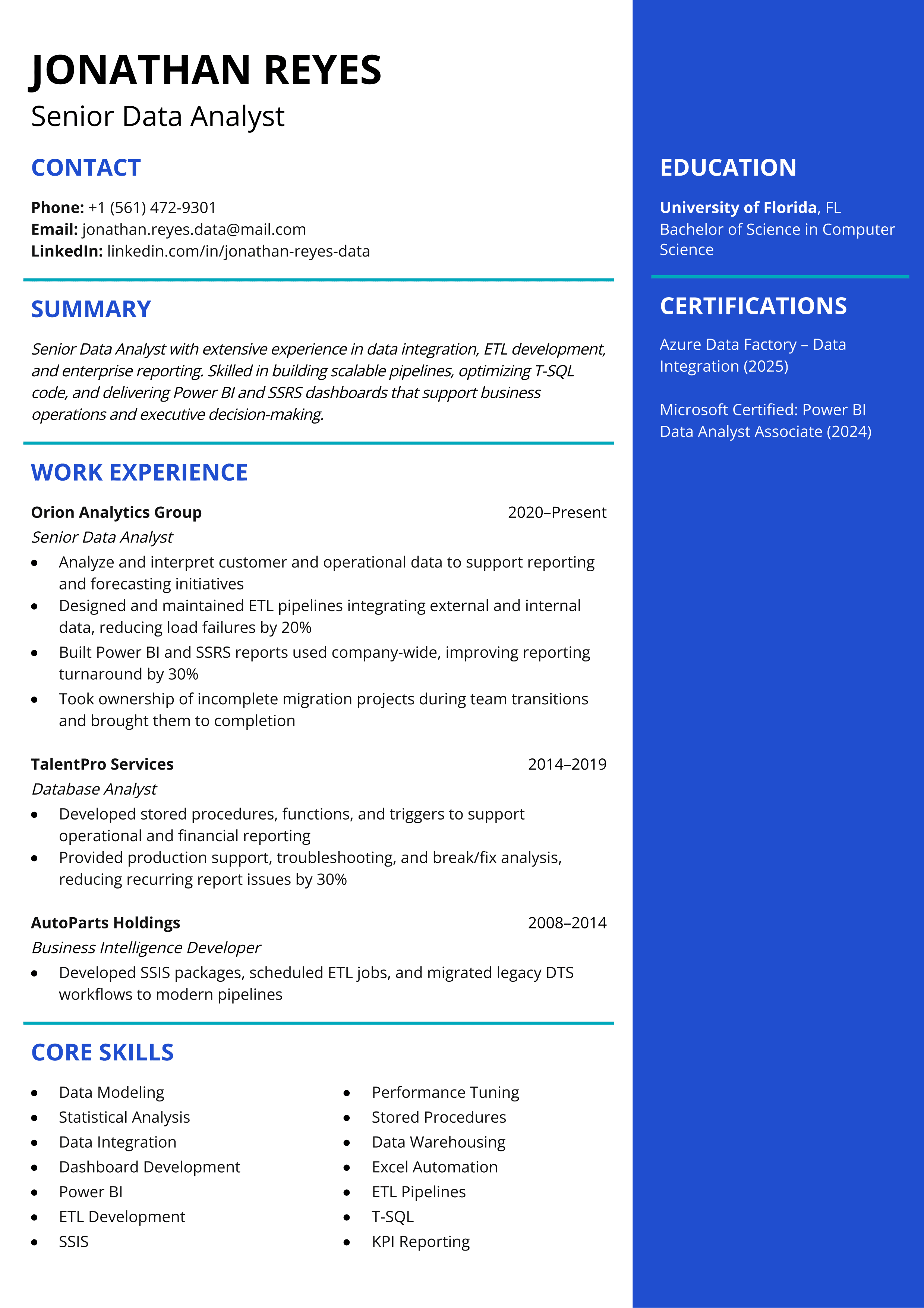
Senior Data Analyst
Start Your Resume Now
Use our AI resume writer to craft a professional resume that helps you land a job.
Data Analyst
Junior Data Analyst
Senior Data Analyst
Start Your Resume Now
Use our AI resume writer to craft a professional resume that helps you land a job.
How to Write a Good Data Analyst Resume
Every strong data analyst resume example demonstrates the candidate's skills for turning data insights into business results. It's not enough to simply list your capabilities; you need to showcase how they were used in your work experience for influencing business decisions and how they led to significant professional achievements.
In addition to results-oriented work experience descriptions, it's important for recruiters to see what tools you're familiar with as a professional working in data science and data analytics, what your work methodology is, and whether you're capable of communicating your insights to stakeholders efficiently.
Below, you can find detailed insights for each section and aspect of a data analyst resume optimization. Our professional resume writers implemented these guidelines in the resume samples you can use to get started.
Professional Summary for Data Analyst Resumes
As illustrated in our data analyst resume samples, a professional summary is the introductory section that briefly describes the most important and impressive skills and achievements. Your goal is to grab readers' attention and make them want to keep reading. To achieve that, make your data analytics expertise clear right away and back it up with some big wins.
Professional summaries are sometimes called resume objectives, but the term is considered outdated. That said, there are some situations where you can say what type of role you're looking for and what you're passionate about, such as when you're just entering the job market.
Skills Section in a Data Analyst Resume
A data analyst resume example always lists a diverse set of skills. Besides the technical skills like SQL, Tableau, Power BI, Excel, and databases, such as PostgreSQL and BigQuery, it's equally important to highlight your "softer" skills. Those are not purely technical, and they are often interpersonal. A good example is your communication skills, which are essential for a professional working in the field of data analytics and data science.
When unsure which skills to list, read the job requirements carefully, as they almost always list all the necessary skills for the job.
- SQL
- Python
- Excel
- Tableau
- Power BI
- Data Visualization
- Data Cleaning
- Statistical Analysis
- Business Intelligence
- ETL
- Reporting & Dashboards
- Data Modeling
Keywords to Include in a Data Analyst Resume
Optimizing the keywords for a data analyst's resume is crucial, especially for getting past applicant tracking systems (ATS). Many companies use ATS platforms in their hiring processes, and they serve as an initial filter in the selection process. Similar to recruiters, those machine readers look for specific keywords to determine whether you're a good fit for the job.
The keywords for a data professional are predominantly the skills required for the position you're applying for. Make sure to weave them into both your job descriptions and the dedicated skills list, like in our data analyst resume examples.
- SQL
- Python
- Tableau
- Power BI
- Excel
- Data Visualization
- Statistical Analysis
- Data Cleaning
- ETL
- Business Intelligence
How to Optimize Data Analyst Resumes for ATS
As we mentioned in the previous section, many companies use ATS platforms in their selection process, and among the most commonly used are Greenhouse, Lever, Workday, and iCIMS. An ATS-friendly data analyst resume example is not only one that includes all the necessary keywords.
In addition to including the keywords, you need to make your resume easily scannable by ATS. That means using standard section headings, such as Professional Summary, Work Experience, Skills, Certifications, and Education. Also, you should avoid using tables or graphics, as they can create a risk that the content of your data analyst resume won't be parsed correctly.
Data Analyst Resumes Design & Formatting
For data analytics and data science resumes, sticking to standard, more conventional resume formats and layouts is typically the safest option. Unless it's clear from the job posting that a creative expression would be appreciated, we recommend avoiding excessive color and visual elements.
As a professional working in the data field, it's essential to make your skills and accomplishments the focus of your resume, without visual distractions. Additionally, choose standard fonts for a design analyst resume, such as Arial, Calibri, or Helvetica.
Common Mistakes in Data Analyst Resumes
- Listing the tools you're familiar with, without describing how you used them and what you achieved.
- Not mentioning the business results and impact of your work as a data analyst.
- Omitting the data volume and complexity when describing your data analytics tasks and projects.
- Failing to include your experience with data governance or data quality frameworks and policies.
- Skipping the so-called "soft skills," such as stakeholder communication or cross-functional collaboration, which are important for data professionals.
Frequently Asked Questions
Similar to the situation with the majority of professional resumes, data analyst resume examples are one to two pages long. It's not so much about the specific target role title as about the level of experience and where you are in your career. More junior roles typically require one-pagers, while seasoned professionals can absolutely submit a two-page resume.