You don’t need to make any of these experiences sound like something they’re not. A class project is still a class project and not a full-time job. The important part is showing what you built, researched, organized, or improved, and what you learned from doing it.
That approach also reflects where hiring is at right now. NACE’s 2026 research found that 70% of surveyed employers use skills-based hiring, with screening one of the stages where it’s most commonly used. The same research highlights internships, other hands-on experience, and the ability to connect coursework and extracurricular activities to professional skills.
For most entry-level resumes, a simple structure is the safest choice:
- Contact information: Name, location, phone, email, and relevant LinkedIn or portfolio links.
- Resume summary (optional): A brief introduction highlighting your field of study, strongest skills, and relevant projects or experience.
- Education: Degree or current program, school, graduation date, and relevant coursework where useful.
- Skills: Technical and practical skills that match the role.
- Projects or relevant experience: Include the most relevant details you have for the specific job.
- Certifications and additional experience: Include certifications, volunteer work, leadership, or other relevant experience when they strengthen the application.
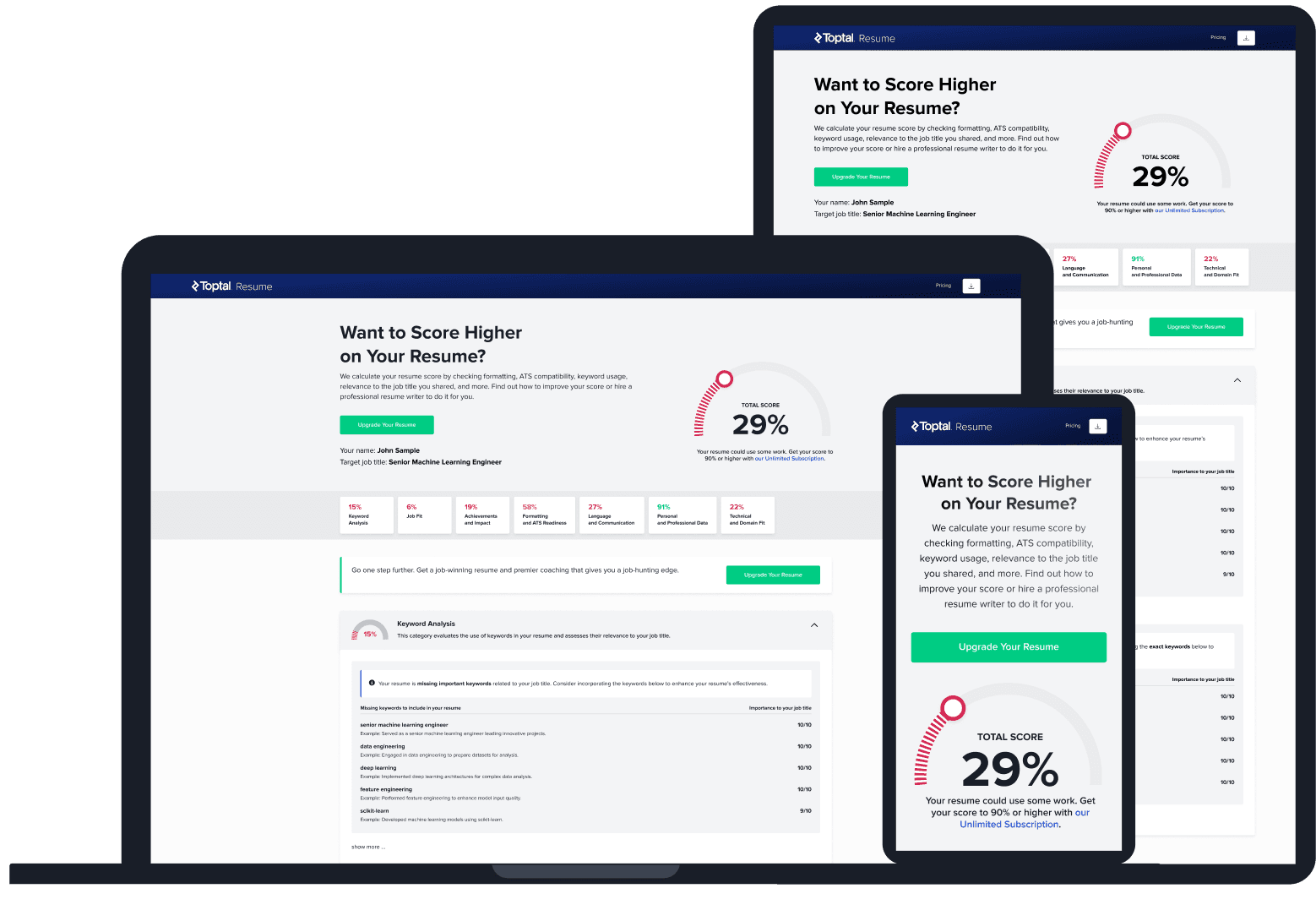
You don’t have to use this exact order. For example, if you have a strong project or internship, it may deserve more attention than a long list of coursework. Your main goal is to make the most relevant evidence easy to find. If you’d rather start with a template than build your resume from scratch, Toptal Resume can help you organize these sections and tailor the content to the role you’re targeting.
Entry-level Resume Example: Computer Science Student
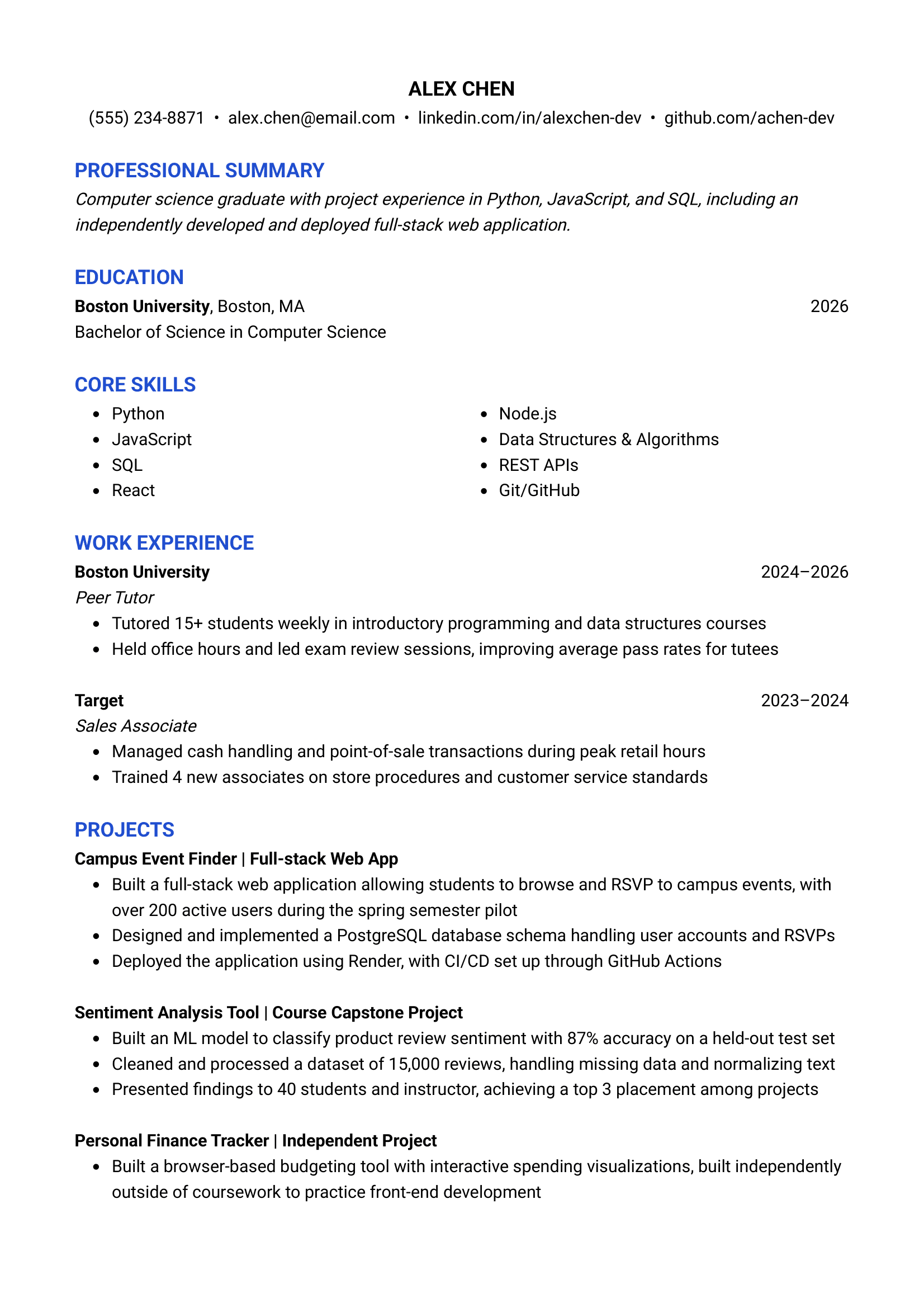
The example below is for a computer science student applying for a first job in tech without a previous internship or paid role in the field.
It uses the standard resume sections, but puts more weight on projects and technical skills because they give the employer the clearest picture of what the candidate can do. The resume also includes a GitHub link, which gives the hiring team a chance to look at the candidate’s actual work.
This approach is particularly useful when you’re building an entry-level tech resume. If you don’t have professional experience in the field yet, projects, coursework, and technical work can give an employer something concrete to evaluate.
Here's what works well in this resume example:
- The introduction gives the reader useful information. Instеad of an objective focused on what the candidate is looking for, the summary highlights their education, technical skills, and project experience.
- The GitHub profile backs up the skills section. Listing Python or JavaScript is a good start, but giving an employer a way to see the code you’ve written is much more useful.
- Projects are treated like traditional work experience. Each project is included like an experience entry, with the project name, tools used, and details about what the candidate built or contributed.
- Part-time work counts. A campus job or retail position may not be directly related to tech, but it still shows how the applicant handled responsibility, worked with others, and managed priorities.
This same principle applies in other industries. A writing portfolio can support a communications application, design work can support a creative role, and volunteer projects can show planning or leadership experience. Start with whatever gives the employer the clearest picture of what you can contribute to the role.
You’ll still find older resume advice recommending objectives for entry-level candidates, but that advice hasn’t kept up with how resumes are read today. We recommend skipping the objective statement, as most of them don’t say much more than “seeking an opportunity to grow and learn.” They tell the recruiter what you want without giving them much reason to keep reading.
Objectives still have a place on some resumes. For example, they can help when there’s a gap between your previous experience and the role you’re applying for, such as a career change, a military-to-civilian transition, or a return to work after a long absence. In those cases, a short explanation can give the recruiter useful context.
If you want to include an introduction at the top of your resume, a short summary is usually the best choice. Use it to explain what you know and what you can do, such as your field of study, your strongest skills, and the kind of work you’re ready to take on.
You can also leave the introduction out altogether. There’s no requirement to fill that space just because it appears on a resume template. If you don’t have anything specific to say, let the recruiter get straight to your education, projects, skills, and other experience.
If you do include a summary, keep it short and specific. For example: “Computer science graduate with project experience in Python, JavaScript, and SQL, including an independently built and deployed full-stack web application.” That gives the reader something concrete to work with instead of describing what the candidate hopes to find. For a full breakdown of when a summary works better than an objective, and when it’s fine to skip both, see our resume objective vs. summary guide.
How to Build an Entry-level Tech Resume
If you’re applying for your first job in tech, your projects and technical work deserve particular attention. You don’t need a professional software engineering job to demonstrate technical ability. A capstone project, coding assignment, personal application, data analysis project, website, or contribution to an open-source project can all give you something to discuss.
For each project, include:
- What you built or worked on
- The tools or technologies you used
- Your specific contribution
- The result, where you have one
- A link to the finished work, when appropriate
For example, “Built a Python application for a class project” doesn’t tell the reader much. A stronger entry might explain what the application did, which libraries or technologies you used, and how you tested or improved it. The same idea applies to an entry-level IT resume. Instead of listing “networking” or “troubleshooting” as skills with no context, point to the lab work, certification, personal project, or other experience where you used them.
Don’t leave a part-time job off your resume just because it isn’t directly related to the position you’re applying for. For example, a retail job might show that you resolved customer issues, trained new employees, or worked toward sales targets. A campus job might involve scheduling, admin work, or managing requests. Tutoring can demonstrate communication, planning, and the ability to explain complex information clearly. All of these represent transferable skills that can be useful for your next role.
You don’t need to pretend these were technical roles. Instead, describe the responsibilities that demonstrate skills you can bring to the next job. The same applies to volunteer work and student organizations. If you organized an event, managed a budget, led a team, raised money, or coordinated volunteers, that’s experience worth including.
- Filling the resume with irrelevant details. Listing every class, hobby, or minor task you’ve completed makes it harder to see the experience that's actually relevant for your application.
- Apologizing for having little experience. You don’t need to explain that you’re inexperienced. Use the space to show what you’ve learned, built, contributed to, or taken responsibility for.
You don't need years of work experience to build a strong first resume. What matters is giving the reader enough evidence to understand what you can do and where you've applied those skills. Toptal Resume can help you organize your education, projects, skills, and other experience into a clear structure, with AI-assisted suggestions you can adapt to the role you're targeting.