

Hire Interactive Designers
Hire the Top 3% of Freelance Interactive Designers
Hire interactive designers, on demand. Top companies and startups choose interactive designers from Toptal for animated UI elements, haptic feedback systems, scroll-based animations, AR/VR experiences, gesture-based interactions, and more.
Hire a Top Interactive Designer Now
No-Risk Trial, Pay Only If Satisfied.









Hire Freelance Interactive Designers

Ning Xu
Freelance Interactive Designer
Verified Expert in Design
UTC-08:00
United States
Toptal Member Since September 25, 2023
Ning is a former startup founder and award-winning designer who brings a deep understanding of user needs to her role as a senior product designer. With a passion for solving complex problems and empowering users through thoughtful design, she has earned recognition for her creativity and problem-solving abilities, including prestigious awards from IxDA and Fast Company's World Changing Ideas. Ning is an overachieving professional who can bring your design visions to life.
Show More




Paula Barcante
Freelance Interactive Designer
Verified Expert in Design
UTC-08:00
Canada
Toptal Member Since February 26, 2020
Paula is an award-winning UX/UI designer, advisor, and illustrator with more than six years of hands-on experience in making complex interfaces delightful and user friendly. She has made a significant impact in large corporations, such as Amazon, Zillow, Google, as well as startups. Her mission is to create efficient, beautiful, innovative, and high-quality experiences for the greater good of society.
Show More


Adrian Sule
Freelance Interactive Designer
Verified Expert in Design
UTC-05:00
Canada
Toptal Member Since January 8, 2016
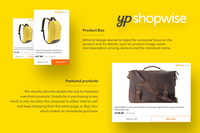
Adrian is a highly skilled and full-spectrum product, UX, and UI designer of complex platforms, web and mobile applications, and websites, with 15 years in B2B and B2C companies and enterprises, such as eCommerce, SaaS, fintech, and retail. Adrian’s sophisticated designs have helped UBS Bank (Neo trading), YellowPages Canada (YP Shopwise and YP Compass), a Fortune 100 construction manufacturer, CutureIQ, and various eCommerce web and mobile businesses.
Show More

Melisa Navarro
Freelance Interactive Designer
Verified Expert in Design
UTC-05:00
United States
Toptal Member Since February 4, 2019
Melisa is a Miami-based product designer who loves working on innovative and stunning experiences by helping clients bring their visions to life. She has experience working with enterprise companies like HBO and Royal Caribbean and startup apps with millions of users, such as Carb Manager, FITRADIO, and more. Melisa is passionate and skilled in the whole product design process, from UX Strategy to visual design, motion, and interaction design.
Show More




Daniela Coiset
Freelance Interactive Designer
Verified Expert in Design
UTC-03:00
United States
Toptal Member Since September 9, 2020
Daniela is a Senior Product and Interaction Designer with 14+ years of experience designing complex systems, AI-powered experiences, and high-impact visual communication for global consumer and enterprise products. She specializes in interaction design, information architecture, and cross-functional collaboration. Daniela excels at translating ambiguity into intuitive, scalable, user-centered solutions across platforms.
Show More

Rodrigo Pitorri
Freelance Interactive Designer
Verified Expert in Design
UTC-03:00
Brazil
Toptal Member Since January 23, 2022
Rodrigo is a product designer with more than 20 years of experience in digital design for Brazilian, Colombian, Spanish, and U.S. companies. With extensive knowledge across key product design disciplines, including UI, visual, UX, UX research, and workshop facilitation, he's proficient in leading digital product design and crafting unique user experiences. To Rodrigo, the most satisfying part is delivering solutions for complex problems and designing products that improve people's lives.
Show More


Hugo Barbera
Freelance Interactive Designer
Verified Expert in Design
UTC+00:00
Spain
Toptal Member Since June 8, 2020
Hugo specializes in pro-grade AI creative work, with 16 years of experience in advertising, working with global icons like Nike, Volkswagen, Audi, Coca-Cola, Hugo Boss, & Vogue. His work has earned awards at major advertising festivals. He's delivered 30+ commercial AI projects & has been exhibited in Milan, Paris, & NYC. A seasoned keynote speaker, he inspired audiences at Digital Fashion Week Paris, Upscale Conf, & Cannes Lions, showcasing the transformative power of AI-driven creativity.
Show More




Lucía Merlo
Freelance Interactive Designer
Verified Expert in Design
UTC+01:00
Spain
Toptal Member Since October 17, 2022
Lucía is a visual designer with 15+ years of experience working with companies and museums, including IKEA, LEGO, Munch Museum, and the Museum of the Future. Alongside visual design, she brings a strategic mindset, helping define the right direction before turning ideas into clear visual communication. Lucía creates brand systems, interfaces, exhibitions, illustrations, motion, and visual guidelines with a focus on clarity, originality, and impact.
Show More

Damir Kotorić
Freelance Interactive Designer
Verified Expert in Design
UTC+01:00
Bosnia and Herzegovina
Toptal Member Since January 13, 2020
Damir is a multidisciplinary digital designer with 16 years of experience and Fortune 500 expertise. He designed open data portals for Australian state governments, the mobile payments user experience at Booking.com, and the search experience at Envato Market. Damir also led AR design efforts on digital humanities projects for professors at Harvard University, taught as the lead UX instructor at General Assembly, and led design efforts for startups around the world.
Show More



Adams Abdulmojeed
Freelance Interactive Designer
Verified Expert in Design
UTC+04:00
United Arab Emirates
Toptal Member Since May 12, 2020
Talented and passionate, Adams brings over five years of experience in product design with the proven know-how to combine creative and usability viewpoints, resulting in world-class web, mobile, wearable, and AI applications. His proficiencies include optimizing user experience for both large and small organizations, planning projects from initial concept to completion, and providing compelling user experience to improve brand loyalty, customer retention, and successful visit-to-order ratios.
Show More

Muhammad Junaid Tahir
Freelance Interactive Designer
Verified Expert in Design
UTC+10:00
Australia
Toptal Member Since July 18, 2022
Passionate about enhancing user experience and maximizing user interface, Junaid is a designer and storyteller currently working as a product designer and web team lead at Mathspace. He uses design thinking to generate innovative ideas that bring brands to life and develop successful products through user-focused problem solving and research. Junaid understands users' pain points to seamlessly carry value through the end-to-end journey and bring a vision together through a holistic approach.
Show More

Discover More Interactive Designers in the Toptal Network
Start HiringA Hiring Guide
Guide to Hiring a Great Interactive Designer
Interactive designers are experts at creating aesthetically pleasing interfaces that engage customers and are easy to use. This guide to hiring interactive designers features an overview of relevant skills, job description tips, and interview questions and answers that will help you identify the best candidates for your company.
Read Hiring GuideInteractive Hiring Resources
Toptal in the press
... allows corporations to quickly assemble teams that have the right skills for specific projects.

Despite accelerating demand for coders, Toptal prides itself on almost Ivy League-level vetting.

Our clients


Creating an app for the game


Leading a digital transformation


Building a cross-platform app to be used worldwide


Drilling into real-time data creates an industry game changer
Testimonials
How to Hire Interactive Designers Through Toptal
1
Talk to One of Our Client Advisors
A Toptal client advisor will work with you to understand your goals, technical needs, and team dynamics.
2
Work With Hand-selected Talent
Within days, we’ll introduce you to the right interactive designer for your project. Average time to match is under 24 hours.
3
The Right Fit, Guaranteed
Work with your new interactive designer for a trial period (pay only if satisfied), ensuring they’re the right fit before starting the engagement.
EXCEPTIONAL TALENT
How We Source the Top 3% of Interactive Designers
Our name “Toptal” comes from Top Talent—meaning we constantly strive to find and work with the best from around the world. Our rigorous screening process identifies experts in their domains who have passion and drive.
Of the thousands of applications Toptal sees each month, typically fewer than 3% are accepted.
FAQs
Interactive design spans multiple sectors and applies to any business seeking to provide exceptional user experiences. Retail and e-commerce lead the way in leveraging interactive design to engage their users. For instance, Nike has created interactive shoe displays in brick-and-mortar stores that provide product information and customization options. Nike’s mobile app offers interactive AR features for trying on shoes virtually.
The entertainment industry relies heavily on interactive design to enhance users’ viewing experience. For example, ESPN features interactive scoreboards, live statistics, and real-time data visualizations during sports events. Other industries, such as advertising, hospitality, education, and technology, hire interactive designers to create digital experiences that improve the lives of their customers.
Typically, you can hire interactive designers with Toptal in about 48 hours. For larger teams of talent or full end-to-end project delivery, timelines may vary. Our talent matchers are highly skilled in the same fields they’re matching in—they’re not recruiters or HR reps. They’ll work with you to understand your goals, technical needs, and team dynamics, and match you with ideal candidates from our vetted global talent network.
Once you select your interactive designer, you’ll have a no-risk trial period to ensure they’re the perfect fit. Our matching process has a 98% trial-to-hire rate, so you can rest assured that you’re getting the best fit every time.
The cost associated with hiring an interactive designer depends on various factors, including preferred talent location, complexity and size of the project you’re hiring for, seniority, engagement commitment (hourly, part-time, or full-time), and more. In the US, for example, Glassdoor’s reported average total annual pay for interactive designers is $93,678 as of September 21, 2023. With Toptal, you can speak with an expert talent matcher who will help you understand the cost of talent with the right skills and seniority level for your needs. To get started, schedule a call with us — it’s free, and there’s no obligation to hire with Toptal.
An Interactive designer aims to create engaging and intuitive experiences by designing and producing UIs and their interactions. They collaborate with cross-functional teams to understand business and user needs, conceptualize messages through visual communication, and translate insights into meaningful design solutions.
Interactive designers apply their expertise in organizing information, mapping user flows, using design principles, and conceptualizing the UI to create visually appealing, engaging, and user-friendly products. Their work contributes to the success of digital products by creating designs that facilitate user behaviors and engagement, and help companies achieve their business goals.
An Interactive designer focuses on designing a digital product’s visual and interactive aspects, and oversees creating engaging and aesthetically pleasing UIs by considering typography, color schemes, iconography, animations, and other interactive components.
A UX designer, on the other hand, designs the overall experience of a product, focusing mainly on the functionality of a product’s features. They consider the entire user journey, from initial interactions to task completion, and aim to create a seamless, efficient, and enjoyable user experience. UX designers also conduct user research, gather requirements, create wireframes and prototypes, and collaborate with stakeholders to ensure the product meets user needs and business goals.
To hire the right interactive designer, it’s important to evaluate a candidate’s experience, technical skills, and communication skills. You’ll also want to consider the fit with your particular industry, company, and project. Toptal’s rigorous screening process ensures that every member of our network has excellent experience and skills, and our team will match you with the perfect interactive designers for your project.
At Toptal, we thoroughly screen our interactive designers to ensure we only match you with the highest caliber of talent. Of the more than 200,000 people who apply to join the Toptal network each year, fewer than 3% make the cut.
In addition to screening for industry-leading expertise, we also assess candidates’ language and interpersonal skills to ensure that you have a smooth working relationship.
When you hire interactive designers with Toptal, you’ll always work with world-class, custom-matched interactive designers ready to help you achieve your goals.
You can hire interactive designers on an hourly, part-time, or full-time basis. Toptal can also manage the project end-to-end based on your specific requirements as part of our Consulting and Services offerings. Whether you hire a interactive designer for a full- or part-time position, you’ll have the control and flexibility to scale your team up or down as your needs evolve. Our interactive designers can fully integrate into your existing team for a seamless working experience.
We make sure that each engagement between you and your interactive designer begins with a trial period of up to two weeks. This means that you have time to confirm the engagement will be successful. If you’re completely satisfied with the results, we’ll bill you for the time and continue the engagement for as long as you’d like. If you’re not completely satisfied, you won’t be billed. From there, we can either part ways, or we can provide you with another interactive designer who may be a better fit and with whom we will begin a second, no-risk trial.
Explore Related Toptal Services
Looking for an end-to-end business solution? Browse Toptal's portfolio of services.

How to Hire an Interactive Designer
The Demand for Interactive Design Continues to Expand
Interactive designers fuse graphic, experiential, and interface design skills to help marketing and advertising teams craft key user touch points, such as websites, kiosks, interactive exhibits, multimedia installations, retail displays, and immersive experiences. According to the US Bureau of Labor Statistics, this rare combination of skills is in high demand: Designers focusing on digital communication, layout, usability, and navigation are expected to enjoy a 16 percent employment increase from 2022 to 2032. With technologies like artificial intelligence (AI) and augmented reality (AR) on the rise, interactive designers will play a prominent role in shaping the digital and immersive experiences of the future.

However, hiring a skilled freelance interactive designer can be challenging, especially considering the confusion between interactive and interaction design—the latter prioritizes reducing friction in human-computer interactions. Despite their similarities, the two disciplines differ in execution and focus. As the prominent design leader and writer Jesse James Garrett proposes in his book The Elements of User Experience, UX design has five levels, with interactive design as a critical link between visual and information design.
This guide clarifies what an interactive designer does, how to evaluate candidates’ qualifications, and how to determine your project’s objectives. We also address how to assess the fit of the designers you interview and provide tips for hiring the best interactive designer for your organization.
What attributes distinguish quality Interactive Designers from others?
Are you hoping to create a compelling interactive experience that engages customers and drives value for your business? For your project to succeed, you need to determine what skills your organization needs. Depending on your project, you may require an interactive designer with some or all of the following abilities:
User-centric Approach: A skilled interactive designer prioritizes the needs and preferences of users. User-centricity should be evident in a candidate’s portfolio, and they should be able to explain how their design decisions led to experiences that are intuitive, user-friendly, and accessible.
Technical Proficiency: Expert interactive designers effortlessly use digital design tools to bring their ideas to life. They are adept at software such as Adobe Illustrator and Photoshop, Figma, and Sketch, and they should possess a working knowledge of front-end technologies such as HTML and CSS, allowing them to collaborate effectively with developers. Additionally, the candidate you hire should have in-depth experience designing devices such as laptops, smartphones, and tablets.
Aesthetic Sensibility: Interactive designers do a fair amount of graphic design work, including type formatting, color selection, and photo manipulation. The best interactive designers have an eye for what makes a visually appealing and emotionally engaging composition, and they know how to use aesthetic elements to communicate clearly.
Understanding of User Experience (UX) Principles: In addition to creating visually impressive designs, accomplished interactive designers have a firm grasp of UX principles. They have strong problem-solving abilities and can optimize design considerations, such as navigation, hierarchy, and consistency, to help users meet their objectives.
Continuous Learning: The digital design world is one of constant technological evolution. Skilled interactive designers stay abreast of the latest design trends, tools, processes, and methods. To benefit customers and clients, they actively seek ways to incorporate learnings into their projects.
In addition to the aforementioned attributes, accomplished interactive designers have portfolios that demonstrate a strong track record of creating effective interactions between users and devices. Their previous projects are aesthetically intriguing and display a high degree of functionality.
Accomplished interactive designers are also expert collaborators and communicators. They are comfortable working closely with other product team members, and they form strong relationships with diverse stakeholders such as brand managers, developers, and product managers.
How can you identify the ideal Interactive Designer for you?
Before you can assess a designer’s skills and fit for your organization, you need to clearly understand your project’s needs and understand the types of projects for which interactive designers are best suited.
Ground-up Project: A ground-up project involves creating a new digital product from conception to delivery. Ground-up projects can be quite complex because they typically involve cross-functional team dynamics, sometimes with competing objectives. The interactive designer you hire should be comfortable collaborating with stakeholders from departments like Engineering, Sales, and Marketing, and they should be skilled at producing detailed mockups that align cross-functional teams around a shared design vision.
Improvement Project: Improvement projects aim to enhance existing digital products and experiences by introducing features, optimizing task flows, improving aesthetics, and addressing user-identified pain points. This type of project often has a tight timeline and requires an interactive designer who excels in a fast-paced environment.
Visionary Project: A visionary project explores futuristic ideas and isn’t always tied to a pressing business need. For instance, you might hire a forward-thinking interactive designer to imagine an immersive retail experience that blends augmented reality and architectural elements. Such a project might not be immediately feasible, but exploring novel concepts can help inform future design directions and inspire your company to embrace new ways of thinking about its products.
Culmination Project: Culmination projects examine a digital product’s interactions from a user perspective. For instance, during a culmination project, a product manager might perform usability testing and discover that users are confused by visual clutter when asked to locate your site’s search bar. In such a scenario, you’d need an interactive designer who understands why the clutter causes confusion and knows how to make actionable recommendations for stakeholders and other designers—such as adding more padding or whitespace around the search bar.

Once you define your project, you’ll need to decide whether to hire a seasoned interactive designer or someone newer to the field. Here’s what you can expect at the junior, mid-level, senior, and lead levels:
Junior interactive designers primarily assist senior designers with production tasks while ensuring that visual design principles and interaction concepts are upheld. Typically, a junior designer’s work is carried out under the guidance of a more experienced designer who provides constructive feedback and skills training.
Mid-level interactive designers can make conceptual decisions and routinely collaborate with cross-functional teams to produce design assets. They are highly proficient in using digital design tools and know how to make design decisions that support business objectives.
Senior interactive designers can oversee multiple projects, gather and prioritize business requirements, and iterate on designs to incorporate user feedback and align with marketing goals. At this level, the designer has a robust design process, collaborates with internal employees and external stakeholders, and makes critical design decisions that drive business value.
Lead interactive designers have all the capabilities of senior interactive designers, as well as the expertise to define the organization’s design strategy, manage design teams, lead design workshops with stakeholders, present design outcomes and performance to executives, and conduct user research to drive innovation.
How to Write an Interactive Design Job Description for Your Project
Writing a clear and compelling job description is crucial to attracting talented candidates to apply for your interactive designer position. Depending on your needs, your job description may prioritize some skills over others. For example, if your project involves an interactive retail display, you’ll want to attract candidates with industrial and environmental design experience. While every project has different needs, your job description should touch on these core interactive design skills:
UI/UX Design Awareness: Interactive designers need a firm grasp of UX and UI design principles to create user-friendly products and experiences that help people achieve their goals. For example, an interactive designer working on a project that aims to convert distracted users in a time-sensitive situation would benefit from knowing Hick’s Law, a prominent UX principle: “The time it takes to make a decision increases with the number and complexity of choices.”
Web Design Proficiency: The bulk of interactive design work centers around websites, and web design proficiency enables designers to create accessible, responsive, and intuitive web experiences that operate seamlessly across devices.
Freelance Design Experience: A freelance interactive designer could be a good fit if your project has a definite end date or you don’t have enough work to hire a full-time employee. Freelancers are used to working on a project for a set duration and then moving on, and they often possess excellent time-management and communication skills. Additionally, many freelancers have skills in specialty areas (such as AI and AR / VR) that can help your product stand out from your competitors.
Visual Design Mastery: Mastery of visual design empowers an interactive designer to craft engaging interfaces through color, typography, photo manipulation, logo design, and grid-based layouts. Any designer you decide to interview should have a compelling portfolio exhibiting their command of visual design principles such as emphasis, balance, and rhythm.
Digital Experience Design Knowledge: The interactive designer you hire should have in-depth knowledge of digital platforms, social media, and web applications, and their design constraints. For instance, a heads-up display poses different design challenges than a mobile device. Such knowledge enables the designer to communicate with users in ways relevant to the medium they use.
Mobile App Design Expertise: With the increase in mobile devices, interactive designers must know how to tailor experiences that are effective on smaller screens and easily navigated via touch and gestures.
What Are the Most Important Interactive Designer Interview Questions?
When interviewing interactive designers, it’s crucial to ask questions that will help you assess their skills, experience, and fit with your organization:
Can you walk me through your design decision-making process for a project in your portfolio?
This question allows the designer to showcase their best work and explain the thinking that goes into their design choices. It also helps you get a feel for their problem-solving abilities when faced with real-world design issues. Top candidates will be able to articulate how their design solution met client and user needs.
Can you tell me about a situation where you had to compromise with stakeholders on an interactive design decision?
This is an opportunity to assess the designer’s communication and collaboration skills. This question often reveals how the designer handles feedback and navigates stakeholder relationships. Skilled interactive designers can achieve a balance between advocating for the best design solution and incorporating stakeholder feedback linked to business objectives.
How do you prioritize accessibility in your interactive design work?
Accessible design is essential to ensure that digital products can be enjoyed by as many people as possible, including people with visual, auditory, and fine-motor disabilities. On many occasions, the accessible choice is also the best design choice. For instance, ensuring that text is legible or implementing a high-contrast color scheme (accessibility basics) benefits all users.
How do you hand off an interactive design project to developers?
Successful collaboration between designer and developer is crucial in interactive design projects. Quality candidates will likely discuss how they pass along user data, provide interactive prototypes, hold designer/developer standups, and track bugs and design issues that arise during development.
What’s your approach to time management and meeting deadlines in a fast-paced environment?
Answers to this question will help you assess the designer’s effectiveness when working on time-sensitive projects. Look for candidates who are process-oriented and able to meet tight deadlines without sacrificing design quality.
Why Do Companies Hire Interactive Designers?
Interactive design is where disciplines and experiences intersect. It incorporates aspects of UX, UI, and graphic design to enhance human-computer interactions in physical and digital environments.
Hiring the right interactive designer might seem daunting, but it doesn’t have to be. The main things to remember as you embark on the hiring process are to:
- Clarify your project’s scope and goals.
- Write a compelling job description.
- Identify candidates who align with your company’s needs.
- Ask thoughtful interview questions.
Companies hire interactive designers to increase conversion rates, improve user engagement, and give their products a competitive edge. A talented interactive designer can help increase the value of your company’s digital product by optimizing its efficiency, usability, and aesthetic appeal.
Featured Toptal Interactive Design Publications





Top Interactive Designers Are in High Demand.