Achieve Your Goals With Custom Software Development Services
Toptal will design, develop, and deploy the right custom software development solution for your specific business needs. Powered by the top 3% of talent worldwide, our custom software services will provide you with robust, scalable, and perfectly aligned solutions every time.
Mohamed is a principal software engineer with 23+ years of experience at Microsoft, Google, Amazon, and Facebook. He specializes in building reliable, scalable distributed systems and has recently led engineering on AI-powered agentic products. He is a proven team player with a strong track record across front-end, back-end, and infrastructure.
Britney has extensive experience utilizing the AWS ecosystem of tools to build reliable, scalable, and expansive web services. She excels at turning ambiguous use cases into detailed technical requirements. Britney joined Toptal to work with companies that make data-driven decisions and value the delivery of functional, tested, and quality code over all else.
Gabor is an Android developer with over 18 years of experience in the tech industry, four in fast-paced startups such as Facebook, Hailo, and Deliveroo. He can build prototype apps with a Firebase server allowing you to validate your ideas fast; give advice and suggestions on what is technically feasible in an app, then build a production-ready MVP. Gabor can then further support the app, iterate on it, and keep track of crashes and issues to help your business lift-off and grow.
Previously at
of Experience
18+ Years
TRUSTED BY LEADING BRANDS
OUR SERVICES
Custom Software Development Services
Toptal’s Custom Software Development services provide clients with a wide range of capabilities, from tailored application development to full end-to-end delivery of scalable digital platforms. We deliver comprehensive strategies alongside robust, flexible solutions to help you build, launch, and grow with confidence.
Custom Software Development Services for Lasting Impact
Toptal provides leading strategy services through its diverse talent network and flexible delivery models. We implement the right skills at each project phase, blending expertise from various roles for seamless execution.
End-to-End Delivery by Toptal
On-demand Talent and Teams
End-to-End Delivery by Toptal
Comprehensive project delivery, tailored to your specific requirements.
As Toptal’s CEO of Technology Services, Robert leads strategy and operations across our technical services portfolio, spanning AI, automation, and operations. He previously served as Deloitte’s Managing Director & Chief Commercial Officer, transforming its Cloud Operate and Engineering business into a multibillion-dollar operation. He held senior roles at IBM, Velocity, co-founded Corio, and was CIO for two Fortune 500 companies.
Rachael serves as a Delivery Manager at Toptal with a focus on leading diverse global teams in developing innovative solutions for our clients. She works across multiple disciplines, including technology, marketing, and management consulting. Rachael specializes in managing people and client relationships, process optimization, and driving teams toward optimal business outcomes.
Sreedevi is a ground-up executive with more than 15 years of experience building, scaling, and transforming organizations at hypergrowth B2B and large companies. She has led teams across Google, Yara International, and startups within product, strategy, and customer success. Sreedevi has experience working across several high-profile organizations and enterprises, including Unilever, Mondelēz International, Philip Morris International, and The Tata Group.
Jeremy is experienced in leading and driving design vision and strategy for Dropbox, Apple, Facebook, Cisco, Five9, PocketSuite, Zillow, Microsoft, and Expedia. He has also cooperated with many startups through his digital product design agency on zero-to-one initiatives, including Y Combinator and Founders Fund portfolio companies, helping them launch and bring products to market.
Gianluca is a highly versatile front-end and full-stack software engineer. He has helped many companies take an idea and turn it into a product that serves thousands to millions of users. Gianluca built the software that powers Tesla’s scheduling service centers from scratch, and has worked at Big Tech companies, such as Adobe, Starbucks, Snapchat, and T-Mobile. Known for building exceptionally fast and well, he can work on either end of the stack, integrate CI/CD, perform end-to-end testing, and more.
Justin is a technical professional with a passion for learning and more than 18 years of experience leading teams to build enterprise-grade distributed applications that solve real-world problems. He firmly believes that collaboration across all facets of a business, from development to marketing to sales, is required to succeed in this endeavor.
Tim is a senior software architect and engineer. He has built technology stacks for multiple startups from the ground up. Tim also has experience rescuing projects and turning train wrecks into successful launches. He has worked in many domains, including 3D games, retail, banking, Internet of Things, high-performance servers, machine learning, and scalable application server design. Tim has also worked with cloud servers like Amazon Web Services, Google Cloud, and Azure.
Seema brings more than 20 years of software testing and quality assurance expertise to the table. She has substantial experience with manual testing and the test automation of web and mobile applications. Seema is a certified Scrum master, an IBM- certified Db2 professional, and an AWS-certified solutions architect comfortable with Agile and Waterfall approaches. Her in-depth knowledge of API and performance testing delivers excellent results
Previously at
On-demand Talent and Teams
30,000+ vetted professionals, ready to deploy individually or in teams.
Prashant is a product manager with more than 12 years of experience. He has worked with companies including Cisco, Thomson Reuters, Marsh, IHS Markit, and Nagarro. Specializing in the development of SaaS and B2C web applications, Prashant delivers results through deep expertise in Agile product management, UI/UX, SQL, Google Analytics, Jira, and Excel. His industry experience is supported by Scrum Product Owner certifications, an MBA from Notre Dame, and a bachelor’s degree in computer science.
Adel, a seasoned UI/UX expert with over six years of experience, specializes in creating flawless user interfaces. His expertise spans collaborations with notable teams like Airbnb, Colgate, and Supercell. As a dedicated freelance, Adel thrives on solving diverse user challenges, bringing a passion for innovative design to every project.
Jiyoun is a creative professional with 10+ years of experience developing quality products while focusing on new feature development, product usability, and customer journeys. She is skilled in overseeing the user experience of a product from conception to launch and able to utilize a user-centered approach and design thinking skills. Jiyoun excels at conducting user research, defining challenges and constraints, proposing innovative solutions, and creating prototypes to share the project vision.
A seasoned front-end engineer, Sergei Garcia boasts more than a decade of impact. Notably, he orchestrated a dynamic overhaul at Typing.com through a 2.5-year front-end refactoring to React, revolutionizing UX for its 35+ million users. He is celebrated for creating high-performance applications with exemplary UX, and his empathetic leadership and zest for continual growth establish him as more than a tech maestro. He’s also an exceptional mentor who elevates every team he joins to new heights.
With more than 22 years of experience, Jongwook develops simple and robust software that delivers value to customers. Jongwook believes that showing the client working software first and evolving the product together is important to the development process, so he welcomes changing requirements. Jongwook enjoys problem-solving and communicating with motivated individuals.
Alonso is a professional software engineer with more than 14 years of experience creating highly maintainable software products. He’s a seasoned full-stack developer with test automation experience. Thanks to his excellent communication skills and a keen eye for specification analysis, Alonso delivers bug-free solutions that fully meet the client’s requirements.
Dolly is a QA engineer with more than 11 years of experience in a range of industries, including real estate, travel, finance, and aviation. She has created multiple testing frameworks from the ground up using Selenium, TestNG, Cucumber, and Cypress, and has automated QA processes. Dolly manages test execution not only from the technical point of view but also from the customer’s, as she believes product usability is as vital as functionality.
David is an IT professional with experience in diverse areas such as Azure Kubernetes technical advisory, enterprise solutions architecture, site reliability, and systems administration. He has worked in various industries such as financial services, manufacturing, and healthcare.
Joe is a seasoned security and infrastructure engineering professional with experience performing application and network assessments, writing and enforcing policies, providing defense for an enterprise environment, and administrating infrastructures. He has in-depth knowledge of information security, information technology, and information warfare. Joe is a competent Python programmer, adding automation and integration that reduces workloads.
From legacy system overhauls to innovative new platforms, Toptal has built custom software to solve real business problems. Explore these case studies to see how clients turned to Toptal for scalable, bespoke solutions, delivered with speed and precision.
Custom-built real-time data software creates an industry game changer.
Challenge: Precision Drilling wanted to develop cutting-edge data visualization software that could accelerate the analysis of drilling rig performance data and provide increased value to its customers.
Solution: Toptal assembled a team of industry experts to help Precision realize its vision. The team developed Clarity, a bespoke, state-of-the-art data visualization platform that delivers real-time insights.
Impact: The custom-built platform significantly reduced the time required for data access and analysis, enabling Precision Drilling to provide immediate performance insights across its entire rig fleet, greatly enhancing operational capabilities.
It wasn’t a customer and vendor relationship; it was more an integrated relationship.
Shuja Goraya
CTO, Precision Drilling
USC innovates a first-of-its-kind scalable AI assistant.
Challenge: TToptal partnered with USC to create a custom-built, scalable virtual wellness assistant called Ask Ari. The programs supports student mental health and wellness, which is sometimes strained in a high-performance academic environment.
Solution: The team combined science-backed content with cutting-edge AI technology to create a first-of-its-kind virtual advocate. Ask Ari combines a custom AI logic tree with next-gen natural language processing.
Impact: By working with Toptal, USC was able to accelerate delivery and expand the reach of Ask Ari. Students using the program report feeling empowered to better handle their anxiety and stress.
I worked with Toptal for a number of years in three different companies and have always had phenomenal results. Bringing them to the university was just a natural extension of my experience with them. You have somebody who really becomes part of the team.
Kelly Christoffersen
Senior Software Engineer, USC Institute for Creative Technologies
CSR Limited drives sales and savings with custom software and digital transformation.
Challenge: Faced with increasing competition and evolving customer expectations, CSR Limited needed more than a standard e-commerce experience. The business required a scalable digital platform to support customers and streamline operational and financial workflows.
Solution: Toptal partnered with CSR to develop CSR Connect, a customer operations platform accessible across desktop, tablet, and mobile. The platform enables customers to place orders, make payments, track deliveries, and manage key accounting and financial processes in a centralized system. Built with JavaScript and deployed on a scalable Amazon Web Services back end, the custom solution supports long-term growth.
Impact: The custom platform enhanced the customer experience, contributing to improved sales performance while automating time-intensive accounting tasks and delivering meaningful operational savings.
Toptal helped us achieve our goals by bringing the resources to bear with very short notice, and very high-quality resources to boot.
Elmar Platzer
Digital Transformation Leader, CSR Australia
Toptal Ranked #1 Most Reliable Professional Services Company in America
Newsweek and Statista’s rankings were based on an independent survey of more than 2,400 decision-makers at Fortune 500s.
Newsweek's Most Reliable Companies in America 2026 ranking. Toptal is ranked #11, the highest-ranked professional services firm.
NEED WORLD-CLASS ARTIFICIAL INTELLIGENCE SERVICES FAST?
Schedule a Call With Toptal’s Custom Software Development Team Today
Robert Orshaw
CEO, Technology Services
As Toptal’s CEO of Technology Services, Robert leads strategy and operations across our technical services portfolio, spanning AI, automation, and operations. He previously served as Deloitte’s Managing Director & Chief Commercial Officer, transforming its Cloud Operate and Engineering business into a multibillion-dollar operation. He held senior roles at IBM and Velocity, co-founded Corio, and was CIO for two Fortune 500 companies.
Explore Insights From the Custom Software Development Field
Read our latest articles and resources to keep you current on emerging trends in custom software development, application architecture, scalable systems, and more.
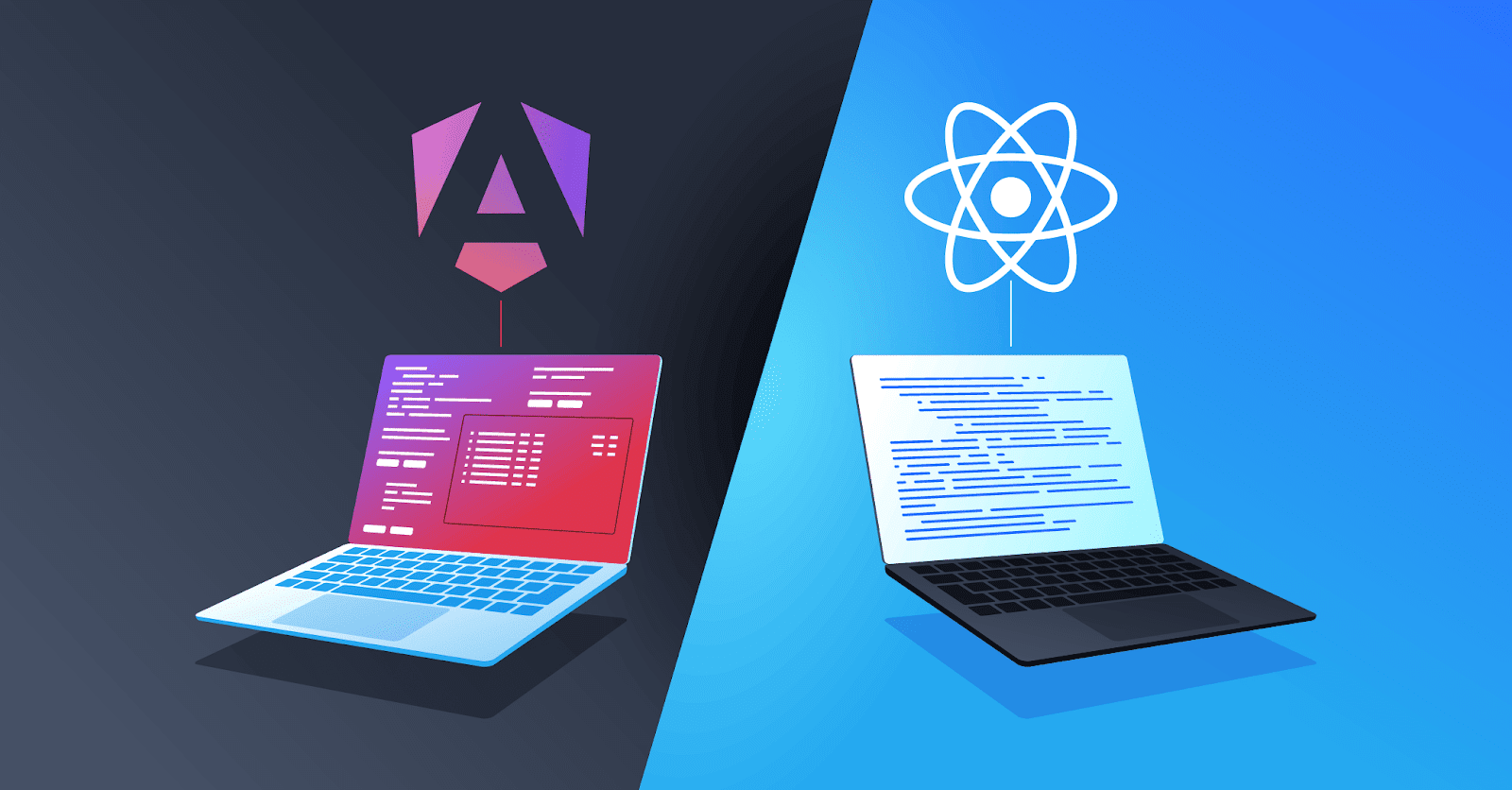
React still leads adoption, but Angular is more viable than ever. This in-depth comparison explains what’s changed, where each excels, and how to choose the right front-end framework or library based on team constraints, not hype.
Tomas is a web developer with extensive experience designing and scaling front-end architectures across React and Angular. He has led framework evaluations, application rewrites, and performance-focused refactors for production systems. Known for his business-focused approach, Tomas prioritizes simplicity, maintainability, and making clear architectural trade-offs.
Alan is a senior front-end developer with more than 15 years of experience building products using React, TypeScript, and GraphQL. He has led SaaS revamps, built dashboards, implemented e-commerce sites from designs, and developed local-first mobile apps using Next.js, React Native, Tailwind CSS, and Prisma. His focus is on creating performant, reliable, and maintainable front-end code.
Thomas is a full-stack developer and technology architect with experience in SaaS, fintech, and enterprise systems. Skilled in JavaScript, Java, Node.js, React, and AWS, he builds scalable web applications, trading engines, and declarative workflow platforms for clients worldwide, combining deep engineering expertise with cross-domain problem-solving.
Toptal has a proven track record of providing innovative solutions for any type of business challenge.
140+
Countries Served
35,000+
Clients Served
Clients rate Toptal
4.9out of 5 on average based on 42,855 reviews.
I have been working with Toptal...
I have been working with Toptal engineers for several years now. They have all been exceptionally talented, very professional, highly productive, great team players, good communicators, and willing to go above and beyond. I have relied on them as key team players and they have never felt like “outsiders”. Toptal as an organization has been professional and easy to work with.
Ian Stokes-Rees
Partner
Toptal is my go-to source
Toptal is my go-to source to find high-quality talent I can’t find elsewhere. I’ve been very impressed with the breadth and depth of talent they have been able to deliver.
Tess Caputo
Chief Operations Officer
Creating an app for the game
With the pressure on and millions watching the Cleveland Cavaliers during the NBA Playoffs, Toptal delivered the talent and expertise needed to launch a brand-new fan engagement platform.
Conor Kenney
VP, Product and Technology
The Technology Platforms We Use
To help you achieve your goals, we enhance our capacities by working with various programming languages, platforms, and new technologies.
Mobile Development
iOS App
Android App
Flutter App
React Native
Hybrid App
Mobile Design
Cross platform App
Mobile App Testing
Web Development
Node.js
React.js
Angular
Vue.js
Laravel
Django
Ruby on Rails
Next.js
Programming Languages
JavaScript
Python
Swift
Java
PHP
C#
C++
Ruby
Platforms
WordPress
Magento
Shopify
WooCommerce
Drupal
Salesforce
Squarespace
BigCommerce
RELATED EXPERTISE
More Custom Software Development Capabilities
Pair Toptal’s custom software services with related competencies to tackle your most important business initiatives.
Kevin specializes in PostgreSQL, JavaScript/TypeScript, Node.js, Perl, and Haxe, among many other programming technologies he's explored and used professionally since grade school. Primarily a lead desktop and full-stack developer, he enjoys project management, back-end technologies, and game development. With more than 20 years of remote work experience, Kevin excels both independently and as part of a team. Notably, he is a Pluralsight author and ranks in the top 2% on Stack Overflow.
Custom software development is a massive industry. The global market is worth $66 billion today, and is expected to reach $141 billion by 2030.
For companies operating at global scale, custom software is often necessary. Amazon, McDonald’s, Netflix, Unilever—their operations are so large and SO complex that no off-the-shelf product could support how they do business.
Organizations often start with commercial off-the-shelf (COTS) software because it’s affordable and easy to deploy. But as they grow, gaps appear, and going bespoke often makes more financial and operational sense than cobbling together workarounds.
Building custom software can seem daunting at first. But when managed well, the business benefits often outweigh the upfront investment—and keep delivering for years.
If your business is exploring custom software development solutions, this guide is for you. It covers the process of approaching and engaging with potential partners, determining the talent your team needs to deliver successfully, as well as the software development best practices that keep delivery on track and costs under control.
We’ve divided this guide into the following sections:
Planning Your Custom Software Development Project
Selecting the Right Technology Stack
Custom Software Development Best Practices
Custom Software Development Processes, Technologies, and Methodologies
Benefits and Challenges of Custom Software Development
Why Choose Custom Software Development?
Planning Your Custom Software Development Project
Custom software development services exist to solve a specific problem: your business needs something that off-the-shelf products can’t deliver.
Maybe your team needs a workflow that no commercial tool supports, more robust integrations than a packaged product can handle, or a customer experience that sets your business apart. Whatever the case, the goal of deploying custom software remains the same: building something unique to your business and how it operates.
Proper planning is key, especially if this is your first time working with a custom software building company. At the very least, you should be familiar with the development team structure and know what to look for in a development partner. It’s also a good idea to make sure the cost-benefit analysis checks out before you get stuck in.
The decisions you make early on will influence everything, from technical design to how easy the solution is to support in the years ahead.
Roles in a Custom Software Development Team
Most software projects need a mix of specialized roles, regardless of team size. Smaller businesses might have one person wearing many hats, but larger companies usually have several people (or entire teams) handling each role.
Usually, business analysts and project managers start by working with stakeholders to set requirements and the roadmap. Once the scope is agreed, technical leads design the architecture and software developers begin coding, whether that means front-end, back-end, or full-stack work. DevOps engineers set up the infrastructure and pipelines to move code from development to deployment.
As development moves forward, QA engineers continually test the software to catch issues before they compound and turn into more expensive late-stage fixes. Database administrators focus on keeping data reliable and secure, while security specialists audit the software layers to identify vulnerabilities and ensure compliance standards are met. UI/UX designers shape what end users actually see and interact with in the software, ensuring that the technical architecture translates into something intuitive.
Post-launch, user queries are handled by support teams, who pass feedback and any bug reports back to the development team. This helps keep the product stable and users (or customers) happy.
The exact team structure will depend on what your business needs. You might bring your own project managers or technical leads and just want to fill specific gaps. Or you might hire a custom software development agency to assemble and run the entire team.
What matters is that both sides are clear on who’s responsible for what. Ambiguity around roles often slows projects down faster than almost anything technical.
Choosing a Software Development Partner
Building a custom software solution involves lots of moving parts, so working with a reliable partner is vital. Begin by setting your budget, business goals, and delivery priorities. Take stock of the resources and skills you already have in-house, and determine which roles need dedicated specialists and which can be combined. On a smaller project, for example, you might have a senior engineer doubling as a technical lead.
Once your in-house capabilities are clear and you’ve identified exactly what you need from a development partner, start evaluating available custom development services. Prioritize clear communication and a strong track record at a minimum. Look for a software development company with strong client testimonials, relevant project experience, and skills that cover any in-house gaps. Make sure they bring the necessary project know-how.
If you’re unsure of the capabilities you need, it’s worth speaking to a software development consultant. Their experience with project roles and team dynamics will help you decide the best path forward. It helps if they know your industry well.
Decision Framework and Cost Considerations
Established wisdom says to engage a custom development company when COTS or open-source solutions impact business performance. That might be manual workflows that drain resources, data locked in silos that slow decision-making, or legacy software that can’t handle your current operational demands.
If your needs go beyond what pre-packaged solutions can deliver, custom software development services are absolutely worth considering. Yes, there are up-front costs—hardware, cloud resources, licensing, training, and likely some occasional downtime, just like any other software.
The long-term payoff is a system built entirely around your business — one you’re in complete control of, and that directly supports how you grow. When software is designed for your unique pain points and processes, teams spend less time fighting bottlenecks and more time doing work that drives the business forward.
Selecting the Right Technology Stack
Programming languages, libraries, frameworks, databases, operating systems, servers, APIs, cloud services—when it comes to building a custom tech stack, there’s certainly no shortage of choice.
In truth, companies don’t always make the best decisions in hindsight—and not for lack of effort or due diligence. It’s hard to predict how technology or an individual project will evolve. Since every custom software project is unique, no two will look exactly the same.
The good news is that the foundational building blocks—languages like JavaScript, Python, PHP, and Java, along with frameworks like React, Angular, and Node.js—are general-purpose and well proven.
Custom solutions often use a mix of technologies. For example, a yoga studio chain might use Angular and the Google Calendar API for bookings, or MySQL for tracking attendance. Walmart uses a range of programming languages and tools—including JavaScript, Clojure, Java, Node.js, React.js, and React Native—for its custom mobile apps. Your tech stack will ultimately be shaped more by the goals of your project than by the sector you’re in.
That said, some technologies have a bigger influence on how software is built and delivered, and they often set specific requirements for the tech stack from the start.
Artificial intelligence is the clearest example. A custom software company might use AI for code generation, code review, or asset creation, but it’s also becoming a core part of many products. Chatbots, recommendation engines, predictive analytics, and computer vision are increasingly standard features in custom and commercial software. Tools like TensorFlow, scikit-learn, and the wider Python and R ecosystems, are all well established.
Blockchain is often linked to cryptocurrency, but applications go beyond fintech. Supply chain management is already seeing real benefits from the technology, and a number of US states have explored decentralized voting systems based on blockchain, showing growing interest outside of crypto. Depending on the project, blockchain may underpin core logic through smart contracts, or simply provide wallet connectivity using tools like MetaMask.
IoT sensors are already embedded across industries—monitoring bakery ovens, tracking fish at sea, flagging temperature breaks in cold chains—each feeding real-time data back to systems that can act on it. Most general-purpose programming languages work well for IoT, although the need to integrate with multiple physical devices can show up in timelines and budgets.
Emerging technologies like augmented reality (AR) and virtual reality (VR) are already part of the custom development landscape, while others—like quantum computing—are still largely experimental, but closing in on practical applications. VR and AR are becoming increasingly commonplace in healthcare training, architectural visualization, automotive simulation, and remote collaboration. Quantum computing is still mostly a research and hardware challenge, but companies like Google and IBM are building software frameworks for it.
Custom Software Development Best Practices
Strong requirements gathering is one of the most overlooked and under-appreciated parts of software delivery. When teams take the time to do it properly, projects start on a much firmer footing and are more likely to launch smoothly. But if requirements are rushed or left incomplete, issues often crop up late, whether as extra development work, missed vulnerabilities, or features that don’t land with users.
Documenting your project’s goals, responsibilities, and processes clearly and thoroughly provides a shared reference point that everyone can work from. This is invaluable for keeping teams aligned and preventing scope creep—not just in technical work, but in team members’ roles and responsibilities. This is especially true for organizations new to custom development, where it’s easy to underestimate how much needs to be agreed in writing before the coding starts.
Ideally, it should be agreed early in the project that any change to documentation should prompt a review of the roadmap and budget. Being transparent in project management is important, too; tools like Jira and Trello make it easier for everyone to see project progress and spot issues.
Best Practices in Architecture and Design
Scalability cuts both ways. Building for every hypothetical scenario is just as inefficient as not planning for future growth.
When designing custom software, the goal is to build architecture that can adapt as needs change. Techniques like loose coupling keep code modular and flexible, making it easier to change one part of the system without triggering rewrites elsewhere in the codebase.
User-centeredness matters just as much. Involving a UX expert during the design phase keeps the project grounded in what is necessary, desirable, and feasible. It also helps teams avoid building features that work technically, but don’t make sense to the people using them.
Accessibility should be part of the conversation from the start. Accommodating users who rely on screen readers or alternative input devices is often a requirement, meaning conforming to W3C Standards and Web Content Accessibility Guidelines (WCAG) may be non-negotiable.
Agile Methodologies and Their Benefits
Adopting an Agile project management methodology—whether that means using Scrum, Kanban, or another framework—is now widely seen as a best practice in custom software development. This marks a departure from traditional Waterfall development, where each phase of development is completed in sequence.
Agile projects run in shorter cycles, typically lasting one to four weeks. This allows teams to gather feedback quickly and make changes as they go. Each cycle also provides regular opportunities for code reviews and for senior developers to mentor junior team members.
Sprint boundaries are a natural point to bring in outside expertise. For example, you might commission a security review after building an authentication flow, or ask a privacy specialist to check whether your code aligns with the Health Insurance Portability and Accountability Act (HIPAA) or the EU’s General Data Protection Regulation (GDPR). Targeted reviews like this serve a dual purpose: keeping your custom code secure, and on the right side of the law.
Agile methodologies and CI/CD often go hand-in-hand. Both encourage iterative development, continuous feedback, and structured teamwork. CI/CD pipelines also introduce automation, making the development process more efficient.
CI/CD pipelines take care of testing, integration, and delivery whenever new code is added. When engineers push changes to a repository, the system automatically builds the code, runs unit tests, and deploys it to a staging environment. If something goes wrong, the process rolls back the changes. This helps developers stay up to date with each other’s work and means QA teams are always working with the latest version. It also prevents developers from stepping on each other’s work.
The main advantage of CI/CD is that it helps reduce risk, particularly in large projects where it’s difficult to keep track of every code change. By releasing updates more often and testing continuously, teams can spot problems early and fix them before they become buried in the codebase.
Testing Best Practices
Catching defects early saves time and money. In custom software, you don’t have a vendor pushing patches or a wider user base surfacing bugs for you. If something’s missed, it stays missed until your team finds it—so you better make sure your testing is on point
Unit testing is the automated testing of code modules in isolation. Every custom software project should involve unit tests. They help ensure code behaves as expected and encourage other good habits, such as decoupling.
Integration testing ensures different modules work together as they should. Changing one piece of custom code can break something that seems unrelated. Unit tests alone won’t catch these issues, but integration tests will.
Regression testing helps stop old bugs resurfacing. After fixing a bug, you add an automated test for it, so future updates don’t unintentionally bring back the same issue.
Hallway testing, sometimes called guerrilla usability testing, is a cheap and easy way to see if new features make sense to users. You ask someone nearby, ideally someone who’s not involved in the project, to try out a feature and give their feedback.
Writing tests before you start coding is also good practice. Test-driven, behavior-driven, or acceptance test-driven development methods require teams to agree on what the finished product should do before any code is written. This ensures that, by the time a feature is built, there’s already a clear way to measure whether it works.
Custom Software Development Processes, Technologies, and Methodologies
How custom software development services are managed matters as much as the end result. The processes, tools, and methodologies a business chooses will determine how quickly features are shipped and how stable the product is once it’s live.
Getting these foundations right doesn’t guarantee success, but it does greatly improve your chances. Conversely, getting them wrong almost always guarantees delays, wasted budget, or software that’s hard to maintain post-launch.
The Custom Software Development Process
Every custom software project follows roughly the same arc, from defining the problem through to maintaining the product in production. How rigorously each stage is handled often determines whether the project stays on track and aligned with the roadmap.
Requirements gathering: Key stakeholders—business owners, product and project managers, IT staff, end users, and sometimes external partners—define the scope of the problem. This stage is strictly about identifying specific pain points related to the issue(s) at hand, rather than pinpointing potential solutions. This keeps guidance practical and decision-oriented. Working with a software partner who understands custom development will help clarify the problem and ensure that resources and development effort in later stages are properly targeted.
Planning: Once the requirements are defined, they’re translated into a roadmap. This should cover timelines, budgets, milestones, and resource allocation. This is also where intellectual property rights are typically clarified, particularly when working with an external development partner.
Design: This should be obvious, but detailed product design specifications need to be set before any actual building starts. Software architects plan out the infrastructure, usually working with DevOps engineers and cybersecurity specialists. UI and UX designers create mock-ups for the necessary platforms (desktop, web, mobile). The more thorough these specifications are, the faster engineers can move once building starts.
Development: Developers begin writing code based on the design specifications. Architects, DevOps engineers and security specialists work closely together during this stage. Depending on the project, graphic artists may create image assets and technical writers may prepare documentation.
Testing: Manual testing starts as soon as a feature or component is ready. Automated testing can begin even earlier with test-driven, behavior-driven, or acceptance test-driven development. The testing stage is your last line of defense for catching bugs before they hit production.
Deployment: After testing and fixing any issues, support documentation is published and the software is released for use. Rollouts are sometimes staged to catch issues that only appear under real-world conditions—traffic spikes or unexpected user behavior, for instance.
Maintenance: All software needs regular maintenance to stay compatible with its environment. Upkeep costs are usually much lower than the upfront investment; it’s usually adding new features or fixing unexpected issues that drives costs back up. Keep in mind that updating live software can be more involved than building it in the first place, particularly on the back end. Ideally, changes to databases, infrastructure, and third-party integrations should happen without disrupting the live product (sometimes easier said than done).
All custom development projects follow these steps in some form. Best practices are there to keep costs and avoidable risks in check, and to help lower time-to-market.
Benefits and Challenges of Custom Software Engineering
Custom software isn’t automatically better than off-the-shelf. It depends on what you’re building, why, and how well it’s executed. But when the fit is right, the advantages tend to compound.
Some of the benefits you might see include, but are not limited to:
Operational Efficiency
COTS tools force you into their workflows and ways of doing things. Custom software development solutions are built around yours: your approval chains, your reporting structures, your data flows. This makes it much easier to get material value of the tools you invest in, and means developer teams spend less time firefighting or trying to patch together workarounds to get things done.
It also allows you to build capabilities that COTS and FOSS products simply don’t offer, because they’re designed for the broadest possible audience. Custom software development solutions are designed for you and you alone, giving you the means to create entirely new value propositions. At a time when almost every business has some sort of digital offer, that’s a real competitive edge.
Scalability and Flexibility
Businesses change, but often, off-the-shelf software doesn’t change with you. At least, not to the extent you require. That rigidity presents a limiting factor when it comes to expanding into new markets, new customers, or simply reaching the scale that you want for your business.
With COTS, you’re also locked into the vendor’s pricing and release cycle. Custom software gives you control over how and when the product evolves. You own the roadmap and set the priorities, with no risk of a provider sunsetting something you depend on. You get something that grows with you, rather than being a blocker to growth.
Security and Integration
Custom software can be built around the specific threats your business faces, rather than relying on a one-size-fits-all security model. Widely-deployed commercial and open-source products also present a broader attack surface, because their codebases are well-known and, in the case of FOSS, easily accessible. On the integration side, custom builds let you design data flows that match your systems exactly. That means no middleware compromises, and no working from another company’s rulebook about how your data should move.
The Challenges of Custom Software Development
Despite the potential advantages, custom software isn’t always the right call. If, for example, you’re looking at a short-term requirement that a pre-packaged solution already satisfies, there’s not much logic in building something from scratch. Some other things to bear in mind include:
Higher upfront cost: Custom development requires a decent chunk of investment before you see returns, and the ROI tends to play out over a longer timeframe than COTS or FOSS. Even a single iteration of the development lifecycle involves multiple phases—ideation, creation, testing, launch, maintenance—and most projects need at least three iterations to reach a production-ready standard. That said, the long-term savings you get from licensing fees, vendor lock-in, and repeated hotfixes outweigh the initial spend more often than not.
Higher infrastructure and talent costs: Going custom may mean upgrading your technical infrastructure or investing in specialist skills you don’t currently have in-house. Working with an experienced custom software development agency can offset this, providing fractional or project-based expertise when you need it.
Longer time to market: Off-the-shelf software can be deployed in days or weeks. Custom builds usually take months at a minimum. If speed matters more than fit, a COTS solution may be the better starting point. The trade-off is that what you do eventually ship is built for your business, rather than for the mass market.
How well a business manages these tradeoffs depends largely on who they partner with. A poorly executed build from an inexperienced custom software application development company will create more headaches than it remedies. The right partner—one with access to strong engineering talent and disciplined delivery practices—will translate your business objectives into a solution that works now and holds up as you scale.
Why Choose Custom Software Development?
Suppose you need a content management system (CMS). You could subscribe to a software-as-a-service platform and use the same tools as everyone else, or you could build a system around your own content workflows that integrates with your internal tools, and gives you capabilities no off-the-shelf tool offers. The first option is something your competitors could replicate quite easily. The second option isn’t. It’s tailored to your unique needs and those of its customers.
We’re only using CMS as an example here. The point is that custom software solutions can provide an advantage that’s exclusive to your business. Just remember that the outcome is almost entirely dependent on your objectives and how you approach them.
Unique Advantages of Customized Software Development
COTS and FOSS tools are designed for mass appeal, which means solving the key needs of as many businesses as possible. They cover only what their developers think most customers want.
Customizing these tools can be a significant technical challenge, and even then, you might not get all the functionality you need. When you hit those limits, building custom software is often the only path forward.
Ready-made software can also become a constraint when industry standards or regulatory requirements go beyond generic compliance. Most major platforms handle broad regulations like GDPR out of the box. But in industries with very specific rules or complex data requirements, COTS and FOSS tools can make it harder to meet those needs exactly—handling sensitive or anonymized health data, for instance.
The same goes for internal business processes. Every company has its own workflows, data pipelines, and approval chains that reflect its way of working. Over time, these become more nuanced. Off-the-shelf tools work well for standard setups, but they’re rarely flexible enough to support what makes a business truly unique or exceptional.
FOSS and COTS tools are undoubtedly valuable. There’s a reason they’re so popular, even among the largest enterprises. Both solve a wide range of common business problems in ways that scale predictably and remain affordable.
The key difference with custom software is ownership. You decide how systems are designed and delivered, and can shape them exactly as needed to drive business growth or give you a competitive edge.
Business Applications of Custom Software Development Solutions
Here’s a snapshot of how custom software is being used across various industries today.
Healthcare
MediView XR, a medtech company working with GE HealthCare, uses custom software to improve surgical visualization with augmented reality (AR) and interactive 3D models of patient anatomy. The Mayo Clinic has also built custom data and imaging software to support biomedical research.
In the UK, the NHS App has become a nationally deployed custom platform, handling millions of prescription requests each month and replacing what was previously fragmented access to core patient services.
Finance
Most major banks now have their own, custom-developed mobile apps, making it easy for customers to manage their accounts from anywhere. In 2024, Bank of America reported over 58 million digital customers and 26 billion digital interactions, showing just how integral these apps and digital services have become.
For years, payments fintech ConnectPay used a third-party provider for its core banking system, which manages all balances and transactions. In 2026, the company switched to its own in-house platform, gaining direct control over building and scaling its infrastructure.
E-commerce
Amazon’s rollout of its Rufus shopping assistant in 2024 shows how large retailers use custom software to change how customers discover and buy products.
Fashion rental platform Rent the Runway created its own warehouse management system because no existing product could handle reverse logistics at its scale.
Manufacturing and supply chains
Walmart’s custom logistics software worked so well internally that the company turned it into a product: Route Optimization, launched in 2024 through Walmart Commerce Technologies.
GE Vernova’s custom SmartSignal predictive analytics software was originally built to monitor GE’s own industrial equipment. It now tracks thousands of assets across multiple industries worldwide.
Public sector
Transport for London operates a custom API platform that exposes real-time transport data to third parties, supporting journey planning, payments, and customer services across the UK capital.
The Vermont Department for Children and Families built custom enrollment software to unify benefits applications across multiple state departments. After launch, processing time dropped 44%.
In each of these cases, custom software was created to address a problem unique to how the organization operates. In some cases, the solution proved valuable enough to become a standalone product.
Custom software is most useful when operational needs are too specific for an off-the-shelf tool. That might be a warehouse focused on reverse logistics, a benefits system that covers several departments, or a banking platform handling millions of daily transactions.
Again, the common thread is ownership: software that works the way your business does, because it was designed exclusively for you.
FAQs
Toptal’s custom software development services are distinguished by our access to a global network of top-tier developers with proven expertise. Unlike traditional software development companies, Toptal offers flexibility with tailored solutions and Agile methodologies that adapt to your needs. Our rigorous vetting process ensures that only the top 3% of developers are selected, providing high-quality talent. Toptal also emphasizes speed and efficiency with rapid project initiation and a client-centric approach, focusing on understanding and aligning with your business goals to provide solutions that fit perfectly.
Custom software development is suitable for your business when you have specific needs that off-the-shelf solutions cannot address adequately. If you require unique functionality, seamless integration with existing systems, or scalability that standard software cannot offer, custom software development provides a solution tailored precisely to your operational requirements.
Custom software offers a competitive edge by providing unique solutions that set your business apart, along with dedicated support and maintenance tailored to your software.
The SDLC is a structured approach to software development that encompasses several key phases. It begins with requirement analysis, where the needs and goals are documented. This is followed by design, where architectural and detailed plans are created. Next, development involves writing and implementing code, while testing ensures the software meets quality standards. And finally, deployment is the release of the software for use, and maintenance involves ongoing support and updates to address issues and enhance functionality.
The cost of custom software development varies depending on factors such as the project’s complexity, the technology stack, the expertise of the development team, and the timeline. Our custom software development services are flexible to your budget, and offer tailored solutions that can provide substantial long-term value and efficiency improvements for your business.
Custom software development companies manage security and quality through a variety of practices. They work with clients to implement security measures tailored to the clients’ risk tolerance and requirements such as encryption, secure coding techniques, and regular security audits. Quality assurance is achieved through rigorous testing phases, including unit tests, integration tests, and user acceptance tests. Additionally, they work with clients to manage clients’ compliance with industry standards and regulations, which can include continuous monitoring and working with clients to make sure that software is updated and patched to address vulnerabilities.
Maximize your business performance with Toptal’s Custom Software Development Services