
What Is an Agile Coach? Key Responsibilities and Business Impact
Navigate the evolving world of Agile coaching with this comprehensive guide. From responsibilities and skills to business impact, explore what the role looks like today and what it takes to succeed.

Navigate the evolving world of Agile coaching with this comprehensive guide. From responsibilities and skills to business impact, explore what the role looks like today and what it takes to succeed.

Antonia is a project management expert with more than 20 years experience across project management, Agile transformation, and organizational coaching. She has held senior roles at a number of enterprise organizations including McKinsey & Co, The New York Times, Yahoo, and IBM, guiding leaders and teams through change while embedding sustainable Agile practices. Antonia holds the Certified Scrum Professional and Project Management Professional certifications, alongside advanced credentials such as Enterprise Agile Coach.
Previous Role
Senior Project ManagerPreviously At


Agile has expanded far beyond its software development origins. What began as a set of principles for improving delivery within software teams is now informing how organizations approach planning, collaboration, decision-making, and change management across entire business functions. As companies seek to operate with greater speed and adaptability, however, many are discovering that adopting and sustaining Agile practices at scale requires much more than daily standups. This has elevated the importance of the Agile coach role that helps build the mindset and habits needed for Agile to succeed within an organization.
Despite this, the role itself is still widely misunderstood; Agile coaches are frequently conflated with Scrum masters, consultants, or project managers. Part of the confusion stems from how differently the role functions across organizations. In some, Agile coaches work closely with individual teams on delivery practices and facilitation. In others, they work across departments and leadership groups, helping coordinate larger transformation efforts. The result is a position that can vary significantly depending on the size of the company and its Agile maturity.
Drawing on more than a decade of experience as an Agile coach, I unpack what the role actually entails, how it differs from adjacent positions, and the skills needed to succeed.
Understanding the Role of an Agile Coach
Agile coaching is often associated with frameworks such as Scrum and Kanban, but the role is usually less focused on enforcing a specific methodology. Typically, coaches help organizations apply Agile principles in ways that align with their structure, goals, and ways of working.
In addition to facilitating short-term process adoption, Agile coaches also support long-term capability building. While teams may initially bring in a coach to improve workflows or implement Agile principles, the larger goal is to help them develop practices that they can maintain independently.
Why Organizations Hire Agile Coaches
In my experience, organizations will often bring in an Agile coach when teams start encountering problems that existing processes can’t resolve effectively. Delivery might be less predictable, or cross-functional work might be harder to coordinate. In many cases, companies realize they’ve adopted Agile language and ceremonies without gaining the adaptability the principles are intended to support. Agile coaches help close that gap by improving communication, conflict resolution, and team culture. While specific outcomes vary across organizations, companies also use Agile coaching to achieve:
- Faster identification and resolution of delivery bottlenecks or inefficiencies.
- Stronger alignment across teams and departments.
- Smoother execution of transformation or change initiatives.
- Improved ownership and accountability.
- More consistent delivery outcomes over time.
Real-world Example: Taking Agile Beyond Adoption
An events and party rental company brought me in on a fractional basis to support its Agile adoption. This involved configuring a single source of truth for planning, establishing a sprint cadence aligned with seasonal demand, and coaching team leads on facilitation.
A year later, the company invited me back for a reassessment to evaluate what had endured and what needed reinforcement. My review combined sprint data, Jira audits, one-to-one interviews, and team health checks. Together, they revealed a problem: Unplanned tickets were disrupting sprints and dragging velocity down, as there was no structure to how this additional work was captured and planned for.
The team created a dedicated workflow for the midsprint requests and determined a more realistic sprint capacity, resulting in greater visibility of operational bottlenecks and a delivery process that reflected the realities of the business. The engagement demonstrated that Agile coaching isn’t just about implementing new ways of working; it’s about enabling organizations to continuously evaluate and refine them as they evolve.
Agile Coach vs. Scrum Master vs. Agile Consultant
The roles of Agile coach, Scrum master, and Agile consultant are often grouped together because all three support Agile ways of working. In practice, however, they differ in scope, responsibilities, and level of organizational influence.
This comparison table highlights some of the key differences between these three professionals.
Role | Primary Focus | Scope | Typical Engagement Style |
|---|---|---|---|
Agile Coach | Improving organizational adaptability, coordination, and Agile maturity | Multiple teams, departments, or leadership groups | Ongoing coaching, facilitation, and guidance |
Scrum Master | Supporting implementation of the Scrum framework and delivery of assets | Single delivery team | Day-to-day facilitation and process support |
Agile Consultant | Advising on Agile transformation or adoption initiatives | Specific initiative or entire organization | Short-term advisory or implementation-focused engagement |
What Does an Agile Coach Do?
A common misconception is that Agile coaching centers on facilitating ceremonies when, in reality, much of the work is about identifying the behavioral and operational patterns that affect the way teams execute. That means coaches move between facilitation, analysis, and guidance depending on where problems are surfacing.
Day-to-Day Responsibilities
A typical week for an Agile coach may involve holding sprint-planning sessions, observing how teams operate, or helping resolve prioritization conflicts. One key, overarching responsibility is to identify issues that teams might not notice themselves, such as recurring blockers, communication gaps, unclear ownership, or rigid processes.
Common day-to-day activities for Agile coaches include:
- Running standups, retrospectives, and workshops.
- Observing team dynamics and delivery processes and providing feedback.
- Holding one-on-one coaching sessions with struggling team members.
- Facilitating difficult conversations between stakeholders to resolve issues.
- Helping refine backlog management and workflows.
- Supporting cross-functional initiatives requiring complex coordination.
The Different Levels of Agile Coaching
As organizations grow, the focus of Agile coaching shifts from improving team execution toward aligning larger operational systems and structures. The table below outlines how responsibilities evolve across different levels of coaching.
Level of Coaching | Primary Focus | Typical Responsibilities |
|---|---|---|
Team | Improving execution within a single group | Running ceremonies, refining workflows, strengthening collaboration, and supporting iterative delivery |
Program | Coordinating work across multiple teams | Managing dependencies, improving alignment, and supporting shared planning |
Enterprise | Guiding organizationwide Agile transformation | Working with leadership to establish more efficient operating models and strategies |
Common Agile Coaching Scenarios
Agile coaches are brought in when organizations know there are delivery problems but are struggling to trace what’s actually causing them. Issues that appear isolated at team level frequently point to deeper weaknesses or issues elsewhere in the business. The following scenarios illustrate two of the most common situations where coaching support is required.
Cross-functional Dependencies Slowing Delivery
A rapidly growing company found that releases were increasingly delayed despite strong individual team performance. The root cause was that dependencies between product, engineering, and operations teams were poorly coordinated, and so ownership became unclear during handoffs. The Agile coach introduced shared planning sessions and clearer task tracking across teams. Collaboration improved and delivery friction was reduced.
Agile Ceremonies Become Performative
An organization using Scrum found that retrospectives and standups were feeling procedural rather than valuable; teams participated consistently but saw little operational improvement. The Agile coach removed unnecessary meetings and redesigned those that remained to address specific blockers. Teams became more engaged because the ceremonies started solving real problems again.
Supporting Remote and Hybrid Teams
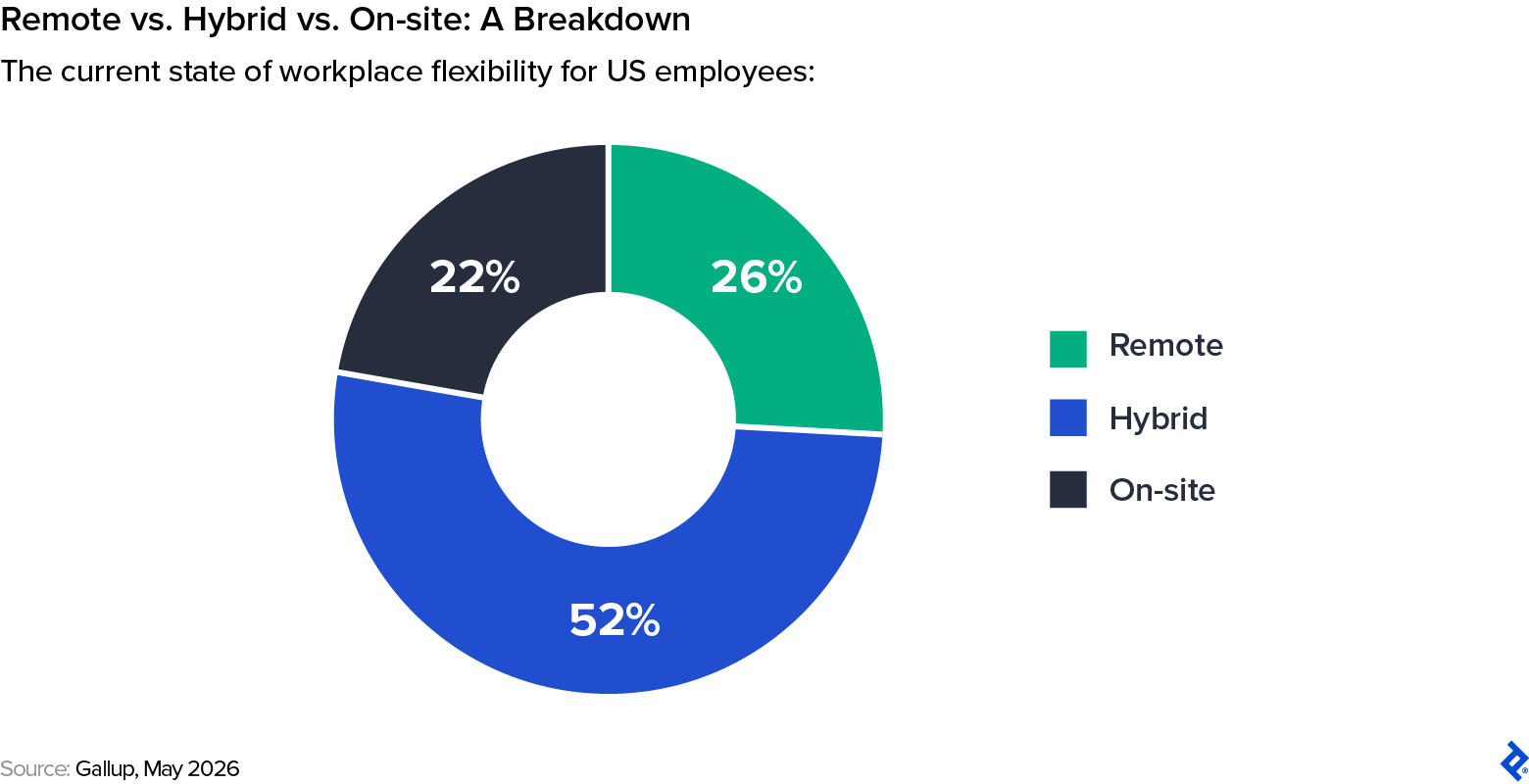
According to the latest data from Gallup, 52% of US employees with remote-capable jobs are hybrid and 26% are exclusively remote. The proliferation of remote and hybrid work has had a big impact on the practical realities of Agile coaching. Many frameworks are built around rapid feedback loops and close collaboration, but when teams are distributed it can make communication more challenging.
As a result, Agile coaches increasingly help teams develop practices that don’t need constant, real-time interaction to be effective. That might involve:
- Improving workflow visibility through shared planning platforms like Jira.
- Enabling teams to establish clear norms for communication, availability, and decision-making.
- Facilitating ceremonies and workshops using virtual collaboration tools such as Miro and Mural.
- Encouraging more asynchronous communication using software like Slack.
I was initially resistant to the idea of coaching remotely, because in-person cues, like reading body language, are so crucial to how you coach. I’ve since realized, however, that online coaching can be just as effective. Of course, keeping people engaged can be harder on Zoom, but as long as you ensure meetings are meaningful, they will keep showing up and participating.
Collaborating online also comes with advantages. Key assets and discussions are preserved after meetings end, so components like agreements, retrospective takeaways, and our definition of done can all be accessed by the team at any time.
Measuring the Impact of Agile Coaching
The value of Agile coaching is difficult to quantify, as the impact is commercially significant but often indirect. Coaches don’t generate revenue themselves, but better processes and stronger collaboration allow organizations to deliver work more efficiently, which does affect the bottom line.
One of the challenges is that impact spans many organizational layers and outcomes, and therefore can’t really be captured in a single metric. Coaches influence everything from planning and communication to alignment, which means success needs to be evaluated across several dimensions, including delivery performance, team effectiveness, and business results.
Team Health and Performance Metrics
Agile coaching often has its most immediate gains at team level. As teams become more effective at planning and resolving issues, those changes tend to show up in their delivery performance. For that reason, organizations frequently evaluate coaching efforts using a combination of operational metrics and team-health indicators. These include:
- Cycle time and lead time: How quickly is work moving from planning to completion? Are delivery processes becoming more efficient over time?
- Delivery predictability: How consistently are teams meeting commitments? How closely do outcomes align with expectations set during planning?
- Throughput and progress levels: Where are bottlenecks forming? Are teams taking on more work than they can realistically complete?
- Delays, rework, and missed commitments: Are avoidable delivery issues becoming less frequent as teams improve their practices?
- Team satisfaction and engagement: Do team members feel supported and confident in how work is organized?
- Collaboration quality: How effectively are teams communicating, sharing ownership, and coordinating work across roles and functions?
- Ceremony participation: Are retrospectives, planning sessions, and reviews generating useful discussion and action items, or are they becoming routine meetings?
Business and Organizational Outcomes
The broader goal of Agile coaching is to strengthen how the organization operates as a whole. Over time, leaders look for evidence that coaching efforts are contributing to measurable business outcomes. Common indicators include:
- Faster time-to-market: Enabling organizations to deliver products, features, or initiatives more quickly in response to business needs.
- Stronger alignment with business priorities: Reducing conflicting objectives and improving coordination across departments.
- Consistent value delivery and customer retention: Increasing the relevance and usefulness of products and services to better meet customer needs.
- Greater adaptability: Allowing organizations to adjust priorities, reallocate resources, and respond to new opportunities with less disruption.
Skills and Background of an Agile Coach
I don’t think you need to be a domain expert to be an excellent coach. You will need a working knowledge of the domain, but what’s more important is understanding people.
Because Agile coaches can be in situations where people are frustrated or confidence is low, the role requires someone who can ask difficult questions, challenge the status quo, and help teams navigate change. You also have to be an empathetic person, able to see problems from other perspectives in order to isolate the root pain point or bottleneck. Having compassion is key to resolving issues.
In my opinion, being a successful Agile coach requires soft skills like curiosity, communication, and the ability to stay effective under pressure, in addition to strong business acumen. It’s a specific and demanding combination.
Core Coaching Skills
Agile coaches work across many different levels and teams, so they need a wide range of core competencies. They must understand how Agile principles function, but also need to recognize when process is not the real issue.
Core skills include:
- Deep knowledge of Agile frameworks such as Scrum and Kanban, including understanding when different approaches are appropriate.
- Strong communication and facilitation skills to guide discussions productively and build alignment among stakeholders.
- The ability to manage conflict constructively and work through challenging dynamics without escalating friction.
- Systems thinking to identify operational patterns across teams and workflows.
- Familiarity with platforms and tools such as Jira, Azure DevOps, Miro, and Mural to support planning and collaboration.
Background and Experience
Few people begin their careers as Agile coaches; most arrive at the role after years inside operational environments, where they’ve seen firsthand how teams, projects, and organizations function. That experience is critical because Agile coaching depends heavily on practical knowledge; teams are far more likely to trust coaches who understand the realities of shifting priorities and stakeholder tension.
Agile coaches often come from backgrounds connected to delivery, particularly in product or engineering, like Scrum master, project manager, or product owner. Over time, some people naturally move closer to facilitation or support roles and away from directly managing delivery.
My own journey began in project management before I moved into a Scrum master role. While most Scrum masters focus on development and deliverables, coming from a project management background meant I was more curious about how to create improvements from a process angle, so becoming an Agile coach felt like a natural progression. This isn’t always the case, however; a great Scrum master won’t always make a great Agile coach.
Career Path and Job Outlook for Agile Coaches
As we’ve established, there’s no standard route into Agile coaching, and the role itself can look different depending on the organization. Once you join a company, responsibilities often expand at the same rate as operational complexity.
At industry level, the profession itself is broadening in response to wider changes. A multitude of remote environments and project-based initiatives is driving greater adoption of distributed, contract-based, and fractional coaching models, giving organizations more flexibility in how they access Agile expertise and coaches more choice in the style of work they take on. These days, as in the example above, I’m more likely to be brought in to help with an Agile adoption for a set period of time, and then engaged again a year or so later to check in on progress.
Agile is also less tied to software development as organizations rethink how work is executed more generally. In the 18th State of Agile Report, published in 2025, 13% of survey respondents described Agile as “deeply embedded” across business, technology, and supporting functions. This expansion means Agile coaches are increasingly being called upon to support a wider variety of departments.
Entering the Profession
There’s no formal qualification needed to become an Agile coach; most practitioners build toward the role over time by combining hands-on delivery experience with facilitation and change management skills. Certifications can help with credibility, and we explore some certification options below, but there are other ways to strengthen an Agile coaching profile:
- Building experience in delivery-focused roles and Agile environments
- Developing good communication and stakeholder management skills
- Working across multiple teams, projects, or business functions
- Participating in transformation initiatives that expose candidates to broader organizational challenges
Typical Career Progression
Because organizations define coaching roles differently, there’s no universally accepted Agile coaching career ladder. But people do tend to follow a similar trajectory of increasing responsibility and organizational exposure. The following stages illustrate the typical Agile coach evolution.
1. Team-level Coaching
Many coaches begin by working closely with individual teams, facilitating ceremonies, improving delivery practices, and helping teams adopt Agile principles more effectively.
2. Multiteam and Cross-functional Coaching
Responsibilities extend beyond a single team to include coordination across departments, shared planning, dependency management, and broader operational alignment.
3. Enterprise Coaching and Digital Transformation Leadership
Coaches start working more directly with leadership groups, organizational structures, and large-scale transformation initiatives that affect multiple teams and business units.
4. Strategic Change Leadership
Some Agile coaches progress into roles focused on business transformation, organizational effectiveness, or operational strategy, where Agile is one part of a wider change agenda.
Salary and Market Demand
Compensation for Agile coaches varies considerably depending on experience, industry, location, and organizational scope. Enterprise-level coaches and practitioners leading large-scale transformation initiatives can earn significantly more, particularly when their responsibilities extend into leadership coaching, organizational design, or strategic change management.
Market demand remains strong, but employers are looking beyond framework expertise alone. Organizations place the greatest value on coaches who can demonstrate measurable improvements in areas such as delivery performance and operational efficiency.
Agile Coach Certifications and Professional Development
Because Agile coaching doesn’t have a single, standard career path, certifications can carry weight. They give organizations a clearer way to assess coaching knowledge and provide practitioners with more structured ways to develop skills.
In larger companies especially, certifications are used to signal familiarity with established Agile approaches and enterprise-scale coordination models. Not all certifications serve the same purpose, however. Some focus on foundational Agile delivery practices, while others are designed for more advanced or large-scale transformation work. Many certification programs also connect coaches to wider professional communities, ongoing training opportunities, and shared industry practices.
Here’s a breakdown of the most common Agile coaching certifications and where they typically fit within an Agile career path.
Certification Type | Common Certifications | Best Suited For |
|---|---|---|
Entry Level |
| Professionals moving into Agile delivery or facilitation roles |
Coaching and Facilitation |
| Scrum masters, delivery leads, or facilitators moving into coaching roles |
Enterprise and Scaling |
| Experienced coaches working across multiple teams or enterprise environments |
It’s important to keep in mind that Agile coaches continue building skills long after completing formal certifications. The role evolves constantly as businesses adopt new tools and models, which makes continuous learning a vital part of long-term career development.
Many coaches rely on resources like blogs, podcasts, webinars, community forums, and open-access learning materials from organizations such as Scrum Alliance and ICAgile, while instructor-led workshops, conferences, and professional communities can provide deeper training opportunities. AI-assisted learning platforms are also becoming more common for practicing coaching techniques in a variety of scenarios.
Tools, Frameworks, and Techniques Used by Agile Coaches
While ceremonies and frameworks are important in Agile coaching, the real task is selecting the right intervention for the problem being faced. A team struggling with competing priorities requires a different approach than an organization trying to implement new delivery processes. Agile coaching is highly situational, drawing from a mix of methods, tools, and frameworks depending on the challenge at hand.
Facilitation and Coaching Techniques
One of the most important Agile coaching skills is the ability to encourage teams to talk openly and honestly. They need to be able to discuss difficult problems and find solutions without conversations becoming defensive or unproductive. Strong facilitation helps surface issues early, before they disrupt delivery more seriously.
Common techniques include:
- Structured retrospectives that enable teams to identify operational friction and recurring problems.
- Planning workshops designed to clarify priorities and expose hidden dependencies before they begin slowing execution.
- Brainstorming exercises or anonymous feedback collection when teams feel uncomfortable raising concerns in a group setting.
- Asking questions that uncover root causes and unrealistic assumptions instead of focusing on immediate symptoms.
- Feedback approaches that foster reflection and review without directing blame.
Scaling Frameworks
As Agile spreads beyond a small number of teams, problems that feel local can quickly become organizational. Many organizations eventually encounter the same problem: Delivery methods alone don’t resolve the coordination challenges created by growth. Teams may run effective standups, for example, but struggle with bottlenecks and fragmented communication.
To manage growing complexity, Agile coaches sometimes introduce scaling approaches such as the Scaled Agile Framework (SAFe), Large-Scale Scrum (LeSS), or the Spotify model. Here’s how they differ:
- SAFe introduces more formal coordination structures, planning cycles, and governance processes. It’s commonly used in large enterprises where delivery work spans multiple departments and leadership groups.
- LeSS extends Scrum principles across teams while attempting to keep coordination lightweight. Organizations that want to scale delivery without adding excessive process overhead often prefer this approach.
- The Spotify model emphasizes autonomy and flexible team structures through concepts such as squads, tribes, and chapters. It’s generally associated with companies prioritizing faster decision-making and collaboration.
AI-supported Tools and Automation
AI tools are beginning to change Agile coaching in much the same way as they’re changing other operational roles, by making patterns easier to detect across large volumes of data and activity.
Agile coaches can now use AI-assisted tools to:
- Analyze sprint histories and delivery trends.
- Summarize retrospective feedback and standup discussions.
- Surface workflow bottlenecks or overloaded delivery stages.
- Identify risks and dependency issues.
- Track patterns across multiple projects or departments.
- Support planning and forecasting using historical data.
Used carefully, AI tools can reduce administrative overhead and make operational issues visible much earlier. Most Agile coaches, however, still treat AI as a support layer rather than a replacement for human judgment; delivery problems are often tied to issues like team dynamics or leadership decisions that require nuanced interpretation.
Bridging the Gap Between Theory and Practice
Agile coaching has come a long way from its origins in software development, but, as Agile adoption has expanded, so too has the gap between understanding the principles and applying them successfully. The root causes of this disconnection aren’t always obvious. More often, they’re hidden in entrenched patterns and processes that are difficult to change.
This is precisely why Agile coaching is so important. As businesses continue to face growing complexity, distributed teams, and rapid technological advances, the ability to navigate operational, cultural, and structural challenges while working in adaptive ways is nonnegotiable. Tools and frameworks will evolve, but the need to help people work together effectively is constant and more pertinent in the face of those challenges. And that’s ultimately where Agile coaches create lasting value.
Further Reading on the Toptal Blog:
Understanding the basics
An Agile coach is a professional who guides organizations through Agile adoption and transformation. They work closely with teams and leaders to improve collaboration, delivery, and decision-making, embedding practices that enable continuous improvement and long-term organizational agility.
Most Agile coaches have practical experience working in Agile environments, often in roles like Scrum master, project manager, or product owner. They also need strong communication, facilitation, and problem-solving skills. Many professionals also pursue certifications to strengthen their expertise and credibility.
Agile coaches facilitate workshops, analyze delivery processes, and help teams resolve obstacles that affect performance. They help organizations solve operational challenges and build more effective ways of working.

Antonia McCullough
New York City, NY, United States
Member since November 28, 2022
About the author
Antonia is a project management expert with more than 20 years experience across project management, Agile transformation, and organizational coaching. She has held senior roles at a number of enterprise organizations including McKinsey & Co, The New York Times, Yahoo, and IBM, guiding leaders and teams through change while embedding sustainable Agile practices. Antonia holds the Certified Scrum Professional and Project Management Professional certifications, alongside advanced credentials such as Enterprise Agile Coach.
Previous Role
Senior Project ManagerPREVIOUSLY AT